
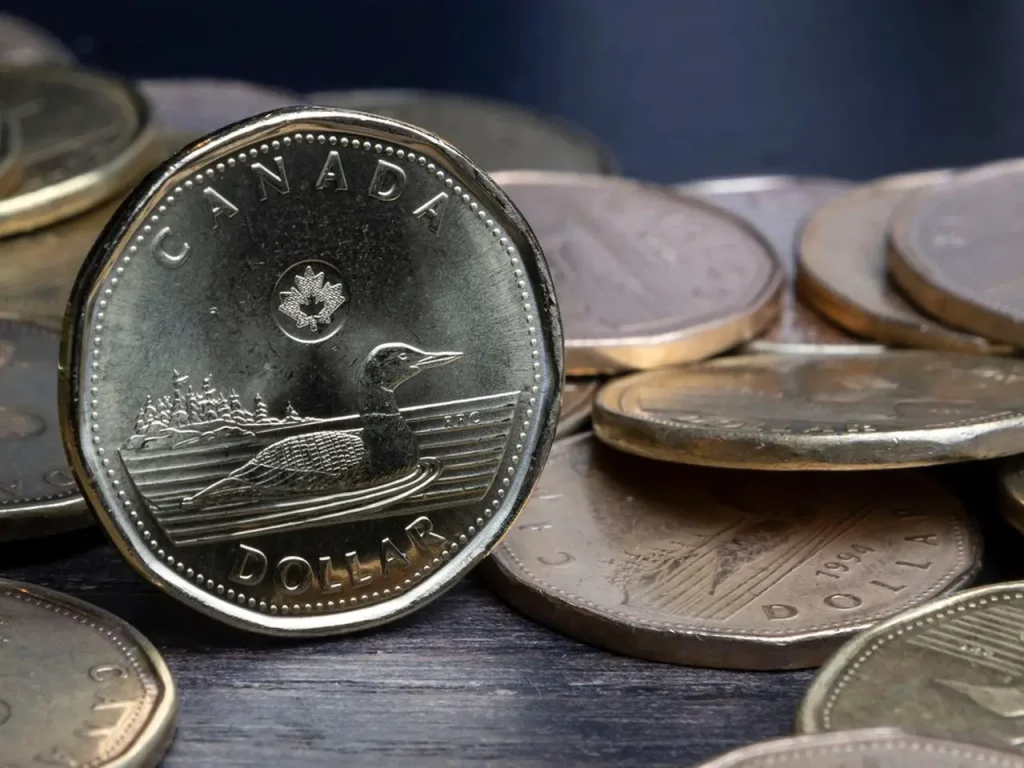
Global financial markets are facing intense pressure this week. A rapidly escalating conflict in the Middle East has rattled investors worldwide. Yet, against all odds, Canada’s currency is stubbornly holding its ground. The latest Canadian dollar forecast shows unexpected stability amid severe geopolitical anxiety. On Tuesday, the currency rebounded sharply. It recovered from a near six-week low against the U.S. greenback.
Tensions have violently boiled over across the Middle East. Israeli and American forces have targeted locations inside Iran. Consequently, Tehran has launched retaliatory strikes across the Gulf. Furthermore, the conflict has officially spilled into Lebanon. Global equity markets are naturally showing signs of panic. Investors are fleeing toward traditional safe-haven assets. The U.S. dollar typically crushes other currencies during such global crises. However, the Canadian dollar is demonstrating unique resilience.
Middle East Escalation and the Canadian Dollar Forecast
The secret to this currency stability lies deep within the energy sector. Canada remains one of the world’s premier oil exporters. When geopolitical fears grip the Middle East, crude prices inevitably spike. U.S. crude oil futures surged 4.5% on Tuesday alone. Prices settled forcefully at $74.45 per barrel. This sudden energy market shock provides a massive protective buffer for the Canadian economy.
Traders treat the Canadian dollar as a classic petro-currency. Therefore, higher global oil revenues translate directly to increased demand for Canadian assets. This dynamic counterbalances the aggressive strength of the safe-haven U.S. dollar. The greenback notched sharp gains against major global currencies for a second consecutive day. Meanwhile, the loonie absorbed the blow and quickly bounced back.
It settled nearly unchanged at 1.3670 per U.S. dollar, or roughly 73.15 U.S. cents. Earlier in the session, it had touched 1.3752. This marked its weakest intraday level since January 23.
The Historical Petro-Currency Advantage
Canada’s identity as a resource-heavy economy provides a unique structural advantage. Historically, during Middle Eastern conflicts, non-oil producing nations suffer severe economic damage. Their domestic currencies plummet as soaring energy import costs drain their capital. Canada experiences the exact opposite macroeconomic effect.
Because energy products dominate its export ledger, global oil shocks act as an automatic economic stabilizer. The revenue flowing into the domestic energy sector eventually trickles outward. It supports national tax revenues and corporate investments. This fundamental strength prevents the Canadian dollar from collapsing alongside European or Asian currencies during massive supply disruptions.
Why the Currency Market Remains Stubbornly Confined
Currency analysts are closely watching this battle between oil strength and global fear. Thus far, the Canadian dollar forecast remains strictly range-bound. Every time the loonie weakens past a certain technical threshold, buyers rush in. This creates an invisible floor for the currency market.
“From a technical perspective, the persistent rejection above 1.3700 reinforces the view that USD-CAD remains confined to a well-defined range rather than transitioning into a structural breakout phase,” said Tony Valente, senior FX dealer at AscendantFX.
Essentially, institutional investors are refusing to let the currency collapse. They are aggressively buying the dip. Valente noted that specific, powerful triggers are required to break this market pattern.
“Absent a clear catalyst, whether a meaningful repricing of Fed expectations, a Bank of Canada surprise, or a decisive move in energy markets, advances into the mid-1.37s are likely to continue attracting selling interest,” Valente explained.
Bank of Canada Policy Shifts Altering the Canadian Dollar Forecast
Domestic monetary policy is also playing a massive role in this standoff. The Bank of Canada is sending highly complex signals to the market. Officials are carefully balancing weak domestic economic growth against looming global threats. Bank of Canada Deputy Governor Sharon Kozicki delivered a stark policy warning on Monday.
She highlighted severe structural changes threatening the global economy. Rising protectionist trade policies in the United States could soon restrict global supply chains. Additionally, the rapid advancement of artificial intelligence is creating entirely new economic bottlenecks. Kozicki warned these supply-side shocks could force the central bank to hike interest rates. Strikingly, this could happen even if the broader Canadian economy remains weak.
The Threat of Imported Inflation
Kozicki’s mention of artificial intelligence and protectionism is particularly noteworthy. AI requires massive infrastructure and energy investments. This deeply strains global raw materials. When combined with U.S. protectionist tariffs, the cost of importing physical goods spikes. Canada relies heavily on cross-border trade with its southern neighbor.
If the U.S. erects higher trade barriers, Canadian consumers will face permanently higher retail prices. The central bank cannot simply ignore this imported inflation. Fighting this pressure requires tight monetary conditions. High interest rates attract foreign capital, which historically supports a stronger domestic currency. Investors are eager for more clues on this front. Bank of Canada Governor Tiff Macklem is scheduled to participate in an informal conversation on financial stability risks this Wednesday.
Bond Yields Surge Amid Economic Uncertainty
The bond market is reacting violently to these shifting economic narratives. Fixed-income investors are demanding higher returns to offset rising inflation risks. Consequently, Canadian bond yields are marching steadily upward across the curve. They are closely tracking aggressive moves in the U.S. Treasury market.
The critical 10-year Canadian bond yield climbed 2.1 basis points on Tuesday. It eventually settled at 3.242%. Earlier in the trading session, it touched 3.326%. This represented its absolute highest level since February 12.
Rising bond yields have profound real-world consequences for citizens. They directly influence domestic borrowing costs. Mortgage rates and corporate loans become significantly more expensive as these yields climb.
What Investors Should Watch Next
The coming weeks will be critical for global forex markets. The Canadian dollar forecast currently hinges on three highly volatile pillars. Investors must carefully monitor these interconnected macroeconomic forces:
-
Geopolitical Stability: Any further military escalation in the Gulf or Lebanon could send crude oil prices soaring even higher.
-
U.S. Dollar Dominance: The greenback’s undisputed safe-haven appeal remains a formidable headwind for all fiat currencies.
-
Central Bank Surprises: Macklem’s upcoming remarks could radically redefine Canada’s interest rate trajectory.
For now, the loonie remains stubbornly resilient. It is caught in a high-stakes global tug-of-war. Oil-driven economic strength is actively battling against intense global market fear. Ultimately, a decisive macroeconomic catalyst is looming on the horizon.
_________________________________________________
How the Latest NNPCL Fuel Price Hike Will Impact Every Nigerian