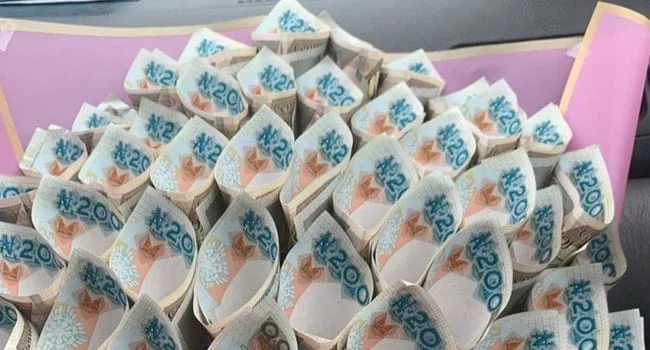
In a major crackdown on currency mishandling, the Central Bank of Nigeria (CBN) has officially classified “money bouquets” as a form of Naira abuse. This directive places the popular gift trend in the same criminal category as spraying, squeezing, selling, and defacing banknotes.
The announcement comes just days before Valentine’s Day 2026. Historically, this period sees a massive surge in demand for creative currency displays. However, the CBN’s stance is unwavering: tampering with the national currency is a criminal offense that carries severe legal consequences.
The Legal Consequences of Currency Tampering
Under the CBN Act, the integrity of the Naira is protected by strict regulations designed to prolong the lifespan of the physical notes. Any individual found guilty of abusing the currency faces a range of penalties.
Statutory Penalties for Naira Abuse:
- Imprisonment: A mandatory minimum of six months in a correctional facility.
- Financial Penalties: A fine of at least ₦50,000.
- Combined Sentencing: Depending on the severity of the damage to the notes, a judge may apply both a fine and jail time.
Enforcement agencies, including the Economic and Financial Crimes Commission (EFCC), have been placed on high alert nationwide. The public is being urged to report any witnessed violations. This collective effort aims to preserve the physical quality and symbolic value of the nation’s legal tender.
Valentine’s Day 2026: A Shift in Gifting Trends
The timing of this ban has sent shockwaves through the Nigerian gift and hospitality industry. For several years, “cash bouquets”—where banknotes are intricately folded, stapled, or glued into floral arrangements—have been the ultimate romantic gesture.
With February 14, 2026, fast approaching, florists and gift vendors are reportedly pivoting their business models. Many have stopped accepting orders for cash-based arrangements to avoid being prosecuted as accomplices to currency abuse.
Social Media Reacts: From Humor to Vigilantism
As news of the directive went viral, Nigerian social media platforms erupted with a mix of humor and relief. For many, the ban provided a convenient excuse for those facing the economic pressure of the “season of love.”
- The “Singles’ Win”: User thefoodnetworknig2 joked, “A win for singles… One down! When are they banning pararan? No peace for the wicked.
- The Loyalty Test: glittaz_ posed a funny ultimatum to their partner, “My Babe, you go collect cash transfer or make I go jail for 6 months to prove I really love you? ????.”
- The Social Media Vigilantes: jhanee_e issued a playful warning, “If I see you with a money bouquet, I go tag CBN. Try me, even if na flowers I go still tag them! ????”
Why Does the CBN Care About Money Bouquets?
The central bank’s concern is rooted in economics. Money bouquets often involve using adhesives, staples, and tight folds that permanently damage the integrity of the paper or polymer. Once a note is defaced or torn, it must be withdrawn from circulation and replaced.
The cost of printing new banknotes is a significant burden on the national budget. By targeting “money bouquets,” the CBN aims to:
- Reduce Mutilation: Discourage practices that render notes unfit for ATMs and circulation.
- Promote Digital Payments: Encourage the transition to the eNaira and other electronic banking platforms.
- Uphold National Pride: Maintain the Naira as a respected symbol of national sovereignty.
Safe and Legal Alternatives to Money Bouquets
You can still show your affection without risking a criminal record. To stay within the law this Valentine’s Day, experts suggest moving away from physical cash displays in favor of these digital and material alternatives:
Conclusion: Protecting the National Symbol
The message from the authorities in Abuja is definitive: show your affection through the heart, not by breaking the law. As the nation prepares for the 2026 “season of love,” the focus shifts toward more sustainable and legal ways of expressing appreciation.
The Naira is more than just paper; it is a shared national asset. By respecting the currency, Nigerians help ensure a more efficient economy and avoid the grim reality of a Valentine’s Day spent behind bars.
READ ALSO: Johannesburg Water Crisis: Residents Protest as Dry Taps Persist for Weeks