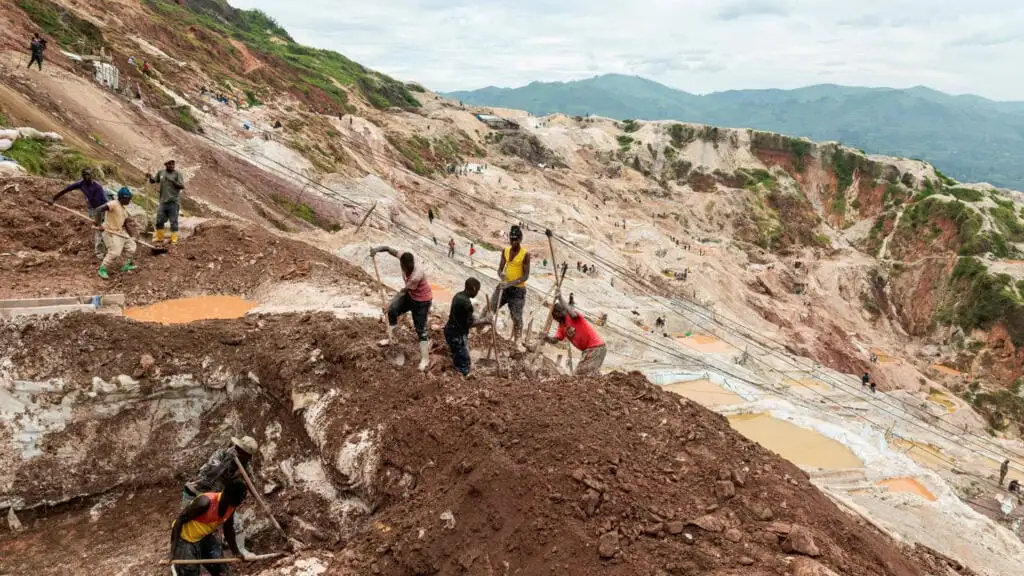
A profound silence fell over a modest courtyard in Goma on Monday as families and survivors gathered to mourn the victims of a catastrophic mining disaster. Last week, heavy rains triggered a massive landslide at the Rubaya coltan mine, burying hundreds of laborers beneath the earth in what is being described as one of the deadliest industrial accidents in the region’s history.
Estimates suggest at least 200 miners perished when the hand-dug tunnels, lacking structural support, collapsed under the weight of the rain-soaked hillside.
The Human Cost of “Digital Gold”
Among those lost was Bosco Nguvumali Kalabosh. His younger brother, Timothée Nzanga, recounted the harrowing efforts to recover the victims. “They extracted the people closest first; several were lifeless,” Nzanga said. It took massive physical effort to free his brother’s body the following day. During the search, rescuers uncovered numerous “unknown” miners whose remains were simply set aside.
The conditions at Rubaya include:
- Artisanal Methods: Miners dig narrow, vertical tunnels by hand, often hundreds of feet deep.
- Lack of Infrastructure: These shafts frequently lack timber supports or emergency escape routes.
- Environmental Risks: Intense tropical rains often turn the surrounding hillsides into unstable mud, leading to secondary collapses.
Survivor Tumaini Munguiko described the terrifying moment the earth gave way. “We were in the mine when the rain started. Suddenly, we saw the hill collapse onto the workers. Some escaped, but many did not.”
Conflict Minerals and Illegal Exploitation
The Rubaya mines are situated approximately 40 kilometers west of Goma. Since 2024, the site has been under the control of the M23 rebel group. Coltan is a high-value mineral essential for the production of smartphones, laptops, and advanced military hardware.
In a statement released via social media, the Congolese government expressed solidarity with the grieving families but also directed sharp criticism toward the rebel forces. Kinshasa accused M23 of “illegally and unsafely exploiting” the nation’s natural resources, prioritizing profit over the lives of the local workforce.
Search Operations and Economic Fallout
Following the tragedy, M23 authorities reportedly halted all artisanal mining activities at the site. However, with the regional economy heavily dependent on coltan exports, the long-term impact on local livelihoods remains uncertain.
For families like the Kalaboshs, the loss is more than emotional; it is an economic catastrophe. “After his passing, only God knows what will become of his family,” Nzanga lamented.
ALSO READ: Iran Threatens to Label European Union Militaries as “Terrorist” Entities