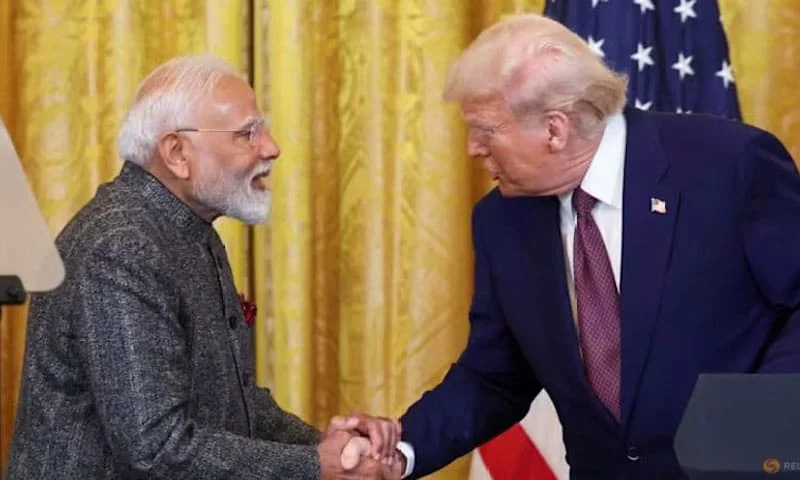
In a major diplomatic breakthrough, U.S. President Donald Trump announced on Monday that a comprehensive trade agreement has been reached with India. As part of this landmark deal, New Delhi has committed to halting its purchases of Russian oil. Instead, India will significantly increase its energy imports from the United States, with the potential to include Venezuelan oil as an alternative source.
This agreement marks a turning point after a year of intense economic friction that had pushed relations between the two nations to an all-time low.
The Roots of the 2025 Trade Conflict
The relationship soured rapidly between April and August 2025 due to a series of aggressive economic maneuvers. President Trump initially surprised Indian officials by imposing a 25% tariff on Indian exports to the U.S. This was quickly followed by a second 25% levy, specifically citing India’s continued reliance on Russian energy.
Key factors of the fallout included:
- 50% Total Duties: Most Indian goods faced a combined tariff of 50%, making them uncompetitive in the American market.
- Diplomatic Protest: India officially labeled these actions as “unfair,” leading to a freeze in high-level communications.
- Geopolitical Tension: Strains increased as the U.S. finalized trade deals with Japan, the EU, and Pakistan while excluding India from similar favorable terms.
The Breakdown of Trade Diplomacy
By the middle of last year, bilateral negotiations had completely stalled. Prime Minister Narendra Modi famously declined an invitation to visit Washington following the G7 summit in Canada, citing the need to protect the interests of Indian farmers. During this period, India pivoted its strategy, striking a landmark trade agreement with the European Union and seeking to stabilize its relationship with China.
President Trump’s repeated offers to mediate the India-Pakistan conflict also served as a major point of contention, leading Prime Minister Modi to delay meetings and phone calls with the U.S. leader.
Market Impact and Economic Resilience
Despite the heavy tariffs, Indian merchandise exports showed surprising resilience. In November 2025, exports to the U.S. actually rose by 21% year-on-year, driven primarily by a surge in electronics. However, other sectors faced severe challenges:
| Sector | Impact Level | Result |
| Electronics | High Growth | 21% Y-o-Y Increase |
| Textiles | Hard Hit | Significant Decline |
| Jewelry | Hard Hit | Significant Decline |
| Auto Parts | Hard Hit | Significant Decline |
While some sectors adapted, the financial markets were less fortunate. Both Indian equity markets and the Indian Rupee were among the worst performers in the emerging markets sector last year. This was fueled by record-breaking sell-offs by foreign investors—a trend that has persisted into early 2026