
Japanese Prime Minister Sanae Takaichi has initiated a major diplomatic row with Beijing. The dispute stems from comments made in the legislature.
She suggested that Tokyo might be compelled to launch a military response if China were to launch an attack on democratic Taiwan.
Historically, leaders in Japan carefully avoided publicly drawing a clear connection between their military and scenarios involving Taiwan.
They upheld a policy of strategic ambiguity, a position also favored by their primary security ally, the United States.
The Catalyst for Conflict
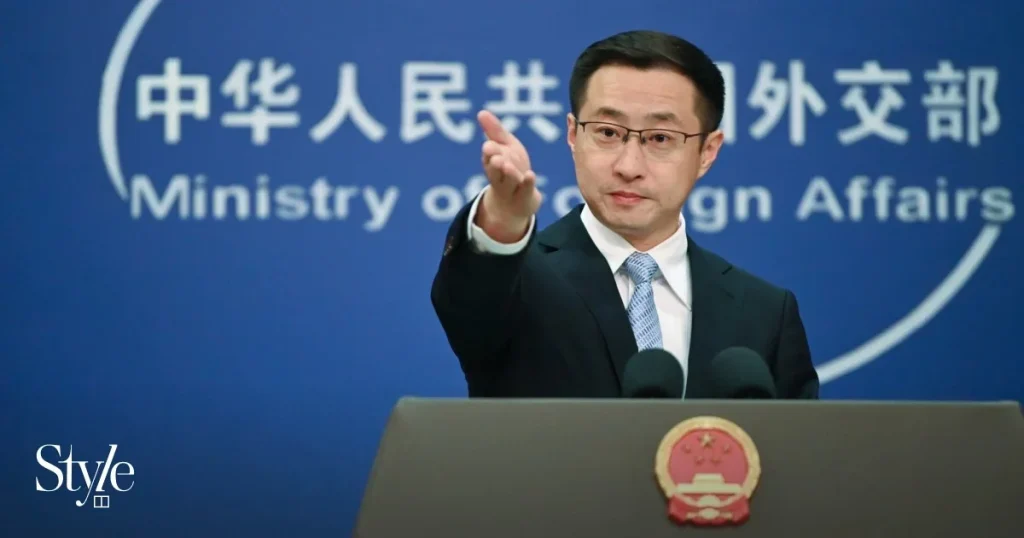
Takaichi’s comments led to an immediate and hostile reaction from a Chinese diplomat based in Japan. Furthermore, Beijing formally registered a diplomatic protest. China denounced the Prime Minister’s statements.
It deemed them a clear intrusion into its domestic governance. Beijing continues to claim sovereignty over Taiwan. It has consistently refused to rule out the use of force to take control of the island.
The Prime Minister was posed a hypothetical scenario by an opposition lawmaker last Friday. The question centered on defining a “survival-threatening situation.” This is a specific legal phrase. Invoking it authorizes a Japanese premier to deploy the nation’s Self-Defense Forces.
Takaichi outlined a potential situation. She argued that a full-scale military attempt by Beijing to subdue Taiwan could legally qualify as an existential threat to Japan.
She later added another layer: if U.S. warships sent to break a Chinese blockade were attacked, Tokyo might be required to intervene militarily to defend its ally and itself.
Strategic and Legal Weight
The physical proximity of Taiwan is critical, sitting just over 110 kilometers (68 miles) from Japanese territory. Sea lanes in the vicinity are crucial trade routes.
Japan’s economy relies heavily on them. Additionally, Japan hosts the largest concentration of the U.S. military stationed abroad.
The term “survival-threatening situation” was broadly defined within a contentious 2015 law. This legislation drastically expanded the capacity of Japan’s traditionally pacifist military to take external action.
This law represented a fundamental shift in Japan’s post-war security stance. Its initial introduction sparked massive public protests.
Takaichi, a strong nationalist, recently took office. She further provoked Beijing’s anger by publicly acknowledging a meeting she held with a Taiwanese representative during a regional summit in Seoul in early November.
Diplomatic Aftershock
The conflict now risks destabilizing relations between Asia’s two largest economies. These ties had been characterized by relative stability in recent years.
The Chinese Consul General in Osaka shared an online news report about Takaichi’s remarks. He accompanied it with a threatening comment: “the dirty head that sticks itself in must be cut off.” Tokyo quickly condemned this public comment as “extremely inappropriate.” The diplomat later deleted the post.
Beijing contended that Takaichi’s statements severely violated the spirit of a 1972 agreement. In that treaty, Japan recognized the People’s Republic of China as the sole legitimate government. Japan also stated it respected Beijing’s stance on Taiwan.
Responding to the Chinese protest on Tuesday, Japan’s Chief Cabinet Secretary, Minoru Kihara, reiterated Japan’s adherence to the 1972 agreement.
He expressed Tokyo’s hope that outstanding issues regarding Taiwan would be resolved through peaceful, ongoing dialogue. Takaichi herself later clarified her remarks were purely “hypothetical.” She indicated a commitment to avoid making similar parliamentary comments in the future.