
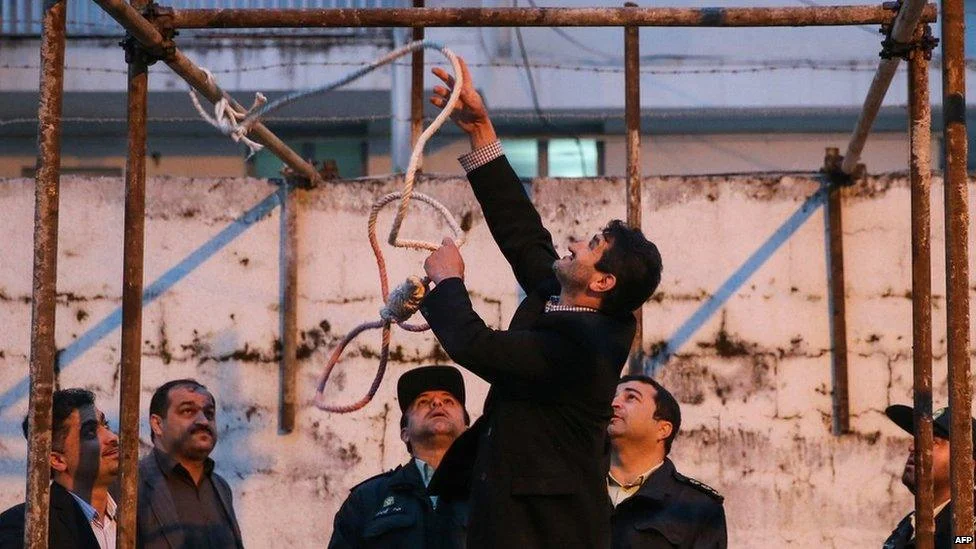
Iranian judicial officials confirmed Tuesday that an individual convicted of murdering a physician in the nation’s southwest was executed publicly.
This act strongly underscored the government’s firm stance on maintaining public safety and order.
The sentence, known as qisas (retribution), was carried out earlier this morning in Yasuj. Yasuj functions as the capital of the province of Kohgiluyeh and Boyer-Ahmad.
The judiciary’s official channel provided reports detailing the execution of the person convicted in the physician’s death.
Judicial Process and Official Justification
The judicial authority verified the meticulous nature of the legal proceedings. The process included a mandated formal mental health evaluation of the defendant.
After the evaluation was concluded, the Supreme Court ratified the sentence. This crucial decision enabled the retribution to be carried out.
The provincial prosecutor, Vahid Mousavian, issued a stern statement. He emphasized the intended symbolic impact of the public execution. He asserted that carrying out this sentence sends a powerful, direct message. This message is aimed at anyone intending to breach the security and civil order of society.
Practice and International Scrutiny
Iran typically executes convicted individuals through hanging. Although most of these judicial punishments occur within prison walls, the authorities occasionally opt for public hangings. These visible executions are generally reserved for particularly high-profile offenses.
The country has been documented by international human rights organizations as ranking second globally in the number of executions.
This places Iran’s rate of capital punishment just behind China. This high frequency of judicial killings subjects Iran’s legal and penal practices to continuous international scrutiny.
Official communications did not provide detailed information concerning the specific motive for the crime. Neither was the relationship between the convicted person and the medical professional clearly identified.
Nevertheless, choosing to perform the execution publicly demonstrates the severity with which the judicial system addresses violence targeting essential community members, such as physicians.
The controversy over public executions is severe globally. Human rights advocates strongly contend that the practice is a cruel and inhumane form of punishment. Conversely, authorities often argue such severe penalties are necessary deterrents.
They believe these acts are vital for upholding public security and fulfilling public demands for immediate justice in serious criminal cases. Confirmation of this execution further intensifies global focus on how Iran applies the death penalty under its existing legal framework.
The Lion’s Roar: Paul Biya Begins Eighth Term After Contested Vote