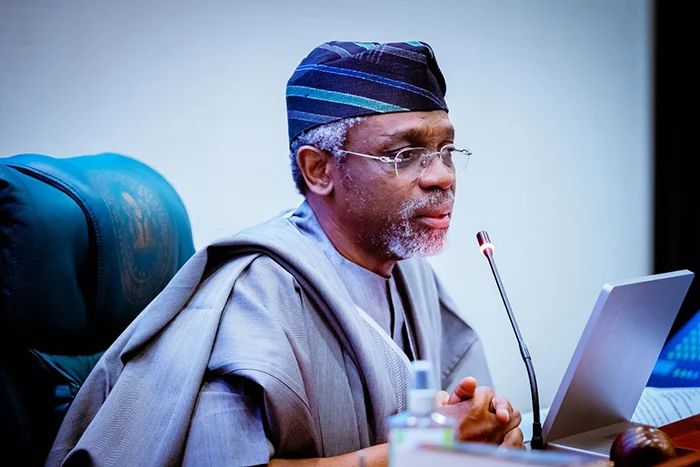
Nigeria’s newly appointed Chief of Staff, Femi Gbajabiamila, announced the formation of a joint committee with the Federal Government (FG), Trade Union Congress (TUC), and Nigeria Labour Congress (NLC) to review proposals for wage increases and establish a framework and timeline for implementation.
This followed the unions’ decision to suspend a planned nationwide strike prompted by the removal of fuel subsidies.
Seven-Point Resolution
Gbajabiamila shared the agreement via his social media handle, outlining a seven-point resolution reached between the FG and the unions:
- Establish a joint committee to review proposals for wage increases or awards and set a framework and timeline for implementation.
- Review the World Bank-financed cash transfer scheme and propose including low-income earners in the program.
- Revive the Compressed Natural Gas (CNG) conversion program agreed with labor centers in 2021, detailing implementation and timing.
- Review issues hindering effective delivery in the education sector and propose solutions.
- Establish a framework for the completion and rehabilitation of Nigeria’s refineries.
- Assess all other demands submitted by the TUC to the FG through the joint committee.
CNG, primarily methane compressed to less than 1% of its standard volume, is a clean-burning fuel. The FG launched a PMS-to-CNG conversion scheme in 2021 to address rising fuel prices.
Union Demands
The TUC, in a statement signed by President Festus Osifo and General Secretary Nuhu Toro, outlined key demands post-subsidy removal, including:
- Increasing the minimum wage from N30,000 to N200,000 before the end of June 2023.
- Granting a tax holiday for employees in both government and private sectors earning less than N200,000 or $500 monthly, whichever is higher.
Following the agreement, the unions suspended the strike notice to continue engagements with the FG to finalize the resolutions.
Context
The removal of fuel subsidies, announced by President Tinubu in his May 29, 2023, inauguration speech, led to a surge in PMS prices and fuel scarcity, prompting the TUC’s demands and strike threat.
The joint committee aims to address these economic pressures and other labor concerns collaboratively.