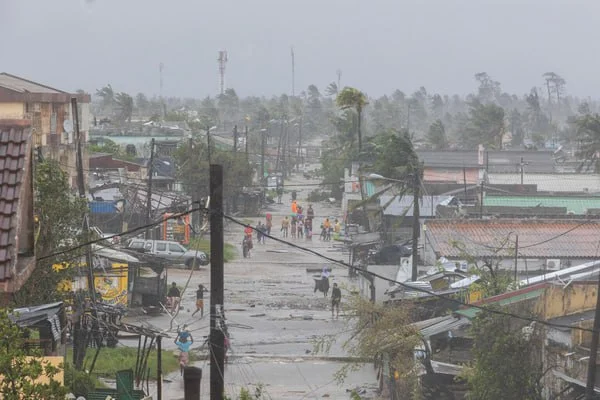
Cyclone Freddy, a record-breaking storm, struck southern Africa for the second time in March 2023, causing severe devastation, particularly in Blantyre, Malawi’s commercial hub.
The storm triggered mudslides that killed at least 190 people in Malawi, including dozens of children, with 584 injured and 37 missing, according to authorities.
In neighboring Mozambique, 20 deaths and 24 injuries were reported.
Rescue workers, including Guilherme Botelho of Doctors Without Borders, warned that the death toll was likely to rise as teams searched destroyed neighborhoods. “The situation is very dire,” Botelho told AFP, highlighting the scale of the crisis.
Humanitarian and Health Risks
The cyclone displaced over 19,000 people in Malawi, exacerbating a cholera outbreak due to contaminated drinking water.
Aid agencies expressed concerns about worsening health conditions, with Malawi already grappling with its deadliest cholera epidemic, which had killed over 1,600 since 2022.
The storm’s impact on infrastructure, including roads and bridges, complicated relief efforts, leaving many stranded in flood-affected areas.
Unusual Path and Record-Breaking Nature
Cyclone Freddy, which formed off Australia in February 2023, crossed the Indian Ocean, hitting Madagascar and Mozambique before looping back to strike again.
This rare trajectory made it one of the longest-lasting tropical cyclones, potentially surpassing Hurricane John’s 31-day record from 1994, as noted by the World Meteorological Organization.
The storm’s second landfall brought torrential rains and winds up to 200 km/h, intensifying destruction in already saturated regions.
Recovery and Future Outlook
Conditions were expected to improve from March 15, 2023, but the immediate focus remained on rescue and relief. Malawi declared a state of disaster, with President Lazarus Chakwera appealing for international aid.
The storm’s impact underscored vulnerabilities in Malawi and Mozambique, where poverty and prior disasters, like Malawi’s cholera crisis, amplified the challenges. Long-term recovery efforts face hurdles due to damaged infrastructure and ongoing health risks.