
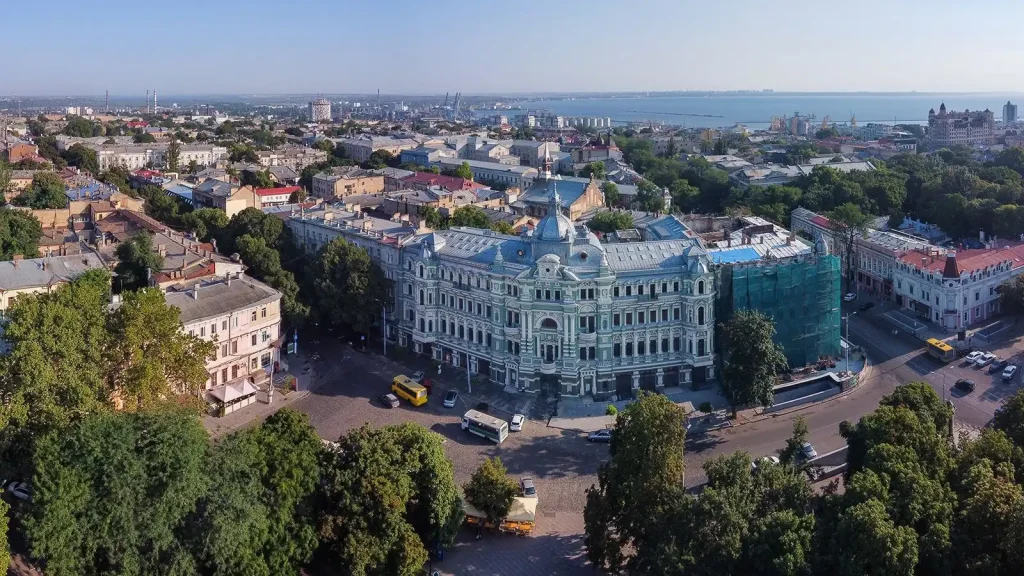
The United Nations Educational, Scientific and Cultural Organization (UNESCO) has added the historic centre of Odesa, Ukraine’s iconic Black Sea port city, to its World Heritage in Danger List, citing threats of destruction linked to the ongoing Russian invasion.
The decision was announced on Wednesday after the 21-member World Heritage Committee voted with six in favour, one against, and 14 abstentions. The move underscores international concern over safeguarding Odesa’s cultural landmarks, which have come under threat despite the city largely being spared in the early months of the war.
A symbol of resilience
Audrey Azoulay, UNESCO’s Director-General, emphasized that the inscription represents a commitment to protecting a city long regarded as a hub of culture and history.
“While the war continues, this inscription embodies our collective determination to ensure that this city, which has always surmounted global upheavals, is preserved from further destruction,” Azoulay said in a statement.
Odesa, renowned for its monumental Potemkin staircase, neoclassical architecture, and rich cultural identity, has endured multiple airstrikes since the Russian offensive began in February 2022. The listing seeks to safeguard Odesa’s historic character and reinforce international monitoring of potential damage.
Celebration in Ukraine
The city’s mayor, Gennady Trukhanov, described the decision as a victory not just for Odesa but for the whole of Ukraine.
“Odesa has the status of a European city. It was built by Italian architects, administered by the French and Greeks. It was originally a European city,” Trukhanov told RFI. “That’s why I feel joy and pride, especially because this is happening at a time when our armed forces are defending our independence. We fought for our city to preserve its cultural heritage.”
Ukrainian President Volodymyr Zelensky, who personally requested the heritage listing in October, also welcomed the move. “Today Odesa got UNESCO protection,” he wrote on Twitter. “I’m grateful to partners who help protect our pearl from the Russian invaders’ attacks.”
Russian backlash
Moscow reacted sharply to the decision, accusing UNESCO of bowing to Western political pressure. Russia’s mission to UNESCO issued a statement calling the move a “politically motivated decision” taken in violation of normal procedures.
“The world heritage committee has ceased to be a platform for professional dialogue,” the mission added. “World heritage status has become a bargaining chip for settling political scores.”
Russia’s Foreign Ministry in Moscow echoed the criticism, claiming Western countries had forced through the vote to isolate Russia diplomatically.
Odesa’s global importance
Founded in the late 18th century, Odesa grew into a multicultural port city known for its architecture, opera house, and vibrant arts scene. Its heritage reflects centuries of European influence, blending Italian, French, Greek, and Russian elements into a unique urban landscape.
UNESCO stressed that despite the war, it would provide technical and financial assistance to help Ukraine safeguard Odesa’s historic centre. The organization also pledged to support emergency repairs in the aftermath of attacks, alongside broader cultural protection efforts across Ukraine.
Other Ukrainian heritage sites
Odesa now joins six other Ukrainian locations already recognized by UNESCO, including the Saint Sophia Cathedral in Kyiv, the historic centre of Lviv, and the wooden churches of the Carpathian region. The inscription of Odesa is seen as a symbolic gesture of solidarity with Ukraine as the conflict drags on.
For many Ukrainians, the recognition is not only about cultural preservation but also about reinforcing Odesa’s identity as a European city resilient in the face of war.