Posidonia oceanica, often called the “lungs of the Mediterranean” by the Mediterranean Wetlands Initiative (MedWet), is a vital seagrass species endemic to the Mediterranean Sea, spanning from Cyprus to Spain. Covering approximately 25% of the seabed between 0 and 40 meters deep, it plays a critical role in carbon sequestration, oxygen production, and coastal protection. “Posidonia oceanica… is one of the most important sources of oxygen provided to coastal waters,” MedWet states, with Tunisia hosting the largest meadows, spreading over 10,000 square kilometers, according to marine ecologist Rym Zakhama-Sraieb. The plant absorbs three times more blue carbon than terrestrial forests and stores it for millennia, mitigating climate change. It also shelters fish, supports biodiversity, and buffers coastal erosion, protecting beaches crucial for tourism, which accounted for 14% of Tunisia’s GDP in 2019.
Threats to Seagrass Meadows
Despite its ecological significance, Posidonia oceanica faces rapid decline due to human activities. “A dangerous cocktail of rampant pollution, illegal fishing using bottom trawling nets, and a failure by people to appreciate its life-giving importance is spelling its demise,” warns a 2022 France 24 report. In the Gulf of Gabes, a 2010 study noted a 50% reduction in seagrass meadows, with a 2023 study estimating a 90% loss since the 1970s due to over 500 million tons of toxic phosphogypsum discharges from phosphate factories. “The sea has been destroyed,” said fisherman Mazen Magdiche from Monastir, reporting a threefold drop in fish catch over 25 years due to pollution and illegal trawling. Coastal development and beach “cleaning” with bulldozers, which remove protective seagrass banks, exacerbate erosion, with 44% of Tunisia’s beaches at risk.
Economic Implications Amid Tunisia’s Crisis
Tunisian marine biologist Yassine Ramzi Sghaier emphasizes the economic stakes: “All of Tunisia’s economic activity depends on Posidonia.” Fishing, contributing 13% to GDP with 40% tied to seagrass meadows, employs at least 150,000 people, while tourism supports up to two million. The 2023 ScienceDirect study estimated economic losses from seagrass decline in the Gulf of Gabes at €105 million in 2014 alone, surpassing the fertilizer industry’s value, with cumulative losses from 1990–2014 exceeding €750 million. Tunisia’s ongoing economic crisis, marked by 9.2% inflation and 15.1% unemployment in 2022 (World Bank), amplifies the urgency of protecting this resource. “There are fewer and fewer fish,” Magdiche noted, highlighting the lack of alternative income sources for coastal communities.
Challenges in Restoration and Protection
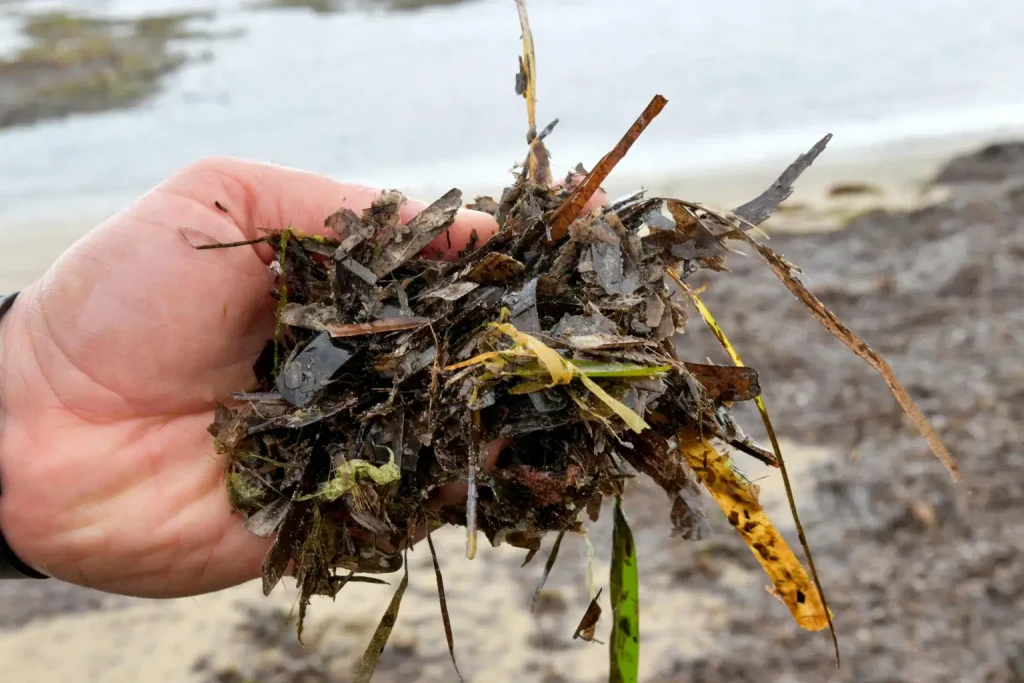
Posidonia oceanica grows slowly, at less than 5 cm per year, making natural recovery difficult. “Destruction has been swift, and replacement slow,” Sghaier observed. Restoration efforts, such as transplanting cuttings or seedlings, have shown limited success, with long-term monitoring often lacking, per a 2021 MDPI study. The Barcelona Convention, to which Tunisia is a signatory, urges protection of seagrass, but enforcement is weak due to insufficient resources, according to biodiversity expert Cyrine Bouafif. Four protected marine zones exist, but Ahmed Ben Hmida of Tunisia’s Coastal Protection Agency warns, “If nothing is done to protect the whole Tunisian Posidonia, it will be a catastrophe.” Public misunderstanding, viewing washed-up seagrass as rubbish, further hinders conservation.
Urgent Need for Action
The decline of Posidonia oceanica threatens Tunisia’s environment and economy, exacerbating the impacts of climate change and economic hardship. “We need Posidonia to capture a maximum of carbon,” Zakhama-Sraieb stressed, underscoring its role in combating global warming. The 2023 Earth Journalism Network report calls for stronger regulations on pollution and trawling, alongside public awareness campaigns, like Zakhama-Sraieb’s translation of a children’s book on seagrass. Without comprehensive action, including enforcing the Barcelona Convention and expanding protected zones, Tunisia risks losing a critical ecosystem, with dire consequences for fishing, tourism, and coastal resilience. As of August 2025, the situation remains critical, demanding urgent policy and community efforts to preserve the Mediterranean’s lungs.