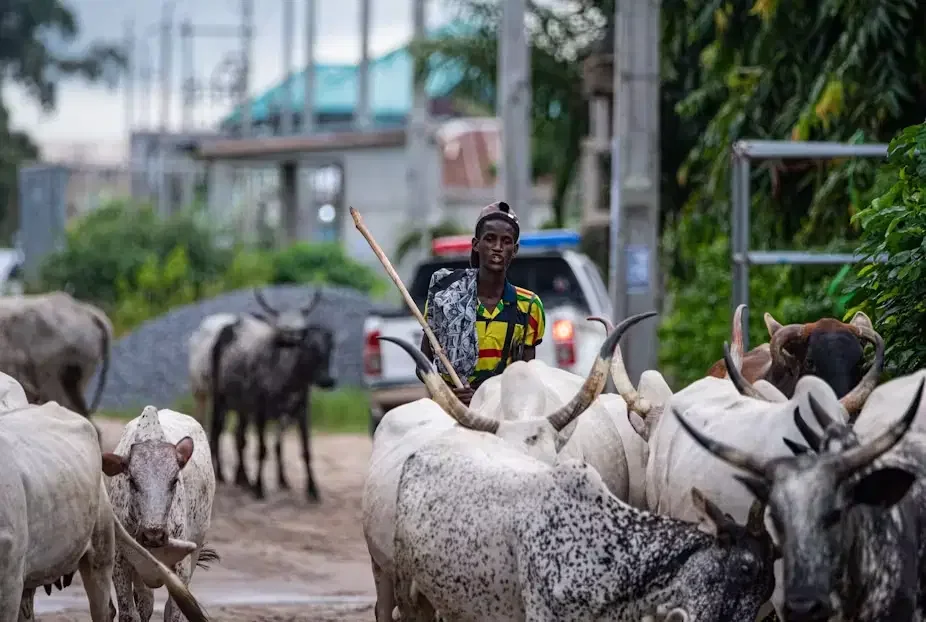
The Federal Government has officially outlawed open grazing across Nigeria. In a major policy shift aimed at ending the deadly conflict between farmers and herders, the government has declared the practice a “capital offense.”
Minister of Livestock Development, Alhaji Mukhtar Maiha, announced the ban on Tuesday in Yola, Adamawa State. He stated that the move is necessary to stop the cycle of violence that has claimed countless lives and displaced thousands.
A “Capital Offense”
The Minister issued a stern warning to cattle rearers during the inauguration of the 1st National Council on Livestock Development. He described the devastation caused by roaming cattle as unacceptable.
“Nigerians have been subjected to untold hardships, including the killing of innocent farmers and herders, as a result of open grazing,” Maiha stated. “There is an urgent need to put a stop to this problem.”
By labeling the violation a capital offense, the government signals a zero-tolerance approach. The administration is now urging herders to embrace ranching, describing it as a safer method that not only prevents conflict but improves the quality and weight of cattle for better profits.
Targeting $74 Billion in Revenue
Beyond security, the ban is part of a broader economic strategy. The government aims to transform livestock development into the country’s second-largest revenue earner, surpassing everything but the oil and gas sector.
Maiha revealed ambitious financial projections for the revamped sector.
- 5-Year Target: The ministry projects generating $74 billion over the next five years.
- Current Progress: Ongoing initiatives have already realized over $14 billion.
A Unified National Strategy
The announcement coincided with the launch of the National Council on Livestock Development. This new body includes directors of livestock from all 36 states and the Federal Capital Territory (FCT). Their task is to ensure that these modernization policies are implemented uniformly across the nation.
Adamawa State Deputy Governor, Professor Kaleptawa Farauta, welcomed the initiative. She noted that Adamawa, as a hub for livestock production, was the ideal venue to launch this new chapter in Nigeria’s agricultural history.