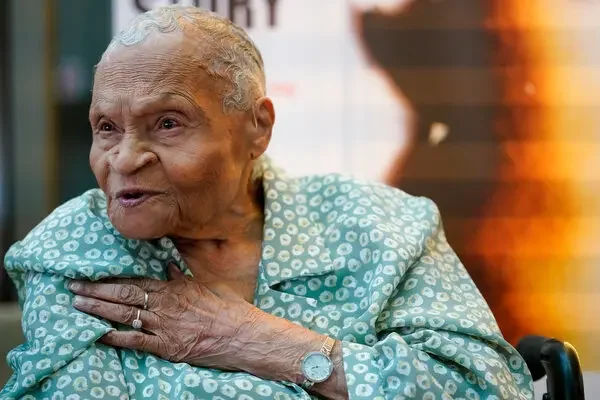
Viola Fletcher, the oldest known survivor of the 1921 Tulsa Race Massacre, has passed away at 111, leaving behind a century of painful memories and a fierce call for justice that echoed to her final days.
A Childhood Shattered by Flames
As a 7-year-old in Tulsa’s thriving Greenwood neighborhood — nicknamed “Black Wall Street” for its prosperous Black-owned businesses Fletcher watched her world burn. On May 31, 1921, a white mob, fueled by racial hatred, unleashed terror after a courthouse clash. They looted, shot, and torched the district, killing up to 300 people and leaving thousands homeless.
Fletcher’s family fled as gunfire rang out and homes crumbled. She later recalled the screams and smoke in vivid detail during her 2021 congressional testimony: “I still see Black men being shot.”
A Life of Quiet Strength
Forced to drop out of school, Fletcher worked as a housekeeper for white families, scraping by in poverty. Yet she never let the trauma silence her.
In her later years, she became a symbol of resilience, testifying before Congress to demand reparations for survivors. A city investigation confirmed Tulsa officials armed the rioters, but court battles blocked compensation.
Mayor’s Tribute: “111 Years of Truth”
Tulsa Mayor Monroe Nichols announced her death Tuesday, calling Fletcher a beacon of grace amid tragedy. “She carried 111 years of truth, resilience, and unyielding spirit,” Nichols said.
“Her passing reminds us how much further Tulsa and America must go.”
The Last Voice Fades
With Fletcher gone, only one survivor remains: 111-year-old Lessie Benningfield, who now holds the weight of Black Wall Street’s untold story alone. Fletcher’s life bridged a dark chapter to today’s reckoning, urging the nation never to forget or repeat the horrors of 1921.