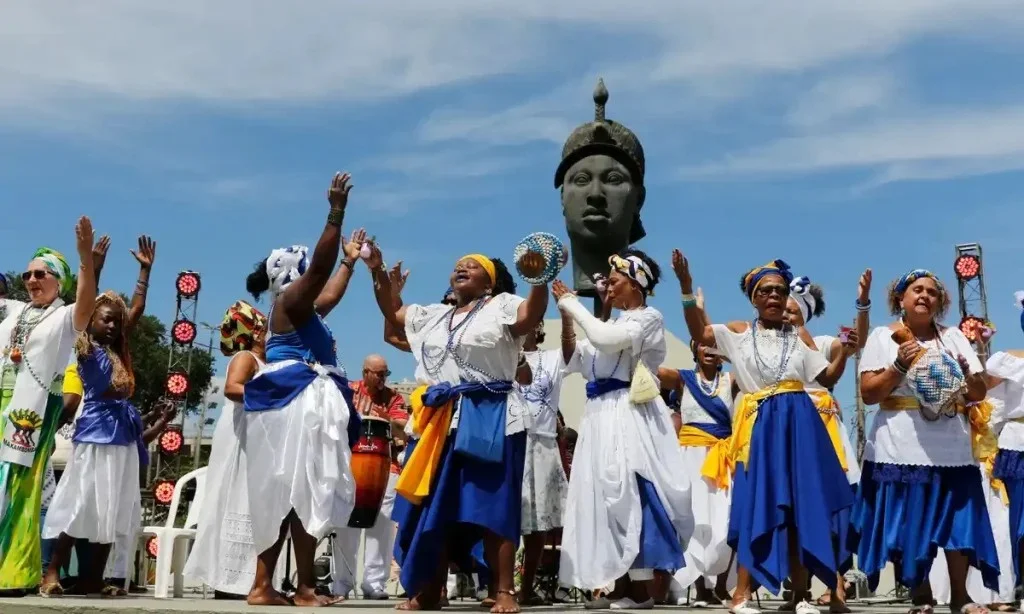
Rio de Janeiro came alive with vibrant energy on Thursday. Thousands of residents filled the streets to celebrate Black Consciousness Day in Rio. This significant national holiday honors Afro-Brazilian history while recognizing the vital contributions of Black communities to the country.
The event serves as a powerful reminder of centuries of resistance. Consequently, the streets were filled with music, dance, and a palpable sense of pride.
A Celebration of Survival
The atmosphere was charged with defiance and joy. For many participants, this day is proof of their resilience in the face of historical hardship. Actor Marcelo Valentim captured the mood perfectly, speaking on the strength found in the city’s favelas.
“We are raised in the favela, we speak straight truth,” Valentim declared. “They wanted me dead, I’m alive. They wanted me poor, I’m rich.”
Honoring Tia Ciata and Samba Roots
A major highlight of Black Consciousness Day in Rio was the Tia Ciata procession. This parade pays tribute to a legendary Black cultural matriarch who played a pivotal role in the city’s history.
In the early 20th century, Tia Ciata’s home served as a creative sanctuary. Musicians gathered there to blend Afro-Brazilian religious traditions with music. Eventually, these gatherings gave birth to samba, the genre that became the soundtrack of the nation.
Gracy Mary Moreira, the icon’s great-granddaughter, explained the deep meaning of the holiday:
“November 20 represents a day of reflection, a day of resistance, of speaking about our culture. So this is a day when we celebrate our culture.”
The Legacy of Zumbi dos Palmares
The date of the holiday is deeply symbolic. November 20 marks the death of Zumbi dos Palmares, a historic warrior and leader.
Zumbi fought tirelessly against the enslavement of Africans by Portuguese colonizers. Today, he stands as an enduring symbol of the fight for African freedom in Brazil.
________________________________________________