
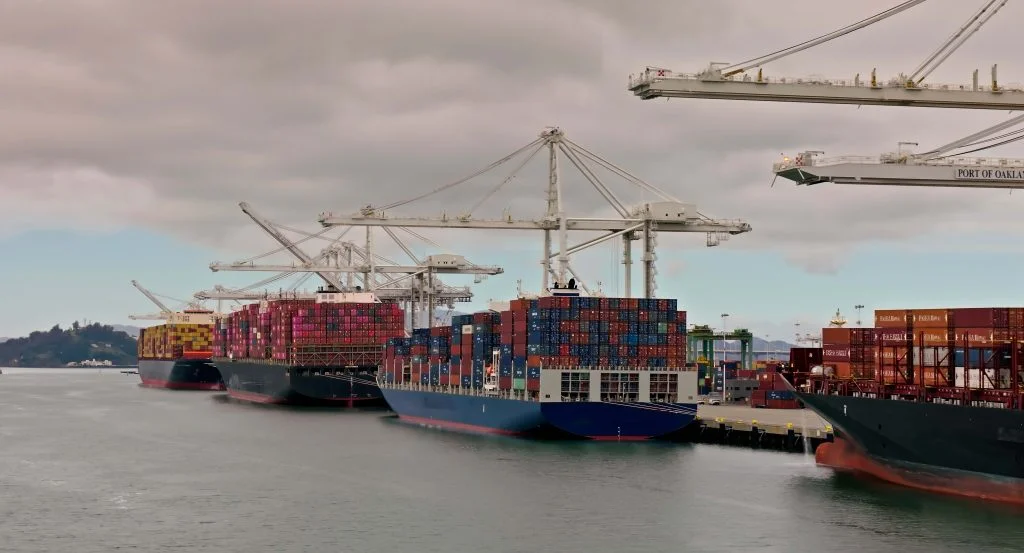
China initiated a significant economic move on Monday, declaring a one-year pause on specific fees applied to vessels connected with the United States.
This action is reciprocal, matching Washington’s recent decision to halt similar duties targeting Chinese ships.
It represents the latest tangible step in solidifying the fragile trade truce between the world’s two largest economies.
Reciprocal Halt on Maritime Duties
For many months, the two global superpowers engaged in tense trade friction, marked by continuously escalating tariffs.
However, a significant turning point came after a meeting between leaders in South Korea last month. This engagement led to a mutual pact to reduce some of the previously implemented punitive economic policies.
The cessation of the “special port fees” which affected US-built or US-operated vessels calling at Chinese ports took effect early Monday afternoon (13:01 Beijing time). A confirmation from China’s transport ministry immediately announced the stoppage of these charges.
This sector remains critical to global commerce. Although the US shipbuilding industry’s dominance, rooted in the post-Second World War era, has significantly diminished, it still accounts for a tiny portion of global output today.
Conversely, Asia now leads this field, with China responsible for building almost half of all new ships launched worldwide, ahead of competitors like South Korea and Japan.
Sanctions Lifted on Shipbuilding Affiliates
In a related measure, Beijing also agreed to lift sanctions previously imposed on the US-based subsidiaries of Hanwha Ocean, a major South Korean shipbuilder.
China’s commerce ministry explained that this year-long suspension, active from November 10, directly corresponded with the US halt on port fees targeting Chinese-built and operated ships.
The official online statement read: “In light of this [US suspension]… China has decided to suspend the relevant measures.”
The sanctions were initially applied by China in October against five US affiliates of Hanwha. This was a direct response to a US government investigation, which had concluded that China’s strong control over the shipbuilding industry constituted unfair practice.
Before the recent suspension, Chinese entities and individuals were prohibited from engaging with these particular Hanwha firms.
Furthermore, a planned domestic inquiry into whether the US investigation harmed China’s own shipbuilding supply chain was also postponed for one year, according to the transport ministry.
Broader Signs of Economic Thaw
These latest suspensions are strong evidence of improving economic ties following the high-level leadership meeting.
Earlier this week, China had already committed to prolonging the suspension of additional tariffs on specific US imports, keeping them steady at a 10 percent rate.
Furthermore, certain tariffs on key US agricultural products, including soybeans, were temporarily suspended.
Other significant actions included Beijing agreeing to pause restrictions on the export of rare earth technology for one year. Simultaneously, China lifted export bans on three technologically crucial metals: antimony, gallium, and germanium.
In parallel action, Washington previously confirmed it would suspend, also for one year, export restrictions targeting foreign companies that are at least 50 percent owned by entities on a US blacklist, as detailed by the Chinese commerce ministry.