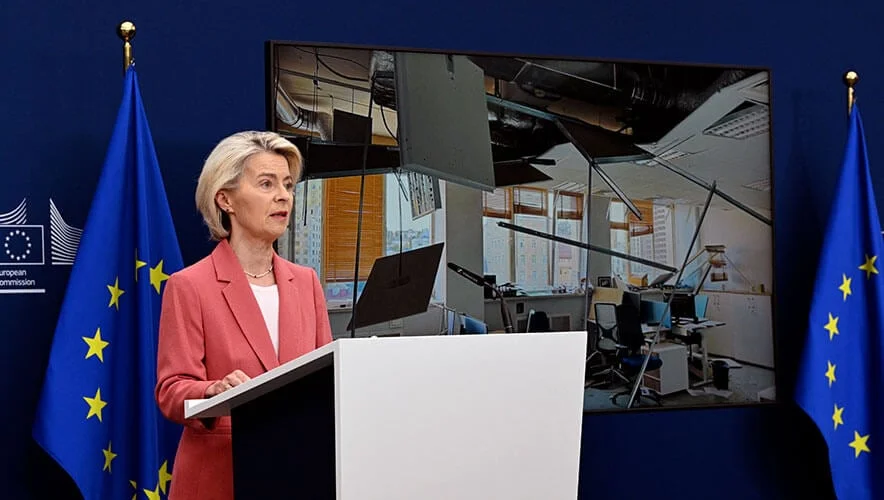
The European Commission has proposed halting Russian liquefied natural gas (LNG) imports starting January 1, 2027, accelerating the original timeline by one year.
Announced on September 19, 2025, this measure is part of the EU’s 19th sanctions package against Russia, designed to intensify economic pressure amid ongoing geopolitical tensions.
Comprehensive Sanctions Package
The forthcoming sanctions, set for release later today, target multiple facets of Russia’s economy. They focus on Moscow’s shadow tanker fleet, used to evade oil export limits, and extend to cryptocurrency transactions, Russian and Central Asian banks, Chinese refineries, and special economic zones.
Additionally, the package closes a customs loophole that has allowed Russia to import dual-use military goods, further tightening the economic screws.
Catalyst for Change
The decision to expedite the LNG ban followed a recent discussion between European Commission President Ursula von der Leyen and U.S. President Donald Trump.
Initially planned for 2028, the ban was moved forward after Trump urged the EU to reduce its dependence on Russian energy more swiftly, aligning with broader support for Ukraine’s resistance efforts.
Strategic and Economic Impacts
These measures aim to weaken Russia’s war funding by disrupting its shadow fleet and financial channels while securing Europe’s energy independence.
Including Chinese entities in the sanctions marks a broader approach to curbing Moscow’s economic reach.
However, as the proposal awaits approval from EU member states, debates are likely to arise over the economic consequences, particularly for countries heavily reliant on Russian LNG.
Looking Ahead
The 2027 LNG ban could significantly alter Europe’s energy market, increasing reliance on alternative suppliers like the U.S. and Qatar.
The influence of transatlantic coordination, underscored by Trump’s involvement, highlights a unified stance against Russia.
As details of the sanctions package emerge, focus will shift to enforcement mechanisms and potential exemptions, with the EU aiming to maintain consistent pressure on Moscow while navigating internal economic challenges.