Nigeria’s federal government has rolled out a new package of incentives aimed at attracting large-scale investment into the country’s agricultural sector.
Announced on Tuesday, September 16, 2025, the measures seek to create millions of rural jobs, strengthen food systems and align with President Bola Tinubu’s broader economic reforms.
Shettima Outlines Plans at FAO Investment Forum
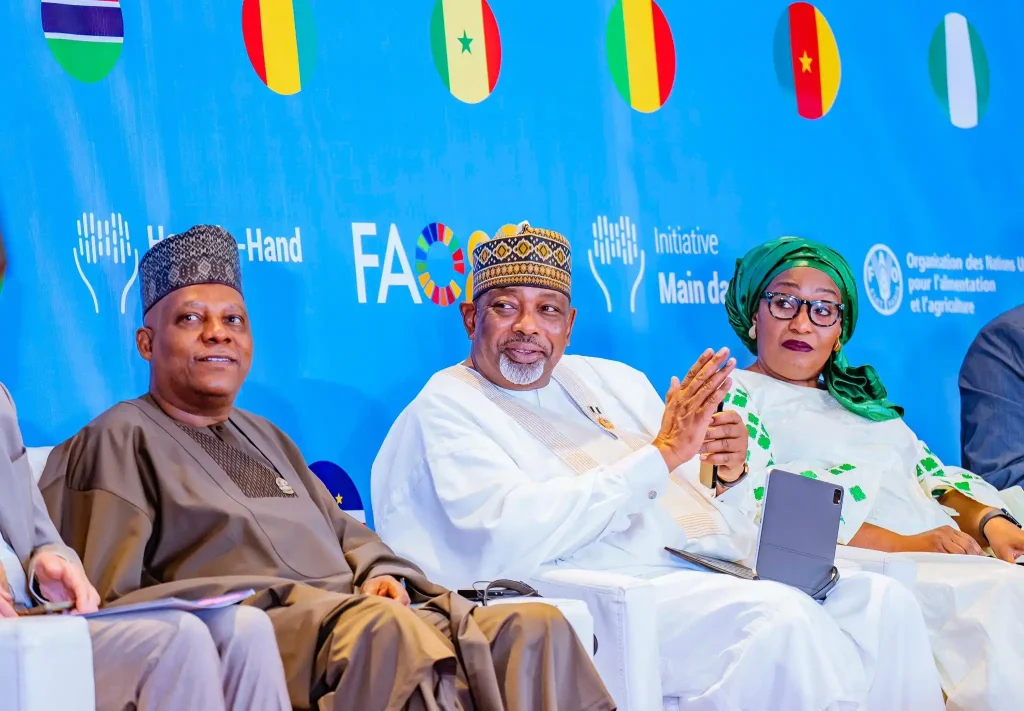
Vice President Kashim Shettima unveiled the initiative at the UN Food and Agriculture Organization’s Hand-in-Hand Investment Forum in Abuja.
Calling hunger a global challenge that “exposes the fragility of humanity,” he said the plan would boost irrigation, improve access to finance and modernize farming practices to meet rising food demands.
Key Measures to Support Farmers
According to details shared by his media aide, Stanley Nkwocha, the government’s blueprint includes:
- Easier land registration for investors and farmers
- Expansion of mechanized farming and large-scale irrigation
- Strengthened credit facilities for producers and agribusinesses
These reforms aim to cushion the impact of rising food costs, climate change and other pressures while reducing Nigeria’s dependence on food imports.
Tapping Untapped Potential
Shettima highlighted that Nigeria has the capacity to irrigate more than three million hectares of farmland but currently uses less than 10% of that potential.
He argued that “smart irrigation” could triple crop yields, build resilience to climate shocks and accelerate rural development.
National Development Goals
The initiatives complement Nigeria’s 2021–2025 National Development Plan, which targets lifting 35 million people out of poverty and creating 21 million new rural jobs.
“Food security is essential for national and global stability,” Shettima said.
Ministers and Partners Weigh In
Agriculture Minister Abubakar Kyari cited Nigeria’s fertile soils, favorable climate and vibrant consumer market as attractive conditions for investors.
Budget Minister Atiku Bagudu stressed agriculture’s role in diversifying the economy under the Renewed Hope Agenda.
FAO’s representative, Hussein Gadain, welcomed the policy shift, calling the Hand-in-Hand Initiative “a catalyst for transforming Nigeria’s food systems.”
EU delegation head Gautier Mignot reaffirmed the bloc’s support, noting more than €80 million invested in agricultural value chains across seven states.
Farmers Urge Action and Transparency
Farm leaders reacted with cautious optimism. Kabir Kebram of the All Farmers Association of Nigeria said the measures “could transform agriculture if implemented effectively.”
Peter Dama of the Competitive African Rice Forum warned that “policy promises must be backed by delivery,” citing delays in past equipment programs.
Women farmers also raised concerns. Chinasa Asonye of SWOFON criticized low levels of support for smallholder women, calling for affordable credit, women-friendly equipment and better access to land.
She noted Nigeria’s agricultural budget remains under 2%, far below the 10% commitment under the Malabo Declaration.
Looking Ahead
If fully executed, these incentives could revitalise Nigeria’s agricultural sector, generate millions of jobs and strengthen food security.
The government is inviting both local and international investors to participate in building a more resilient and prosperous rural economy.
Simeone Confident Atletico Can Upset Liverpool Despite Injuries