
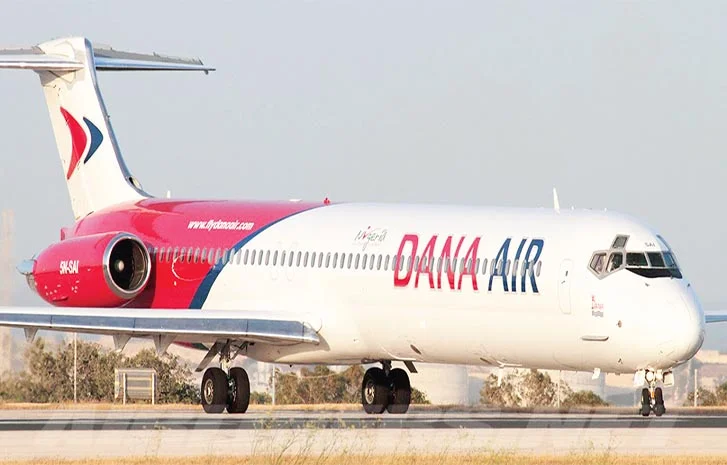
On November 13, 2020, Dana Air’s Chief Operating Officer, Obi Mbanuzuo, announced the airline would launch daily flights from Lagos to Enugu and Abuja, and add flights between Abuja and Owerri, starting November 17.
The move responded to customer demand for Enugu services and increased Abuja-Owerri frequency, aiming to offer convenient schedules and affordable fares. Mbanuzuo highlighted Dana Air’s commitment to reliable service, urging passengers to book via www.flydanaair.com, the airline’s mobile app, or WhatsApp at 07051190363.
The expansion aimed to support Nigeria’s economic recovery following the COVID-19 pandemic and October 2020 EndSARS protests.
Context and Aviation Sector Challenges
Dana Air, operating nine aircraft and 27 daily flights to five cities, including Lagos, Abuja, Port Harcourt, Owerri, and now Enugu, faced significant challenges. The COVID-19 pandemic grounded most commercial flights in early 2020, slashing airline revenues.
The EndSARS protests disrupted logistics, delaying flights and damaging businesses. The Enugu route revival aimed to boost regional connectivity, supporting local economies.
The airline’s strategy focused on digital booking platforms to streamline reservations, responding to growing online travel demand.
Developments by August 2021
By August 2021, Dana Air maintained its expanded routes, though specific performance details for the Enugu and Abuja-Owerri flights are unavailable.
Nigeria’s aviation sector showed signs of recovery, but high fuel costs and competition from larger airlines strained smaller carriers like Dana Air.
The airline’s on-time performance supported its reputation, though some passengers reported inconsistent customer service.
The absence of robust government support for aviation infrastructure, unlike efforts to certify MKO Abiola Stadium for international matches, limited the sector’s growth.
Critical Analysis
Dana Air’s expansion was strategic, targeting Enugu’s sizable passenger base to drive revenue. However, Nigeria’s outdated airport infrastructure risked operational inefficiencies, delaying flights and increasing costs.
The EndSARS protests exposed systemic vulnerabilities, disrupting supply chains and passenger confidence.
Dana Air’s digital booking focus aligned with market trends, but its limited fleet size restricted scalability compared to competitors.
The insurance sector’s recapitalization struggles, driven by similar economic pressures, highlighted the need for regulatory flexibility, which aviation also lacked.
Path Forward
Dana Air must invest in fleet maintenance to reduce delays and enhance reliability. Nigeria should prioritize airport upgrades to meet international standards, improving efficiency. Community engagement programs can build passenger loyalty, boosting ticket sales.
Clear regulations, modeled on global aviation standards, can minimize operational disputes. Without these reforms, Nigeria’s aviation sector risks stalling, threatening Dana Air’s growth and the broader economic recovery.