On March 2, 2022, French President Emmanuel Macron, speaking on television with a Ukrainian flag behind him, vowed to maintain dialogue with Russian President Vladimir Putin to “unstintingly seek to convince him to renounce violence” and prevent the Ukraine conflict’s spread.
Following a 90-minute call on February 28, Macron urged Putin to stop attacks on civilians, secure roadways south of Kyiv, and respect humanitarian law, with Putin reportedly agreeing to these points, though no immediate action followed.
Macron, who had unsuccessfully sought a Putin-Biden summit, emphasized, “We are not at war with Russia,” praising the Russian people’s World War II sacrifices and supporting anti-war protesters, over 6,000 of whom were detained in Russia by March 2.
Ukrainian Resistance and Russian Tactics
French Foreign Minister Jean-Yves Le Drian, on March 3, warned on France 2 TV that Russia, thwarted by Ukraine’s “exemplary, courageous, and strong resistance,” was shifting to besieging cities like Kharkiv and Kyiv, tactics reminiscent of Russia’s devastating campaigns in Aleppo, Syria, and Grozny, Chechnya.
Russian paratroopers landed in Kharkiv on March 2, triggering street clashes, while shelling killed four and damaged key buildings, per Ukrainian emergency services.
Le Drian noted Russia’s failed “blitzkrieg” expectations, with Ukraine reporting 352 civilian deaths, including 14 children.
France planned to propose a UN Security Council ceasefire resolution on March 3, with Le Drian insisting, “We will not negotiate under terror,” and calling Russia’s actions “despicable aggression” isolating it globally.
Humanitarian and Strategic Shifts
The invasion, launched February 24, displaced 836,000 people, including African students facing border discrimination, and prompted France to advise its citizens to leave Russia due to escalating risks.
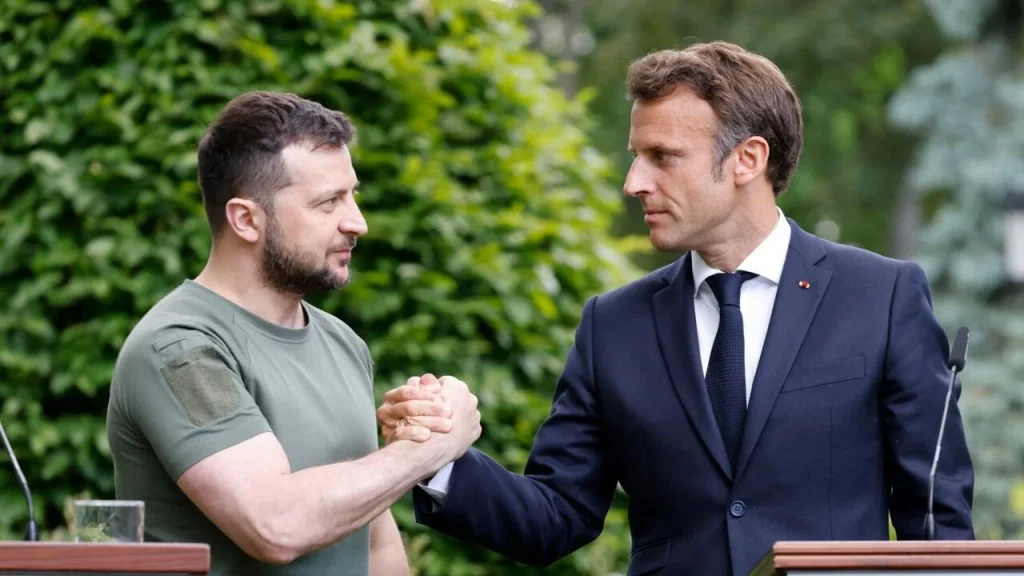
Macron hailed Ukrainian President Volodymyr Zelenskyy as “the face of honour, of liberty, and of bravery” for remaining in Kyiv amid bombardments, including a March 1 strike on the Babi Yar memorial.
He warned that “the days to come will likely be harder,” with Russian forces controlling Kherson and encircling Mariupol.
The EU and NATO supplied arms but ruled out troops, while sanctions, including SWIFT exclusions, crashed the ruble by 30%.
Macron announced a March 10–11 EU summit at Versailles to boost European defense and energy independence, stating, “We can no longer depend on Russian gas.”