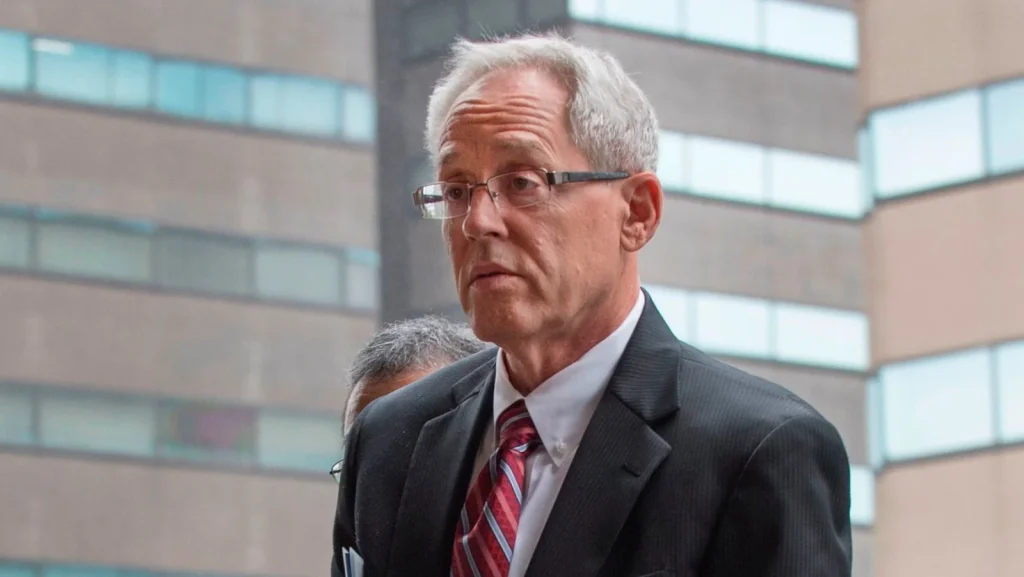
On March 3, 2022, a Tokyo court sentenced Greg Kelly, a 65-year-old former Nissan executive, to a six-month prison term, suspended for three years, in a high-profile case tied to the financial misconduct allegations against ex-Nissan CEO Carlos Ghosn.
Arrested in November 2018 alongside Ghosn, Kelly was found not guilty of under-reporting Ghosn’s compensation for 2010–2016 but guilty for fiscal year 2017, involving 9.1 billion yen ($79 million, €71 million) in unreported payments.
Prosecutors had sought a two-year prison term, accusing Kelly of conspiring with Ghosn and Nissan executive Toshiaki Ohnuma to hide deferred compensation to retain Ghosn post-retirement.
Judge Kenji Shimizu ruled that by 2017, Kelly “was aware that there was an unpaid remuneration” and participated in a conspiracy.
Kelly’s Reaction and Appeal
Kelly expressed shock at the verdict, stating, “I have consistently acted by prioritizing the best interests of Nissan, and I absolutely did not take part in illegal activities.”
He called himself “innocent of all charges” and questioned the guilty finding for 2017, announcing plans to appeal.
His defense argued that the proposed payments were never finalized, merely exploratory discussions to legally retain Ghosn and prevent him from joining competitors like Hyundai.
Kelly’s three-year detention in Japan, joined by his wife Dee, who took Japanese lessons to secure a visa, drew attention, with U.S.
Ambassador Rahm Emanuel noting relief that the Kellys could now leave Japan. “While this has been a long three years for the Kelly family, this chapter has come to an end,” Emanuel said.
Ghosn’s Escape and Nissan’s Role
The case centered on Ghosn, who fled Japan in December 2019, hidden in an audio-equipment box, to Lebanon, leaving Kelly to face charges alone.
Ghosn, holding French, Brazilian, and Lebanese citizenship, claimed from Beirut that he and Kelly were victims of a “palace coup” by Nissan executives fearing a merger with Renault.
He alleged a conspiracy involving Japanese prosecutors, stating, “If he’s guilty, many Japanese should also be in prison.” Nissan pleaded guilty in a separate case, fined 200 million yen ($1.7 million, €1.5 million) on March 3.
Business lawyer Stephen Givens told AFP that Kelly was arrested to pressure him to testify against Ghosn, but Ghosn’s escape left prosecutors with a “weak, free-standing case.”
Broader Implications
Japan’s 99% conviction rate made Kelly’s partial acquittal notable, as the case was a first for prosecuting unreported executive compensation under the Financial Instruments and Exchange Act.
The trial, closely watched globally, raised questions about Japan’s judicial system, with critics like Ghosn alleging prosecutorial bias.
Two Americans, Michael and Peter Taylor, who aided Ghosn’s escape, were extradited from the U.S. and sentenced to 20–24 months in 2021.
The case unfolded amid global crises, including Russia’s invasion of Ukraine, which saw SWIFT sanctions and African students facing border discrimination, and the UNEA-5’s focus on plastic pollution. Posts on X in 2022 questioned Nissan’s motives, with some calling Kelly a “scapegoat” for corporate power struggles.
Context and Fallout
Kelly’s detention strained U.S.-Japan relations, with Emanuel prioritizing the case. Ghosn’s escape embarrassed Japanese authorities, prompting tighter bail protocols.
By 2025, Ghosn remained in Lebanon, untried due to no extradition treaty, while Kelly’s appeal continued.
The case highlighted tensions in the Nissan-Renault alliance, with Nissan’s 2021 financial losses of $1.4 billion reflecting ongoing challenges.
The verdict offered Kelly freedom to leave Japan but left unresolved questions about corporate governance and international legal cooperation in high-stakes financial cases.