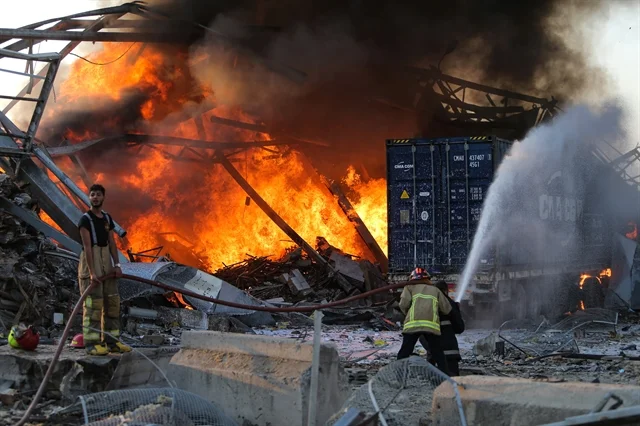
On August 4, 2020, a massive explosion at the Port of Beirut killed at least 78 people and injured approximately 4,000, with officials expecting the death toll to rise as rescue efforts continue.
The blast, one of the largest non-nuclear explosions in history, sent shockwaves across the city, causing widespread damage and leaving an estimated 300,000 people displaced.
Cause Linked to Ammonium Nitrate
Lebanese authorities identified 2,750 tonnes of ammonium nitrate, stored unsafely in a port warehouse since 2013, as the likely cause.
The chemical, confiscated from the MV Rhosus, a Moldovan-flagged ship docked in Beirut due to technical issues, detonated after a fire broke out nearby, possibly triggered by welding work.
The ammonium nitrate was stored without adequate safety measures, despite repeated warnings from customs officials.
Official Response and Investigation
President Michel Aoun called the storage conditions “unacceptable” and vowed the “harshest punishments” for those responsible. An investigative committee was tasked with identifying culprits within five days, and Beirut was declared a disaster-stricken city.
A two-week state of emergency was proposed, with import traffic redirected to Tripoli’s port. The Lebanese Red Cross deployed 75 ambulances and 375 medics, setting up triage stations to treat non-critical injuries.
Impact on Infrastructure and UNIFIL
The explosion damaged nine hospitals, exacerbating strain on Beirut’s healthcare system amid the Covid-19 pandemic, and caused an estimated $10-15 billion in property damage. A UNIFIL ship at the port was damaged, with several peacekeepers critically injured.
The US embassy warned of toxic gases, including ammonia and nitrogen oxides, urging residents to stay indoors and wear masks
U.S. Claims and Controversy
U.S. President Donald Trump called the explosion a “terrible attack,” suggesting it was caused by a bomb, though he provided no evidence.
Lebanese officials, including Prime Minister Hassan Diab, attributed the blast to negligence, with no indication of deliberate intent.
Human Rights Watch later reported that officials, including Aoun and Diab, were aware of the ammonium nitrate’s risks but failed to act, potentially violating the right to life under international law.
Ongoing Challenges
The explosion, which registered as a 3.3-magnitude seismic event, compounded Lebanon’s existing economic and political crises.
Investigations have faced obstruction, with no official report released by mid-2021, prompting calls for an international inquiry.
The tragedy highlighted systemic corruption at the port, where the ammonium nitrate was stored alongside fireworks and other flammable materials, increasing the risk of detonation.