Dakuku Peterside, Director General of the Nigerian Maritime Administration and Safety Agency (NIMASA), detailed plans to tackle piracy in the Gulf of Guinea following the 2019 Global Maritime Security Conference in Lagos.
Nigeria is expected to lead regional efforts, collaborating with international partners due to the shared nature of open seas.
Peterside emphasized updating legal frameworks, with Nigeria pioneering standalone anti-piracy legislation in West and Central Africa. He stressed the need for interoperable maritime domain awareness assets and enhanced naval capacity through joint operations and training.
Global Maritime Security Conference Outcomes
The conference highlighted the untapped potential of Africa’s blue economy due to leaders’ limited awareness and investment.
Peterside announced the formation of an expert group to implement resolutions with the African Union, IMO, UN, ECOWAS, and others. A follow-up conference is planned within two years to assess progress.
The event spurred global action, with the EU’s Friends of Gulf of Guinea and Portugal’s Atlantic Defence Centre focusing on the region’s security challenges.
Deep Blue Project and Piracy Trends
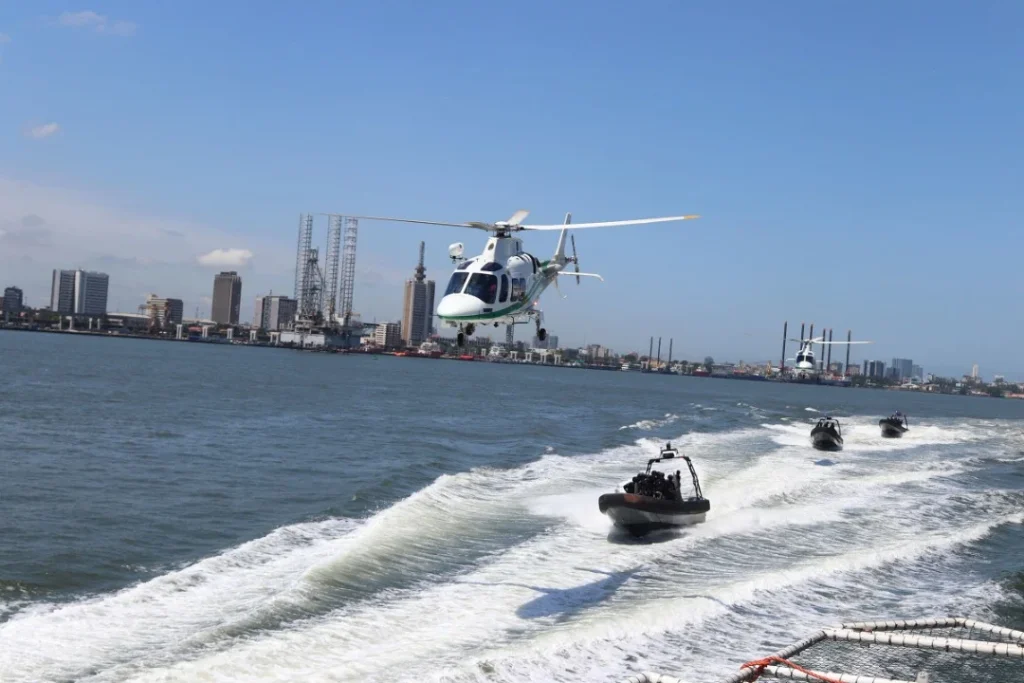
The Deep Blue project enhances intelligence, tracking suspicious vessels and illegal activities, though it’s not yet fully operational. Peterside noted a significant drop in Nigeria’s pirate attacks, per the International Maritime Bureau, but the Gulf of Guinea remains a global piracy hotspot.
Nigeria is integrating intelligence systems and conducting joint operations with regional neighbors to strengthen security.
Blue Economy and Economic Contribution
Peterside highlighted the maritime sector’s substantial but underreported contribution to Nigeria’s GDP, particularly via Customs revenue. Addressing security and illegal fishing could boost fisheries, shipping, and cabotage.
NIMASA is engaging the Ministry of Finance to mainstream the blue economy in national planning, supported by a high-level committee led by the Vice President.
Streamlining Vessel Inspections
To address operators’ concerns about multiple vessel boardings, NIMASA is developing a harmonized standard operating procedure with other agencies to streamline inspections, aligning with the government’s Ease of Doing Business initiative. A 50% reduction in agencies boarding vessels has already been achieved.