
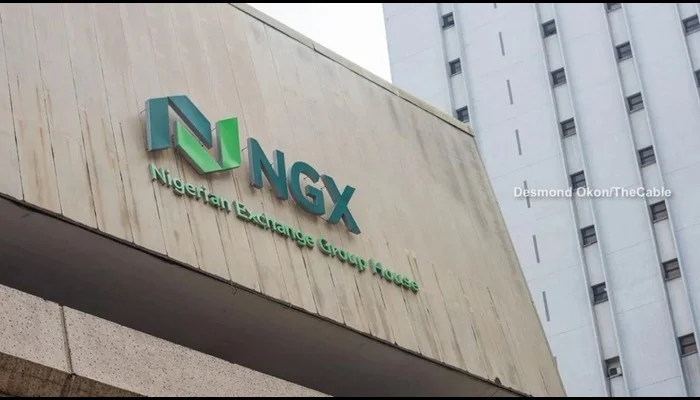
On January 8, 2020, the Nigerian Stock Exchange (NSE) recorded its largest daily gain since December 2018, with the All Share Index (ASI) rising 3.5% to close at 28,562.48 points.
The market capitalisation increased by N471 billion, reaching N13.8 trillion from N13.3 trillion, driven by a shift from low-yield fixed income assets to equities.
Drivers of the Rally
The Central Bank of Nigeria’s (CBN) October 2019 ban on local investors in Open Market Operation (OMO) treasury bill auctions led to excess demand in fixed income, dropping one-year Nigerian Treasury Bill yields from 15% in January 2019 to 5.2% at the latest auction.
This low-yield environment, coupled with attractive dividend yields, pushed investors toward equities. Higher oil prices, briefly above $70/barrel after Iran’s strikes on US-Iraqi bases, also fueled the rally, though prices later settled at $68.60/barrel.
Sectoral Performance
All sectors closed positive, led by the Industrial Goods Index (+6.2%), driven by Dangote Cement (+9.3%) and WAPCO (+5.7%). The Banking Index gained 3.7%, with Stanbic IBTC (+6.3%), FBNH (+10.0%), and Zenith Bank (+3.8%) leading. The Insurance Index rose 2.7%, supported by Mansard Insurance (+2.5%) and CHIPLC (+8.3%).
The AFR-ICT and Consumer Goods Indices increased 1.0% and 0.3%, respectively, due to MTN Nigeria (+1.8%), Flour Mills (+8.8%), and NASCON (+3.8%). The Oil & Gas Index edged up 0.2% with Conoil (+9.7%) and Oando (+1.3%).
Trading Activity and Outlook
Top traded stocks by volume were UBA (156.0 million units), Zenith Bank (86.1 million units), and Access Bank (82.4 million units), while Zenith Bank (N1.9 billion), MTN Nigeria (N1.3 billion), and UBA (N1.1 billion) led by value.
Year-to-date returns reached 6.4%. Analysts noted the rally’s reliance on local investors may not be sustainable due to limited capacity, but upcoming corporate earnings could maintain momentum.