Kinshasa, Democratic Republic of Congo – On June 27, 2020, Célestin Tunda Ya Kasende, the Democratic Republic of Congo’s Vice-Prime Minister and Minister of Justice, was briefly arrested at his Kinshasa home and questioned at the Court of Cassation before being released hours later.
The arrest followed a clash with President Félix Tshisekedi over controversial judicial reforms proposed by allies of former President Joseph Kabila, exposing deep rifts in the ruling coalition.
Arrest and Release
Tunda, a lawyer and senior member of Kabila’s Common Front for Congo (FCC), was taken into custody around 5:40 PM after police surrounded his residence in Ngaliema, Kinshasa.
According to ACTUALITE.CD, the arrest stemmed from Tunda’s “personal initiative” to transmit government opinions on judicial reform bills to the National Assembly on June 18, without approval from the Council of Ministers or Tshisekedi.
He was questioned for alleged “forgery and use of forgery” but released the same day, as confirmed by Kinshasa’s police chief, Sylvano Kasongo.
“I am serene. I’m a member of the government and I have immunity,” Tunda told AFP before his arrest, highlighting his belief that the action violated his ministerial protections.
FCC leaders, including Emmanuel Ramazani Shadary, denounced the arrest as an attempt to intimidate, likening it to tactics worse than those under Mobutu’s dictatorship.
Judicial Reforms at the Heart of the Conflict
The proposed reforms, introduced by FCC lawmakers Aubin Minaku and Garry Sakata, aimed to define the Justice Ministry’s authority over judges, which critics, including Tshisekedi’s Union for Democracy and Social Progress (UDPS), labeled a ploy to undermine judicial independence.
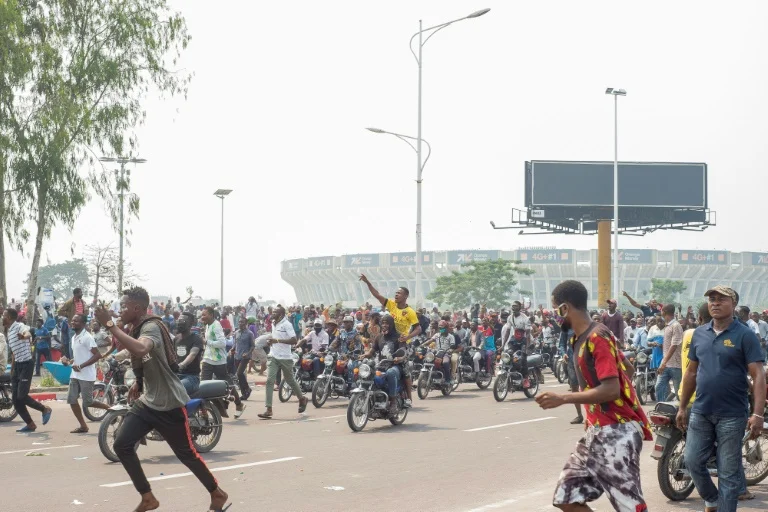
The bills sparked violent protests in Kinshasa on June 24–25, with UDPS supporters burning tires and blocking roads near parliament, some wielding petrol bombs.
The Catholic Church’s National Episcopal Conference (Cenco) warned that forcing the reforms could “plunge the country into chaos.”
Tunda’s transmission of government support for the bills without cabinet approval infuriated Tshisekedi, who, during a tense Council of Ministers meeting on June 26, criticized the move as a breach of protocol.
Prime Minister Sylvestre Ilunga Ilunkamba, an FCC member, held an emergency meeting to address the arrest, signaling coalition strain.
Fragile Coalition Dynamics
The FCC, controlling most of the 66 cabinet posts and the prime ministership, forms an uneasy coalition with Tshisekedi’s UDPS, established in August 2019 after eight months of negotiations following Tshisekedi’s 2018 election.
Kabila’s enduring influence through parliamentary and military control has frustrated Tshisekedi’s efforts to assert authority, with the judicial reform dispute exacerbating tensions.
Tunda’s Resignation
Tunda resigned, citing a “personal examination of the situation” and expressing gratitude to Tshisekedi and Ilunga.
In a video statement, he claimed his tenure strengthened the rule of law, including recovering $37.5 million in corruption cases and decongesting prisons like Makala, where 237 detainees were released in October 2019 to curb Covid-19 spread.
He described his resignation as a “patriotic duty” to preserve coalition unity, though analysts like Vincent Rouguet of Control Risks noted it would not fully resolve FCC-UDPS frictions.
Broader Implications
Tunda’s arrest and resignation underscore the DRC’s fragile political landscape, where coalition disputes spill into public unrest, as seen in deadly protests over election commission nominations in July 2020.
His efforts to combat corruption and reform justice, including plans for a financial prosecutor’s office, were notable but marred by political interference allegations.
The incident highlights ongoing challenges in balancing judicial independence with political power in the DRC.