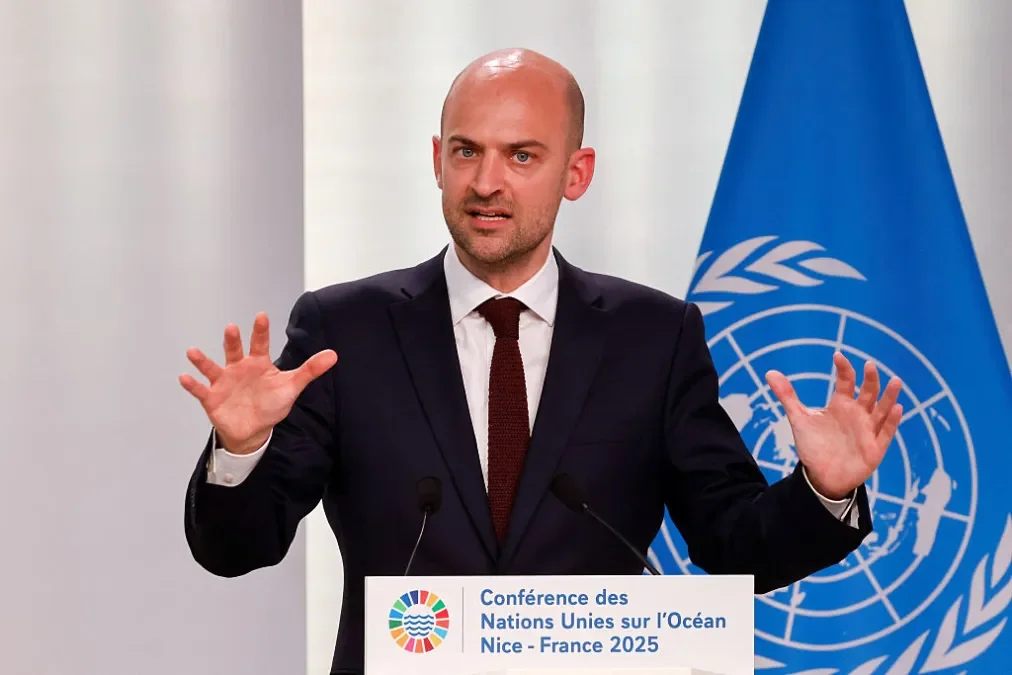

In a major diplomatic shift, French Foreign Minister Jean-Noël Barrot began a two-day official visit to the Central African Republic (CAR) this week. This marks the first time in seven years that a high-ranking French official has traveled to the capital, Bangui. The visit signals a strategic effort by Paris to reclaim its influence and mend fractured relations with its former colony.
The diplomatic thaw follows a pivotal meeting in April 2024 between French President Emmanuel Macron and Central African President Faustin-Archange Touadéra. Barrot’s arrival comes at a delicate time, as Touadéra recently returned from high-level talks in Russia with President Vladimir Putin, highlighting the complex geopolitical tug-of-war currently playing out in the region.
A Strategic Pivot Amid Global Competition
For the past decade, France has watched its historical influence wane in this mineral-rich nation of 5.3 million people. As internal instability and armed conflicts persisted, President Touadéra looked toward Moscow for security and political backing.
This shift led to a significant presence of Russian-linked forces, specifically those associated with the Wagner Group. These entities have secured lucrative contracts across the country’s primary resource sectors, including:
- Gold and Diamond Mining: Essential for the national economy but often shrouded in opaque agreements.
- Logging and Timber: A key export that has increasingly come under foreign management.
Barrot’s visit is a clear message that Paris is no longer willing to remain on the sidelines. The last time a French foreign minister set foot in Bangui was in 2018, when Jean-Yves Le Drian visited during the height of the country’s civil war.
Navigating a Contentious Political Landscape
The timing of this renewed partnership is not without controversy. In December 2025, President Touadéra secured another term in office, officially claiming nearly 78 percent of the vote. However, local opposition groups and international observers have raised concerns, with some labeling the election results as fraudulent.
By sending Barrot to meet with Touadéra now, France appears to be prioritizing regional stability and counter-influence over the criticism regarding the CAR’s democratic processes.
The Goals of the “New Partnership”
Paris has expressed a desire to “renew the partnership” through several key initiatives aimed at providing an alternative to Russian security dependence:
- Economic Cooperation: Offering transparent investment opportunities in infrastructure and healthcare.
- Security Reform: Proposing renewed military training and support for the national army (FACA) that aligns with international standards.
- Humanitarian Aid: Increasing direct support for the millions of Central Africans displaced by years of localized fighting.
The Challenges Ahead
The road to reconciliation is steep. The Central African Republic has become a laboratory for Russia’s “security-for-resources” model. For France to succeed, it must prove that a partnership with Paris offers more long-term prosperity than the immediate, albeit controversial, security provided by Moscow’s mercenaries.
Conclusion: A Diplomatic High-Wire Act
Jean-Noël Barrot’s two-day mission is more than just a photo opportunity; it is a test of French soft power in the 21st century. As Touadéra balances his commitments to the Kremlin with this new overture from the Elysee Palace, the Central African Republic remains a critical focal point for the future of European-African relations.
Whether this visit results in a lasting alliance or simply a brief diplomatic pause remains to be seen. However, one thing is certain: the “Giant of Europe” is back in Bangui, and the competition for Central Africa’s future has reached a new intensity.