The South African government formally summoned the newly appointed United States Ambassador on Wednesday, March 11, 2026. This move follows a series of controversial public comments regarding the nation’s racial policies and judicial independence. Foreign Minister Ronald Lamola confirmed the summons, citing a need for the envoy to explain remarks that Pretoria has labeled “undiplomatic.”
The friction comes as bilateral relations between Washington and Pretoria reach a historic low. Tensions have been fueled by South Africa’s international legal actions against Israel and President Donald Trump’s claims regarding the treatment of white Afrikaners.
The “Kill the Boer” Controversy
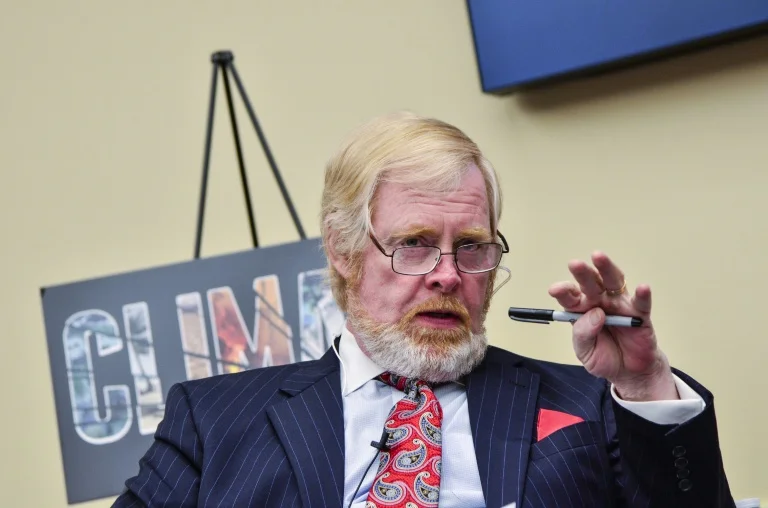
During his first public address on Tuesday, Ambassador Brent Bozell targeted a controversial struggle-era chant, “Kill the Boer, kill the farmer.” Despite multiple rulings by South African courts that the chant does not legally constitute hate speech when viewed in its historical context, Bozell dismissed the judiciary’s findings.
“I’m sorry, I don’t care what your courts say, it’s hate speech,” Bozell told a gathering of business leaders.
This specific chant has been a recurring point of contention in international politics. Last May, during a White House meeting with President Cyril Ramaphosa, President Trump used video clips of the chant to support his claims of a “white genocide” in South Africa—claims that both the South African government and various human rights monitors have repeatedly debunked.
Black Economic Empowerment vs. “Reverse Racism”
Ambassador Bozell also directed sharp criticism toward South Africa’s Broad-Based Black Economic Empowerment (B-BBEE) policies. He warned that these initiatives could trigger mass disinvestment. Most controversially, he compared current empowerment laws to the legislation of the apartheid era.
The Ambassador’s Claims:
- Legislative Parity: Bozell claimed there are roughly the same number of “race-based laws” targeting white citizens today as there were targeting Black citizens under apartheid.
- Discrimination: He echoed figures often cited by pro-white lobby groups, suggesting a rise in “reverse discrimination.”
The Government’s Rebuttal:
Foreign Minister Lamola firmly rejected these insinuations. “Broad-based Black economic empowerment is not reverse racism,” Lamola stated. He described the policies as a “constitutional imperative” designed to fix structural imbalances left by decades of white-minority rule. Lamola added that Bozell’s role as a guest is to help build a unified nation, rather than taking society back to a “polarized state along racial lines.”
A Background of Right-Wing Activism
Brent Bozell is a well-known figure in American conservative circles. As the founder of the Media Research Center, he has spent decades campaigning against what he describes as “leftist bias” in U.S. media.
His history with South Africa dates back to 1990. During Nelson Mandela’s historic tour of the United States following his release from prison, Bozell’s organization criticized the media for not labeling Mandela a “terrorist” or “saboteur.” During his Senate confirmation hearing in October 2025, Bozell justified those past comments by citing the ANC’s Cold War-era ties to the Soviet Union.
Bozell’s Current Agenda:
- Israel-Palestine: Pushing Pretoria to drop its genocide case against Israel at the International Court of Justice.
- Refugee Status: Promoting President Trump’s offer of refugee status specifically for the white Afrikaner minority.
The Personal and Political Intersection
The diplomatic spat is further complicated by Bozell’s personal ties to the current U.S. administration. His son, Leo Brent Bozell IV, was among those convicted for the January 6, 2021, assault on the U.S. Capitol. He was recently pardoned by President Trump upon his return to office in 2025.
By Wednesday afternoon, Ambassador Bozell appeared to attempt a diplomatic retreat. In a post on X (formerly Twitter), he clarified that while he personally views the “Kill the Boer” chant as hate speech, the U.S. government “respects the independence and findings of South Africa’s judiciary.”
Conclusion: A Precarious Partnership
The summoning of a U.S. ambassador is a rare and serious diplomatic gesture. It signals that South Africa is unwilling to tolerate external interference in its domestic social policies or its judicial sovereignty. As the Trump administration continues to focus on the perceived plight of white South Africans, the gap between the two nations’ priorities appears to be widening.
The world will be watching closely to see if this “undiplomatic” start defines Bozell’s tenure or if a middle ground can be found to preserve the vital economic ties between the two nations.
ALSO READ: Ghana Swears In New Citizens from Global Diaspora