
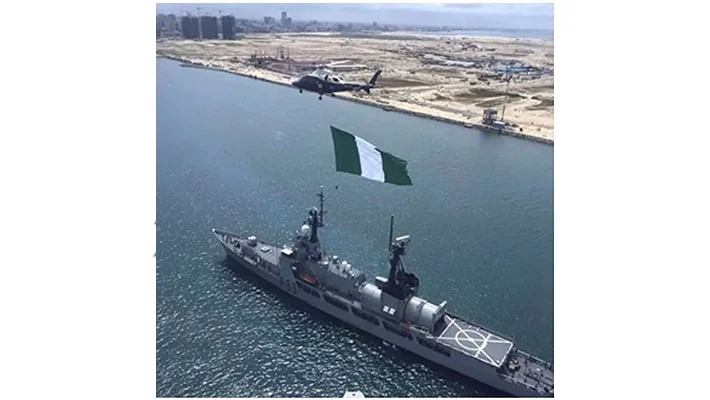
The United States government has donated advanced maritime surveillance equipment to the Nigerian Navy as part of ongoing efforts to strengthen maritime security in the Gulf of Guinea and deepen bilateral cooperation between both nations.
The equipment was officially handed over during a ceremony held on Friday, attended by U.S. Consular General Claire Pierangelo and Rear Admiral Tanko Pani, who represented Rear Admiral Oladele Daji, Flag Officer Commanding Western Naval Command.
Strengthening Maritime Policing and Capacity
Rear Admiral Tanko Pani described the donation as a critical step toward enhancing the Nigerian Navy’s capacity to monitor and respond to maritime threats. He noted the equipment—part of the Regional Maritime Awareness Capability (RMAC) system—would help address operational gaps due to past shortages of spare parts.
“This will greatly mitigate the operational deficiencies occasioned by lack of spares in the recent past,” he said.
“The RMAC system has improved our maritime patrols through intelligence-led operations, reducing the costs associated with blind patrols.”
He also highlighted the continued support of the United States in building human capital within Nigeria’s Armed Forces through training programs and technical collaborations.
“In addition to this equipment, the U.S. has transferred multiple naval vessels to Nigeria, including four buoy tenders and two cutters, and established RMAC centres across all three naval operations commands.”
A Long-Standing Partnership
Claire Pierangelo reaffirmed the U.S. commitment to assisting Nigeria in tackling piracy and other maritime challenges in the Gulf of Guinea—a region recognized as one of the world’s most dangerous waterways due to persistent threats.
“This event signifies the strong and enduring relationship that our nations have,” she said.
“This equipment is part of the RMAC initiative launched in 2006, aimed at enabling the Nigerian Navy to monitor and respond to maritime threats within its territorial waters and across the Gulf of Guinea.”
She emphasized that Nigeria, due to its size and strategic location, holds greater responsibility in securing regional maritime borders.
Context: Maritime Threats on the Rise
According to data from the International Maritime Bureau (IMB), piracy and armed robbery in the Gulf of Guinea surged in 2020. The region accounted for 80 out of 85 global seafarer kidnappings reported in the first nine months of the year.
The rise in attacks underscores the urgent need for international collaboration in safeguarding maritime trade routes in West Africa.
Meanwhile, the Nigerian Air Force has also stepped up its defense capabilities, with recent acquisitions including two Wing Loong II unmanned combat aerial vehicles and 12 A-29 Super Tucano fighter jets, six of which are already in use for pilot training in the U.S.