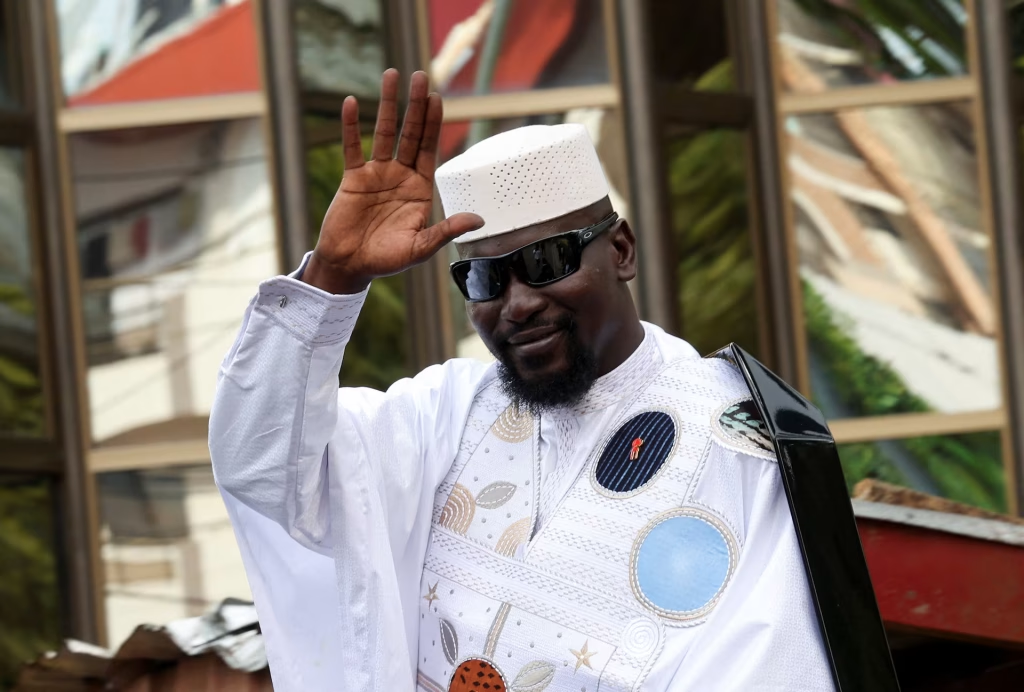
The political tension paralyzing Conakry finally broke on Friday afternoon. Thousands of citizens swarmed the capital’s main thoroughfares to witness the Mamadi Doumbouya Guinea return at the international airport. This highly choreographed arrival marks the end of a three-week period of total public silence from the 41-year-old leader. His sudden disappearance following a diplomatic trip had ignited a firestorm of speculation regarding his physical health and political survival. Consequently, the presidency utilized this homecoming to project an image of absolute, unwavering authority.
Supporters lined the roads leading away from Ahmed Sékou Touré International Airport for miles. They waved flags and cheered as a heavily armed motorcade began its slow procession toward the city center. Many participants wore coordinated outfits, specifically white t-shirts and caps emblazoned with the President’s portrait. A massive brass band provided a deafening, rhythmic soundtrack to the proceedings.
The Strategic Significance of the Mamadi Doumbouya Guinea Return
This event represents much more than a simple return from a diplomatic mission. In the high-stakes environment of Guinean politics, visibility equals power. Doumbouya has ruled with an iron fist since seizing control in 2021. Therefore, his twenty-one-day absence created a dangerous information vacuum that critics and rivals quickly filled. By appearing in person and engaging with the public, the President aims to re-establish his dominance over the national narrative.
However, the administration’s handling of his absence remains a point of intense scrutiny. Doumbouya originally departed the country on February 13. He traveled to Addis Ababa, Ethiopia, to attend an important African Union summit. Following his brief speech at that event, the President vanished entirely from the public eye. For nearly three weeks, the government offered no official explanation for his whereabouts.
This silence eventually forced the presidency to issue a reactive statement this past Monday. Authorities claimed the leader remained in “good health” and was simply resting. They also mentioned a routine medical check-up following his rigorous diplomatic duties. Yet, they glaringly failed to identify the country where he was recuperating. This lack of transparency only deepened the public’s anxiety and fueled underground rumors of a more serious medical crisis.
Analyzing the Health Crisis Narratives
Persistent reports regarding the President’s physical decline have shadowed his administration for months. Journalists and political analysts noted a significant change in his appearance during his rare public outings earlier this year. He appeared visibly thinner and less energetic than during his initial rise to power. In a regime built on military strength, any perception of physical frailty can have catastrophic consequences.
Military-led governments often view a leader’s health as a state secret. They fear that admitting to a medical condition might embolden internal factions to attempt a counter-coup. Historically, Guinea has experienced numerous instances where leadership vacuums led to sudden, violent shifts in power. Consequently, Doumbouya’s team prioritized a high-energy, public-facing arrival to dispel these lingering doubts.
The President stepped off the plane wearing a traditional, floor-length brown tunic. He walked alongside his wife, acknowledging the salutes of high-ranking military officers on the tarmac. Shortly thereafter, he climbed into a specialized armored vehicle to greet the masses. This specific sequence of events was designed to showcase a leader who is physically capable and in total command of his security apparatus.
From Coup Leader to Permanent President
To understand the weight of this moment, one must recall the events of September 2021. Doumbouya, then a colonel in the elite Special Forces, orchestrated a lightning-fast coup. He successfully overthrew Alpha Condé, the nation’s first democratically elected president. Initially, the military junta promised a short transitional period. They vowed to organize free elections and return the country to civilian rule.
-
September 2021: Military coup removes Alpha Condé.
-
2022-2023: Consolidation of power and banning of public protests.
-
December 2024: Doumbouya wins a seven-year term as President.
-
January 2025: Official swearing-in ceremony in Conakry.
The transition, however, unfolded quite differently than many had hoped. The government systematically sidelined, arrested, or exiled major opposition figures. This paved the way for the December elections, where Doumbouya faced no significant political challengers. He effectively traded his military fatigues for a presidential sash, securing a seven-year mandate that many international observers labeled a sham.
Regional Instability and the “Coup Belt”
Guinea does not exist in a vacuum; it is part of a broader regional trend. West Africa has seen a startling resurgence of military takeovers in recent years. Nations like Mali, Burkina Faso, and Niger have all experienced similar transitions. This phenomenon has earned the region the nickname of the “coup belt” among geopolitical analysts.
This regional volatility places immense pressure on Doumbouya. He must constantly balance his domestic crackdown with the need for international legitimacy. His attendance at the African Union summit was a key part of this balancing act. He wants the world to recognize him as a legitimate head of state, even while he restricts civil liberties at home. The Mamadi Doumbouya Guinea return ensures he can continue this diplomatic tightrope walk from his seat of power in Conakry.
The Economic Cost of Uncertainty
Beyond politics, the President’s health and stability directly impact the national economy. Guinea is a global powerhouse in the mining sector, specifically regarding bauxite. This ore is the primary source of aluminum, making it vital for international industries. Multinational corporations have invested billions into Guinean infrastructure.
These investors demand stability above all else. A president who disappears for weeks without explanation creates market uncertainty. If the mining sector experiences disruptions due to political infighting, the government’s primary revenue stream could vanish. Consequently, the airport fanfare served a dual purpose: it reassured the public and sent a signal of continuity to global capital markets.
Future Challenges for the Doumbouya Administration
Despite the successful optics of Friday’s return, the road ahead remains incredibly difficult. The President faces a population struggling with high inflation and limited access to basic services. While he has successfully silenced the formal political opposition, he has not eliminated the underlying social frustrations.
Furthermore, he must remain vigilant against potential dissent within his own military ranks. Most coups in Guinean history originate from within the presidential guard or elite units. By remaining out of the country for three weeks, he took a significant risk. The coming months will test whether his “iron fist” approach can maintain order during his full seven-year term.
For now, the mystery of the President’s whereabouts has ended. The streets of Conakry are quiet again after the celebrations. However, the questions regarding his health and the long-term future of Guinean democracy will undoubtedly persist. The world is watching to see if this reappearance marks a new beginning or merely a brief reprieve in a turbulent era.
_________________________________________________
Beirut Displacement Crisis: 95,000 Flee as Airstrikes Level Dahiyeh Infrastructure