As the smoke clears over the Middle East following a second week of brutal, high-intensity combat, the distance between Washington and Tehran has never felt greater.
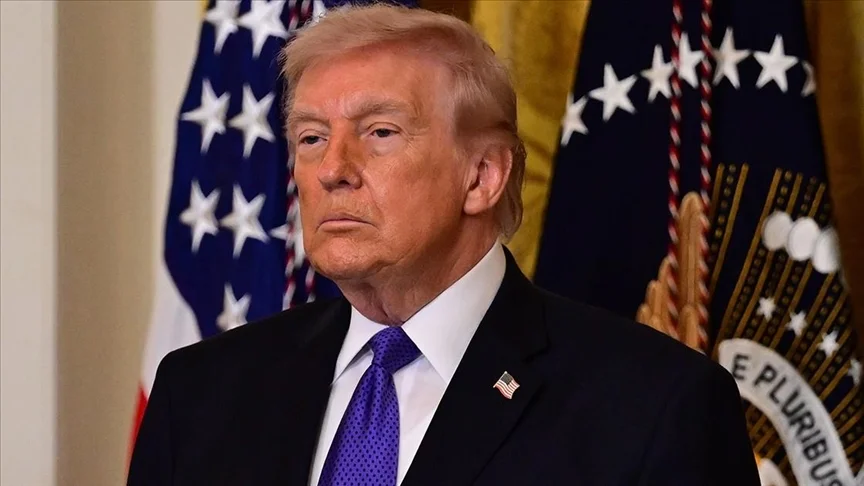
On Thursday, March 5, 2026, Iran’s Ambassador to Egypt, Mojtaba Ferdousi Pour, stood before a room of journalists in Cairo to set the record straight. His message was blunt: despite what President Donald Trump is telling the world, Iran is not looking for a way out through the back door of diplomacy.
In an exclusive briefing from the Iranian Embassy, Ferdousi Pour dismissed the President’s recent claims that Tehran is “ready to talk.” According to the Ambassador, no such request has been made, and under the current rain of missiles and bombs, no such request is coming. This creates a dangerous disconnect between Trump’s “art of the deal” rhetoric and the reality on the ground.
The Ghost of Failed Promises
The biggest obstacle to peace isn’t just the military hardware being deployed it is a complete, systemic collapse of trust. Ferdousi Pour reminded his audience that the two nations have been down this road before. After two separate attempts at a nuclear framework crumbled, culminating in the current war, the Iranian leadership has concluded that diplomatic ink is worthless.
“There will be no trust in Trump,” the Ambassador stated. From Tehran’s perspective, the transition from failed talks to active warfare proved that the White House isn’t looking for a partner; it’s looking for a surrender. For the Iranian government, this isn’t a conflict of interest it’s a fight for survival triggered by a U.S. policy shift from containment to direct, violent confrontation.
The Reality of “Total War” in 2026
One of the most sobering parts of the Ambassador’s speech was his description of the current struggle. He pushed back against the idea that this is just a series of border skirmishes or air strikes. Instead, he labeled it a “comprehensive war” one that hits every aspect of modern life.
The Five Fronts of the Conflict:
- The Battlefield: The terrifying exchange of missiles and drones between the IRGC, Israel, and U.S. forces.
- The Digital Front: Cyber warfare that has already flickered power grids and jammed communications across the region.
- The Economic Squeeze: A ruthless blockade of trade routes and the freezing of vital international assets.
- The Political Arena: A desperate fight for influence within the United Nations and the court of global public opinion.
- The Shadow War: Intelligence operations and the high-stakes targeting of senior leaders.
“This is a war in all fields,” he warned. The implication is clear: Iran is bracing for a long-term, multi-dimensional struggle that won’t be settled by a simple handshake.
Targets: A Warning to Regional Neighbors
The Ambassador didn’t mince words when it came to the security of the region. He described the killing of Supreme Leader Ayatollah Ali Khamenei as a “heinous crime” that changed the rules of engagement forever. With the traditional “red lines” of diplomacy gone, Iran now views any military facility housing U.S. or Israeli forces as a fair target.
This puts an incredible amount of pressure on neighboring countries. Many of them host U.S. bases but want no part in a regional firestorm. “We have declared repeatedly that if there are bases on the borders… belonging to the United States, and they benefit from these bases, they will be targeted,” Ferdousi Pour stated. This essentially tells America’s allies that their soil is no longer safe as long as the U.S. military is using it to launch strikes.
The Succession Crisis: A Fight for the Future
While the bombs fall, a political earthquake is happening inside Iran. Following the death of the Supreme Leader, the country is in the middle of a high-pressure search for a successor. Ambassador Ferdousi Pour noted that the Assembly of Experts should reach a decision soon.
However, President Trump added fuel to the fire during a recent interview with Axios. He suggested that he should have a say in who becomes the next leader of Iran. In Tehran, this was received as a shocking violation of national pride.
The Friction Over Leadership:
- The Mojtaba Factor: Trump has explicitly “vetoed” the idea of Mojtaba Khamenei (the late leader’s son) taking power.
- Regime Change Fears: For the Iranian leadership, Trump’s meddling in their succession process confirms their worst fear: that the goal of this war is the complete dismantling of the Islamic Republic.
- Sovereignty: The idea of a foreign president picking a religious leader is, to the Iranians, the ultimate insult to their independence.
The Retaliatory Loop
We are now on the sixth day of non-stop bombardment, and the cycle of “hit and hit back” is only getting faster. While the U.S. and Israel hammer high-value targets inside Iran, the IRGC and its network of regional allies are firing back.
Reports are coming in of daily drone and missile attacks on American positions in Iraq and Syria. Meanwhile, the waters of the Gulf have become a “danger zone” for commercial shipping. Every day this goes on, the risk of a neutral country being accidentally pulled into the fight grows.
Conclusion: No End in Sight
The words of Ambassador Mojtaba Ferdousi Pour offer little hope for a quick resolution. With Tehran refusing to sit at the table and Washington trying to influence Iran’s internal politics, the war of 2026 feels like an open-ended tragedy.
The message coming out of Cairo is loud and clear: Iran isn’t looking for a deal to save face. It is digging in for a “total war” scenario where the only goal is to survive the onslaught and strike back wherever it can.
READ ALSO: Women’s Africa Cup of Nations: Uncertainty Clouds Morocco’s Hosting Status