The financial bleeding has finally stopped for Africa’s most industrialized nation. A relentless, 17-year cycle of spiraling national borrowing is officially breaking. Consequently, the government is suddenly unlocking billions in capital to fight a staggering national crime wave.
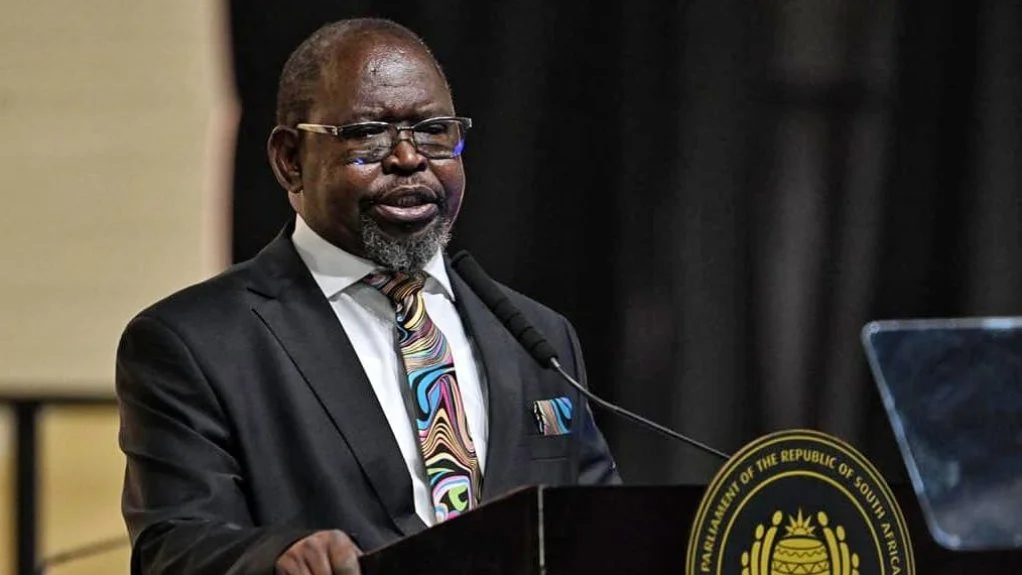
This shift marks a monumental pivot for the entire region. South Africa debt is stabilizing for the first time in nearly two decades. Finance Minister Enoch Godongwana delivered this bombshell economic update on Wednesday. His announcement effectively closes a dark chapter of fiscal instability.
For years, mounting liabilities choked the developing nation. Now, an economic tourniquet has been firmly applied. This financial recovery frees up massive resources for domestic emergencies. Leaders are immediately deploying these newly available funds to tackle rampant street violence. The shift from basic survival mode to strategic public investment is officially underway.
The Numbers Behind the South Africa Debt Stabilization
The fiscal trajectory of the nation is completely changing course. National liabilities recently peaked near a dangerously high 80% of Gross Domestic Product. Such alarming levels historically cripple emerging markets. However, that ceiling has finally been breached in reverse.
Projections now show a steady, calculated decline in borrowing. Officials expect the financial burden to ease to 77.3% during the 2026/27 fiscal year. Furthermore, it will drop to a much healthier 76.5% the following cycle.
During his parliamentary budget speech, Godongwana outlined the precise scope of this victory.
“For the first time in 17 years, debt will stabilise and it will continue to fall in the coming years,” Godongwana stated.
This is highly significant because sovereign borrowing limits a country’s true potential. Exorbitant interest payments devour tax funds meant for public services. Halting this explosive growth means revenues can fund actual infrastructure. The South Africa debt curve is flattening, securing the nation’s economic future.
S&P Upgrades and Restored International Trust
The global financial community is closely monitoring this newfound fiscal discipline. International watchdogs are actively rewarding the country’s strict economic management. A major turning point arrived late last year.
In November, S&P Global officially elevated the country’s sovereign assessment. This marked the very first major credit upgrade in over 16 years. Upgrades of this magnitude lower borrowing costs immediately across all sectors. They also signal to global hedge funds that the market is safe for capital injections.
Additionally, another massive regulatory hurdle was cleared recently. The global money-laundering watchdog officially removed the nation from its infamous “grey list.” Being on this list previously created severe friction for local banks. It heavily restricted international financial transactions and deterred corporate investment.
Exiting this punitive list restores immense institutional trust worldwide. Godongwana addressed these international victories directly in his address to parliament. He proudly called them “signals of restored credibility, of renewed resilience.”
Restoring international credibility is a grueling, multi-year battle. Managing South Africa debt responsibly was the primary catalyst for these upgrades. Investors demand absolute stability before committing billions. The current administration has finally delivered that vital prerequisite.
Redirecting Funds: How South Africa Debt Relief Funds Security
Stabilizing the national ledger produces immediate, real-world results. The most drastic impact will be felt directly on the streets. Authorities are launching a massive, well-funded crackdown on violent crime.
The statistics regarding domestic violence are notoriously grim. The nation averages roughly 60 brutal killings every single day. This astronomical murder rate terrorizes citizens daily. It also severely suppresses vital tourism and local business operations.
With the South Africa debt crisis easing, government spending is shifting dramatically. The state mapped out a massive 2.67 trillion rand ($168 billion) budget for 2026/27. A significant chunk of this cash is strictly earmarked for public safety.
Peace and security funding will skyrocket over the next two years. By 2028, this critical sector will receive 291.2 billion rand ($18 billion). This represents a formidable new arsenal for national law enforcement.
This massive cash influx funds a highly aggressive tactical strategy.
-
Military units will deploy directly into civilian crime hotspots.
-
Armed soldiers will operate alongside traditional police forces.
-
Targeted tactical operations will sweep through highly volatile neighborhoods.
Deploying the army highlights the extreme severity of the domestic crisis. Fortunately, the new budget provides the necessary financial ammunition. None of this bold security action would be possible without reining in the deficit.
Historical Context: Escaping a Two-Decade Trap
Understanding this victory requires looking at the past two decades. The South Africa debt crisis did not happen overnight. It was a slow, agonizing accumulation of liabilities and institutional mismanagement.
Historically, the economy suffered from severe structural bottlenecks. Persistent energy grid shortages crippled domestic manufacturing. State-owned enterprises required massive, repeated financial bailouts. These emergency bailouts drained the national treasury continuously for years.
Meanwhile, global economic shocks compounded these frustrating domestic failures. The recent pandemic further accelerated panic borrowing. The nation was essentially trapped in a vicious cycle. They frequently borrowed new money simply to pay off older, toxic loans.
Breaking a 17-year trend is a major administrative triumph. It proves that painful institutional reforms are actually working. The government is finally collecting enough domestic revenue to manage its obligations. By stabilizing its South Africa debt, the nation narrowly avoided a catastrophic fiscal cliff.
Economic Growth Projections and the Path Forward
Controlling the massive deficit is only half the battle. To truly thrive, the underlying economy must also expand. Shrinking the debt-to-GDP ratio requires the GDP itself to grow aggressively.
The Finance Minister offered cautious optimism regarding future economic output. Godongwana officially projected a 1.6% growth rate for the year 2026. While somewhat modest, this positive trajectory is absolutely vital.
Consistent growth generates much higher corporate and income tax revenues. This organic income further reduces the urgent need to borrow. Consequently, the reliance on foreign and domestic creditors diminishes rapidly over time.
This dynamic is incredibly important for the broader African continent. As Africa’s most developed economy, South Africa serves as a critical financial hub. When its domestic markets stabilize, neighboring economies often experience highly positive ripple effects.
Ultimately, Wednesday’s announcement redefines the country’s immediate future. The dark clouds of insurmountable fiscal ruin are finally parting. A stabilized balance sheet means a safer, stronger, and significantly more secure nation.
__________________________________________________
Tehran Issues Stark Ultimatum Ahead of High-Stakes US-Iran Nuclear Talks