
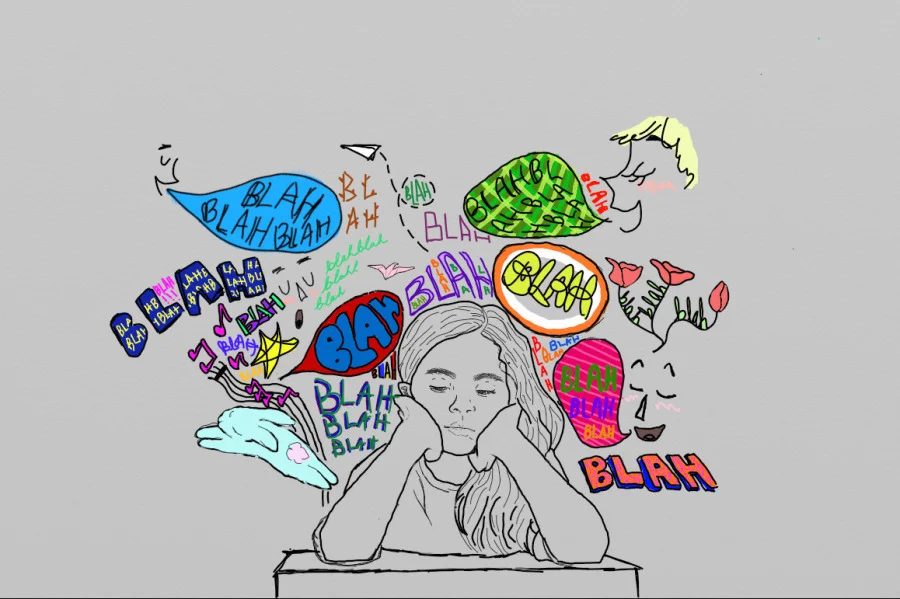
Have you ever walked into a kitchen with a clear mission perhaps to grab a glass of water only to find yourself twenty minutes later organizing the spice rack by “vibes” while the tap is still running? Or maybe you’ve spent three hours meticulously researching the migratory patterns of the Arctic Tern when you were supposed to be finishing a high-stakes project due at midnight? Perhaps you’ve lived your whole life being told you have “so much potential” if only you could “just sit still” or “try harder.”
If those scenarios feel like a personal attack, welcome to the club. You aren’t lazy, you aren’t “too much,” and you certainly aren’t broken. You’ve likely just been operating a high-performance Ferrari engine with the braking system of a bicycle. That, in a nutshell, is ADHD (Attention-Deficit/Hyperactivity Disorder).
For a long time, society viewed ADHD as a “naughty child” problem something you’d eventually outgrow with enough discipline. We now know the truth is far more complex. ADHD is a lifelong neurological difference in how the brain’s dopamine pathways function.
It is a struggle with the brain’s “executive suite.” But once you understand the mechanics of your unique wiring, you can move from merely surviving the chaos to navigating life as a professional, a student, and a human with absolute precision.
The Professional: Turning Hyperfocus into a Career Engine
In the corporate world, the traditional 9-to-5 desk job can feel like a slow-motion car crash for the ADHD brain. Open-plan offices, endless “status update” meetings, and the soul-crushing weight of administrative minutiae are designed for neurotypical brains.
However, the same brain that struggles with a boring spreadsheet often thrives in high-stakes, high-pressure, or creative environments.
The Strategy: Designing Your Workflow
As a professional, your goal isn’t to “fix” your focus but to curate your environment.
- The “Body Doubling” Hack: This is a game-changer. If you find it impossible to start a difficult task, sit with a colleague or use a virtual co-working platform. The simple presence of another person “anchors” your brain to the task at hand. It creates a social accountability loop that quiets the “I’ll do it later” voice.
- Externalize Your Memory: Your brain is a factory for having ideas, not a warehouse for holding them. Use digital tools like Notion, Trello, or a simple physical “brain dump” notebook. If a task isn’t written down in a place you look at every day, for your brain, it simply does not exist.
- Collaborate with Your Biology: Most ADHD professionals have a “magic hour” a window where the brain finally clicks into gear. Don’t waste that window on emails. Use it for your most cognitively demanding work.
The Student: Hacking the Learning Curve
For a student with ADHD, a 30-page reading assignment doesn’t just look like work; it looks like Mount Everest. The ADHD brain is interest-based, not importance-based. This means that no matter how “important” an exam is, if the subject is boring, your brain will physically refuse to engage.
The Strategy: Gamification and Sprints
The trick to studying with ADHD isn’t to work longer—it’s to work in high-intensity “sprints.”
- The Pomodoro Technique (with a Movement Twist): Work for 25 minutes, then take a 5-minute break. But here is the secret: during those 5 minutes, you must move. Stretch, do ten jumping jacks, or dance to one song. This physical “jolt” resets your nervous system and prevents the dreaded brain fog.
- Active Engagement: Stop passive reading. If you’re studying, doodle the concepts, explain them out loud to an imaginary audience, or use neon highlighters. The more sensory input you give your brain, the less likely it is to wander off to think about what you had for lunch three years ago.
- Fidget to Focus: If you’re in a long lecture, give your hands something to do. Doodling or using a quiet fidget toy actually provides a “baseline” level of stimulation that allows your prefrontal cortex to stay engaged with the speaker.
The Human: Navigating the “Rest of Life”
ADHD isn’t just about work or school; it’s about the laundry piles that stay in the dryer for four days, the forgotten birthdays, and the emotional “rollercoaster” that comes with a sensitive nervous system. This is where most of the self-shame lives, but it’s also where you can find the most relief.
The Strategy: Systems Over Willpower
You cannot “willpower” your way out of ADHD. You need systems that act as external scaffolding for your brain.
- The “Don’t Put It Down, Put It Away” Rule: To fight the inevitable clutter, make “away” the default destination. It takes 10 seconds now to put the keys on the hook, saving you a 45-minute meltdown tomorrow morning when you’re already late for work.
- Mastering Emotional Regulation: Many people with ADHD experience Rejection Sensitive Dysphoria (RSD). This is an intense emotional pain caused by perceived criticism or rejection. When you feel that sudden “sting,” pause and remind yourself: “This is my nervous system overreacting to a stimulus.” Labeling the feeling takes away its power.
- The Power of “Done Over Perfect”: Perfectionism is a common ADHD trap. We get so overwhelmed by doing it “right” that we don’t do it at all. Embrace the “B-minus” work. A half-folded laundry basket is better than a mountain on the floor.
The ADHD Superpower: Hyperfocus and Creativity
It’s easy to focus on the “Deficit” part of ADHD, but what about the “Superpower” part? When an ADHD brain finds something it truly loves, it enters a state of Hyperfocus. In this state, you can accomplish more in four hours than most people do in four days.
People with ADHD are often the best “crisis managers.” Because our brains are used to a baseline of chaos, we remain calm and creative when everyone else is panicking. We are the “out-of-the-box” thinkers, the inventors, and the entrepreneurs who see connections that others miss.
Conclusion: Acceptance Over Fixation
Navigating ADHD isn’t about trying to turn your brain into a “normal” one. It’s about building a world that fits your unique wiring. You have a brain that is fast, curious, and incredibly capable. The world needs your “too much” energy. It needs your unconventional ideas and your ability to see the world in high-definition.
Stop judging yourself for the things you find hard and start leaning into the things you do brilliantly. You aren’t broken; you’re just wired for a different frequency. Once you stop fighting your brain and start collaborating with it, the whirlwind inside becomes the wind in your sails.
Have you ever experienced this? Let us know in the comments section!