In a landmark shift for the Horn of Africa’s political landscape, Sudan has officially confirmed its full return to the Intergovernmental Authority on Development (IGAD). This pivotal decision ends a contentious two-year freeze on the nation’s participation.
As of February 2026, this move signals a potential turning point in regional diplomacy. It occurs while the country continues to struggle with one of the most devastating internal conflicts of the modern era.
The Sudanese government, which is closely aligned with the national armed forces, originally suspended its membership in January 2024. This suspension served as a dramatic protest. Leaders in Khartoum viewed the bloc’s actions as a direct affront to their national sovereignty and a serious breach of established diplomatic protocols.
Unpacking the Roots of the Diplomatic Freeze
The primary reason for the initial suspension traces back to a high-level summit held in Uganda. During that event, the leadership of IGAD extended an official invitation to Mohamed Hamdan Daglo. He is the commander of the Rapid Support Forces (RSF).
To the army-led government in Sudan, this invitation was unacceptable. They viewed the gesture as an attempt to grant international legitimacy to a paramilitary group. The government officially categorizes the RSF as an illegal insurrectionist force.
For the Sudanese leadership, the invitation suggested that the regional bloc was treating a sovereign state and a paramilitary organization as equals. Khartoum argued this violated international norms during a time of active warfare. Consequently, a diplomatic “frost” lasted for over a year. This tension left Sudan largely isolated from regional mediation efforts led by its closest neighbors.
A War-Torn Backdrop: The Human Toll of Conflict
This diplomatic maneuvering is happening against a backdrop of unimaginable human suffering. Since April 2023, Sudan has been locked in a brutal power struggle between the national army and the RSF. This conflict has transformed the nation into the site of a severe humanitarian disaster.
The Catastrophic Scale of the Crisis
The statistics surrounding the war are staggering. They paint a picture of a nation essentially split in two:
- World-Leading Displacement: Approximately 11 million people have been forced to flee their homes. This has created the largest displacement crisis currently active on the planet.
- Severe Loss of Life: While precise counts are difficult to verify due to the fog of war, tens of thousands have likely perished. Many deaths result from direct fighting or the subsequent collapse of health services.
- Fragmented Sovereignty: The RSF currently maintains control over large portions of the western and southern regions. In these territories, they have reportedly tried to set up a parallel, unrecognized administration.
The Road to Reconciliation: Sovereignty Reaffirmed
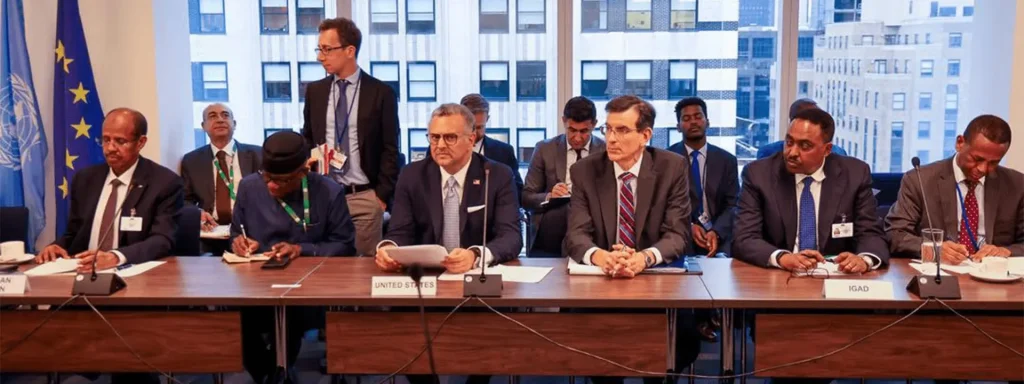
The decision to rejoin the regional bloc was not a sudden change of heart. Instead, it resulted from a series of high-level diplomatic engagements designed to rebuild trust. A critical turning point occurred in January 2026. At that time, the Executive Secretary of IGAD held a productive meeting with Sudan’s Prime Minister.
Key Factors Driving the Diplomatic Return
The Sudanese Foreign Ministry identified a significant shift in the bloc’s official rhetoric as the deciding factor. A recent IGAD statement provided the necessary “off-ramp” for the government. The statement focused on three essential elements:
- Explicit Condemnation of Violations: The bloc condemned atrocities attributed to the RSF. This move brought its public stance closer to the government’s own narrative.
- Commitment to National Unity: The statement reaffirmed a dedication to the territorial integrity and sovereignty of the Sudanese state.
- Recognition of Authority: By treating the army-aligned government as the primary legitimate authority, the bloc removed the chief obstacle that had prevented Sudan’s participation.
Regional Solidarity and the Complex Path to Peace
IGAD leadership has welcomed Sudan’s return with open arms. They describe it as a vital step toward regional solidarity. In the Horn of Africa, a stable Sudan is a prerequisite for the security of all neighboring nations. The bloc maintains that having the Sudanese government at the table is the most effective way to facilitate a meaningful, lasting ceasefire.
However, the path forward remains laden with significant obstacles. While the diplomatic bridge has been reconstructed, the situation on the ground in cities like Khartoum and regions like Darfur remains highly volatile. The return to IGAD opens a fresh channel for dialogue. Nevertheless, whether this translates into a real-world reduction in violence depends on the willingness of both factions to commit to a political settlement.
The Broader Geopolitical Context
Sudan’s re-engagement with IGAD also reshuffles the deck for external influencers. Powers such as the United Arab Emirates, Saudi Arabia, and the United States have all played roles in various mediation attempts.
By re-entering the regional bloc, Sudan is centralizing its diplomatic efforts back within the African continent. This shift could potentially give the African Union and regional neighbors more leverage. They may now have a greater say in determining the terms of any future peace treaty. Furthermore, the return to the bloc may assist in the coordination of much-needed humanitarian aid.
Conclusion: A Glimmer of Hope for Dialogue?
Sudan’s full return to IGAD is far more than a simple diplomatic formality. It is a powerful reaffirmation of the country’s central place within the regional community. By re-engaging with its neighbors, the Sudanese government is positioning itself to influence the narrative of the peace process more directly.
As the conflict nears its third year, millions of displaced citizens are searching for any sign of a legitimate breakthrough. While rejoining a regional organization is a positive diplomatic step, the ultimate test will be its impact on the ground.
Success will be measured by the opening of humanitarian corridors and, eventually, the permanent silencing of the guns. For now, the world watches with cautious optimism. Many hope this diplomatic thaw marks the beginning of a genuine push for peace.