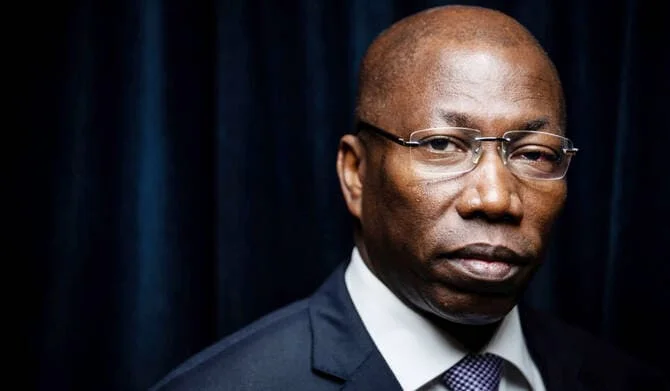
In a significant escalation of political tension, Guinea-Bissau’s prominent opposition figure, Domingos Simões Pereira, has been ordered to appear before a military tribunal. This development marks a volatile turning point for the West African nation. Judicial and military officials recently confirmed that Pereira faces accusations of being linked to several attempts to seize power by force.
Pereira is the leader of the PAIGC, the historic party that spearheaded the nation’s independence movement in 1974. His summons is the latest chapter in a turbulent period following the recent overthrow of the government. For a country with a long history of military intervention, the decision to try a civilian leader in a military court raises urgent questions about the future of the rule of law.
The Weight of History: PAIGC and the Liberation Legacy
To understand the gravity of Pereira’s summons, one must understand the role of the PAIGC (African Party for the Independence of Guinea and Cape Verde). Founded by the legendary Amílcar Cabral, the party is the foundational pillar of the state. It led the liberation war against Portuguese colonial rule, ultimately securing independence in 1974.
Consequently, any move against the leader of the PAIGC is viewed by many as an attack on the very identity of the nation. Pereira has long been a thorn in the side of the military-backed political establishment. Furthermore, his popularity among the youth and urban population has made him a formidable opponent for those currently holding the reins of power.
A History of Legal and Political Turmoil
The legal challenges facing Pereira have intensified since the November 2025 coup that removed President Umaro Sissoco Embaló from office. This transition occurred just days after the country held long-awaited presidential elections. The sudden military intervention disrupted the democratic process, leading to a state of emergency that has yet to fully subside.
Timeline of Recent Escalations
The rapid sequence of events has left Pereira in a precarious legal position. Following the military takeover in November 2025, the President was ousted and Pereira was immediately taken into custody. By January 2026, Pereira was granted a conditional release from prison, though he was instantly placed under strict house arrest. Now, in February 2026, the situation has shifted to the judicial sphere with an official military summons regarding alleged ties to multiple coup plots.
While Pereira was released from prison last month, his freedom remains curtailed. Authorities are also conducting separate investigations into alleged financial crimes during his previous tenures in government.
Military Accusations and the Coup Plots of 2023-2025
The military hierarchy has now connected Pereira to at least two specific instances of unrest. Investigators suspect his involvement in failed coup attempts that reportedly took place in late 2023 and October 2025.
According to military sources, these plots were designed to destabilize the Embaló administration and install a transition government favorable to the PAIGC. Pereira’s legal team has dismissed these claims as “purely political fabrications” intended to disqualify him from future political participation. Nevertheless, the military insists it has “irrefutable evidence” of communication between Pereira and dissident officers.
The “Narco-State” Factor and Chronic Instability
These allegations arrive against a backdrop of chronic national instability. Since gaining independence, Guinea-Bissau has endured five successful coups and countless more attempts. Experts often point to a volatile combination of factors:
- Systemic Poverty: Despite rich natural resources, Guinea-Bissau remains one of the poorest countries globally. This despair often makes the military an attractive path for power and income.
- Corruption and Drug Trafficking: The country has frequently been labeled a “Narco-State.” Its coastline makes it a primary transit point for cocaine traveling from South America to Europe.
- Military Supremacy: Historically, the military has viewed itself as the ultimate arbiter of political disputes, stepping in when civilian leaders fail to align with their interests.
The Global Response: Scrutiny on the Rise
The decision to try a civilian political leader in a military court will likely draw significant international scrutiny. Organizations such as ECOWAS, the African Union (AU), and the United Nations have repeatedly called for a return to constitutional order in Bissau.
Military tribunals are often criticized for their lack of transparency and susceptibility to executive influence. If Pereira is convicted, it could trigger sanctions or further isolate Guinea-Bissau from the international financial community. Conversely, the current administration argues that “extraordinary measures” are required to maintain order.
The Economic Toll of Political Fragility
Beyond the halls of justice, the average citizen in Bissau bears the brunt of this instability. Every time a coup occurs, international aid is frozen and foreign investment flees. Consequently, the country’s infrastructure remains in a state of decay. Hospitals often lack basic supplies, and the educational system is frequently interrupted by political strikes.
Furthermore, the focus on military trials distracts from the urgent need to diversify the economy. Guinea-Bissau remains dangerously dependent on cashew nut exports, leaving it vulnerable to global market fluctuations. Until political stability is achieved, prosperity remains out of reach for most Bissau-Guineans.
Conclusion: A Nation at a Crossroads
As Pereira prepares for his appearance before the military tribunal, Guinea-Bissau stands at a critical juncture. The outcome of this trial will serve as a bellwether for the country’s democratic health. If the proceedings are viewed as a “show trial,” it may deepen political divisions and invite further unrest.
However, if the process adheres to international standards of fairness, it could provide a path toward national reconciliation. For now, the streets of Bissau remain quiet, but the air is thick with anticipation. The world is watching to see if the nation can finally break the cycle of the gun and return to the ballot box.
READ ALSO: Ending the Silence: International Day of Zero Tolerance for Female Genital Mutilation