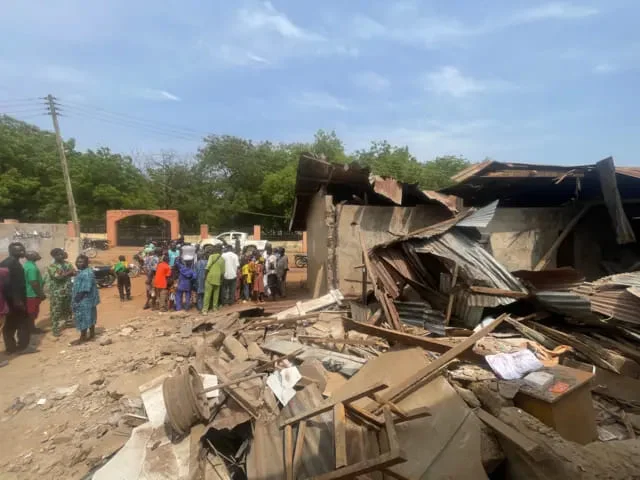
The quiet agricultural villages of Woro and Nuku in Kwara State have been transformed into haunting landscapes of ash and grief. Following a catastrophic attack on Tuesday, February 3, 2026, what remains is a scene of absolute devastation. Survivors are now left to grapple with the loss of their loved ones and the total destruction of their ancestral livelihoods.
According to harrowing local accounts, suspected extremists arrived on motorcycles under the cover of night. They initially opened fire indiscriminately to create panic before systematically rounding up residents. In a display of extreme brutality, the attackers executed scores of villagers. At least 170 people are confirmed dead. This event marks the deadliest assault in Nigeria in several months. It highlights a dangerous surge in violence across regions once considered relatively stable.
Horrific Accounts from the Smoking Ruins
For those who survived the onslaught, the physical and emotional scars are profound. Maryam Muhammed, a local resident and shopkeeper, returned to find her home in ruins. The fire was so intense that it melted metal and reduced concrete to dust.
“In my shop, the fridge that was outside is gone, there’s nothing else. The fences have all been destroyed,” she shared, gesturing toward the blackened shell of her business.
Muhammed described a scene of unimaginable horror. She noted that the intensity of the flames left some victims unrecognizable. The brutality of the attack was not limited to gunfire. Many victims suffered horrific mutilations before the attackers set their homes ablaze. This systematic destruction was clearly designed not just to kill, but to displace the survivors permanently.
Abdullahi Ibrahim, another survivor, voiced the deep frustration felt by many in these remote areas. He argued that a chronic lack of infrastructure and a minimal government presence has made their community a “soft target” for armed groups.
“That is why the so-called attackers are coming to invade the community to destroy their lives for nothing,” Ibrahim stated. He pointed toward the mass burial sites of his neighbors. “Look at this community, look at the people they killed. We were abandoned long before this happened.”
Security Response: An Army Battalion Deployed
In the immediate wake of the massacre, the Nigerian government mobilized an army battalion to the Kaiama district. This deployment is intended to restore order and challenge the authority of the armed groups. Currently, various extremist factions are competing for control in several “hot spots” across the country.
However, residents like Umar Bio Kabir remain deeply skeptical about the long-term prospects for the village. While he acknowledges that the government is “trying its best” by sending soldiers, Kabir believes the damage to the community’s spirit may be permanent.
“Even though they say the community is normal today, and nothing will happen again, it’s not everybody that will come back here,” Kabir remarked somberly. “There is a lot of damage that has happened. Trust is gone.”
The Anatomy of the Crisis: Why Kwara?
Kwara State has historically been a buffer zone between the more volatile northern regions and the southern commercial hubs. However, the surge in violence in Kaiama indicates a shifting strategy by armed groups.
Several factors contribute to this volatility:
- Challenging Authority: Armed groups are increasingly attacking remote villages to prove the government cannot protect its citizens.
- Resource Competition: Kaiama sits near fertile lands and trade routes, making it a valuable target for groups seeking to fund their operations through extortion.
- Remote Geography: The distance from major urban centers means that by the time security forces respond, the attackers have already vanished back into the wilderness.
A Difficult Path to Recovery Amid the Harmattan
Days after the violence, the atmosphere in Woro and Nuku remains physically and emotionally heavy. The seasonal harmattan wind—a dry, dusty trade wind from the Sahara—now carries the soot of incinerated shops and homes. This wind serves as a constant, bitter reminder of the tragedy.
As the wind rattles the scorched zinc roofs of destroyed buildings, the surviving residents face a daunting question: how do they rebuild in a place where safety feels like a distant memory? The stench of blood still lingers in the dry air, and the lack of clean water and food in the Kaiama district is reaching a critical point.
Humanitarian Needs are Immediate
The survivors are currently lacking:
- Emergency Shelter: With over 200 homes destroyed, families are sleeping in the open air during the cold Harmattan nights.
- Medical Care: The local clinic was looted and burned, leaving no place to treat the wounded.
- Food Security: Grain stores were targeted and destroyed, meaning the community has no food reserves for the coming months.
Conclusion: Rebuilding Beyond the Military
While the military presence in Kaiama provides a temporary shield, it is not a long-term solution for Woro and Nuku. The recovery of these villages will require a massive humanitarian effort and a fundamental shift in how remote communities are secured.
The clattering of zinc roofs in the wind is the only sound in many parts of these villages today. If the government and international aid organizations do not act quickly, the silence will become permanent as survivors abandon their land for the safety of overcrowded urban camps. Rebuilding is not just about brick and mortar; it is about restoring the belief that these people have a future on their own soil.
READ MORE: 6 Consecutive Terms: Nguesso Confirms Massive Bid to Control Congo’s Future