
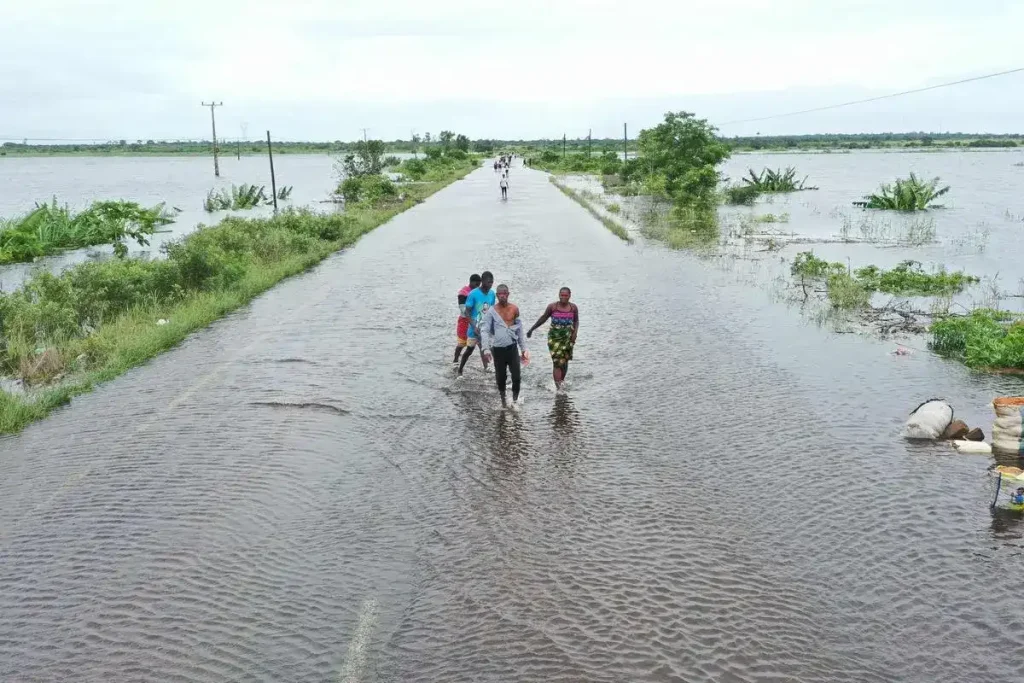
Search and rescue teams are currently struggling to reach stranded communities across Mozambique. Following weeks of catastrophic rainfall, flooding has submerged vast stretches of farmland and destroyed thousands of homes. Furthermore, the disaster has crippled critical infrastructure throughout Southern Africa.
The scale of this crisis is immense. Mozambique’s Institute for Disaster Management and Risk Reduction has now confirmed 103 fatalities. Additionally, more than 650,000 people have been forced to flee their homes.
Rescue Challenges and Health Risks
Local authorities and aid groups report that reaching survivors has become a logistical nightmare. In provinces like Gaza and Manhica, entire road networks have vanished under deep water.
- Access Denied: Many areas are now only accessible by boat. This is because floodwaters have completely cut off all land routes.
- Camp Crisis: Nearly 100,000 people are taking refuge in temporary camps.
- Disease Outbreak: ActionAid Mozambique has issued an urgent warning. They fear that cholera and other water-borne illnesses will spread rapidly through these crowded displacement centers.
The Science: A Year of Rain in Just 10 Days
A recent study by World Weather Attribution reveals the staggering intensity of this weather event. Researchers found that parts of Mozambique, South Africa, and Zimbabwe received a full year’s worth of rainfall in just 10 days.
Scientists describe the event as a “once-in-50-years” occurrence. However, they warn that such extremes are becoming the new normal due to global warming.
“Our analysis clearly shows that burning fossil fuels is increasing the intensity of extreme rainfall,” says Izidine Pinto, a senior climate researcher. “It turns events that would have happened anyway into something much more severe.”
Climate Change as a Force Multiplier
The study highlights a clear shift toward more violent weather patterns. Specifically, researchers noted two major factors:
- Increased Intensity: Human-caused climate change likely increased the intensity of this deluge by 40%.
- The La Niña Factor: The natural La Niña phenomenon usually brings wetter conditions to the region. However, it is now operating within a much warmer atmosphere, which supercharges the resulting storms.
Regional Impact and Infrastructure Damage
The devastation extends far beyond Mozambique’s borders. In Zimbabwe and the South African provinces of Limpopo and Mpumalanga, bridges have been swept away. Many buildings remain completely submerged. Consequently, the total financial damage to infrastructure is already estimated to be in the millions of dollars.
For these communities, a “serious rainy season” has transformed into a violent disaster. Unfortunately, the local infrastructure was never designed to handle a deluge of this magnitude.
ALSO READ: Kenyan Court Rejects Compensation for 1998 US Embassy Bombing Victims