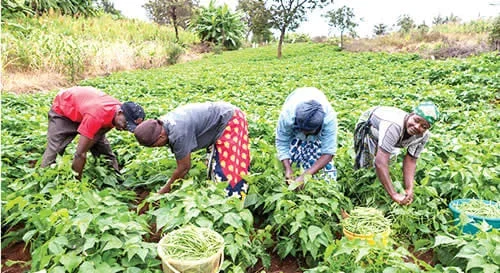
The Federal Government of Nigeria has committed over $50 million to biotechnology research and the development of climate-resilient seeds over the past two years. This major financial injection aims to modernize the nation’s agricultural landscape and ensure long-term food security.
Fatuhu Muhammed, Director General of the National Agricultural Seeds Council (NASC), disclosed this on Thursday, January 22, 2026, during the launch of the ProSeV Project. Speaking through Kunle Adeseko, the Director of Seed Industry Development, Muhammed emphasized that improved seed varieties are the “critical foundation” for transforming subsistence farming into a competitive agribusiness sector.
Breakthroughs in Seed Technology
The $50 million investment has already yielded significant results in the laboratory and on the field. By partnering with global research bodies like the International Institute of Tropical Agriculture (IITA), Nigeria has successfully developed:
- Pest-Resistant Cassava: Reducing crop loss for one of the nation’s most vital staples.
- Drought-Tolerant Millet: Ensuring survival in arid regions affected by changing weather patterns.
- High-Yield Rice: Boosting local production to meet the demands of a growing population.
Data-Driven Farming: The IMAGE Project
Historically, Nigerian agribusiness has struggled with inaccurate data regarding which seed varieties farmers actually use. To solve this, NASC is implementing the Institutionalizing Monitoring of Crop Variety Adoption through Genotyping (IMAGE) Project.
This initiative uses DNA fingerprinting to scientifically identify crops on farmers’ fields. By replacing visual identification with genetic evidence, the government can now track varietal dominance and adoption patterns with high accuracy. This data helps investors assess risks and allows regulators to effectively curb the spread of counterfeit seeds.
Record Gains and Digital Transformation
The Nigerian seed sector has seen several major milestones in the last few years:
- Certified Seed Distribution: Over 120,000 metric tonnes of certified seeds reached millions of smallholder farmers.
- Digital Seed System: A distribution system launched in 2021 has slashed logistics costs by 25% while improving transparency.
- Gender Inclusion: Women now represent 35% of certified seed users, signaling a shift toward more inclusive agricultural growth.
- Global Leadership: Through the Plant Variety Protection Act, Nigeria has secured membership in elite international bodies like UPOV and the OECD Seed Schemes, positioning itself as a leader in the African seed market.
Future Outlook
Moving forward, the government intends to sustain its collaboration with the Nigeria-Netherlands Collaborative Seed Programme, which has already facilitated the release of over 20 new crop varieties. With over 2.5 million farmers trained in modern agricultural practices, Nigeria is laying the groundwork for a more resilient and sustainable food system.