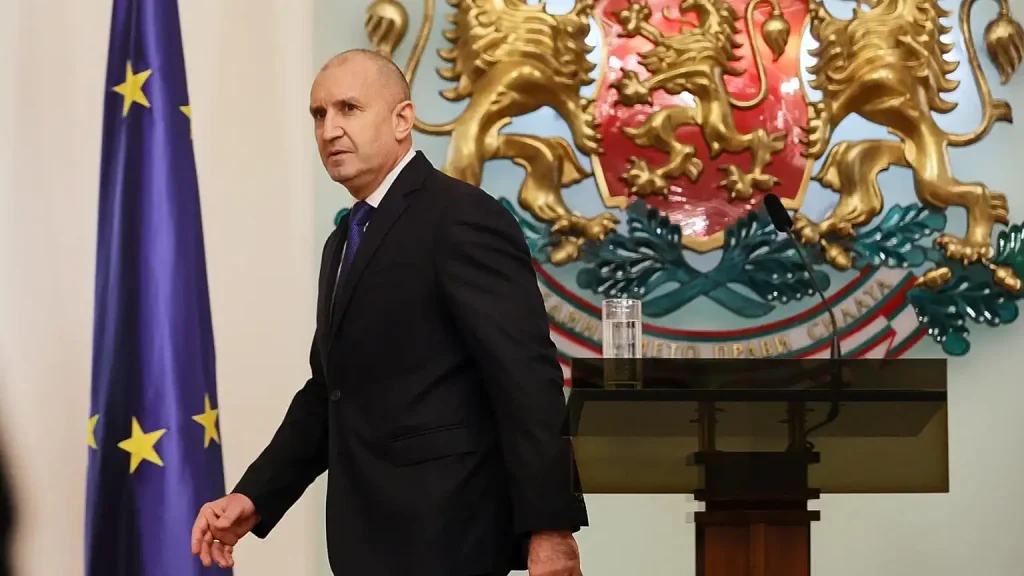
Bulgarian President Rumen Radev is trading his ceremonial office for the grit of the parliamentary battlefield. On Monday, January 19, 2026, the former air force commander announced his immediate resignation, cutting his term short by a full year.
This strategic exit paves the way for Radev to establish a new political entity. His objective is clear: to contest the upcoming general elections and seize legislative control in a nation paralyzed by instability.
A Country in Perpetual Election Mode
Radev’s move comes as Bulgaria faces its eighth parliamentary election in just four years. The political landscape is fractured, with the previous administration collapsing in December 2025 amid corruption scandals and budget disputes.
By stepping down, Rumen Radev seeks to transition from a critic on the sidelines to a central player in government formation. He plans to submit his resignation to the Constitutional Court on Tuesday.
Vice President Iliana Iotova is set to assume the presidency until the November elections.
Radev Targets a “Betrayal” of Hopes
The President has long expressed disdain for the revolving door of coalitions that have defined recent Bulgarian history. He frames his entry into the legislative race as a necessary intervention.
“Today’s political class has betrayed Bulgarians’ hopes. We need a new public contract,” Radev declared.
Ideological Clashes: Ukraine and the Euro
Radev’s platform diverges sharply from the European mainstream. Since his initial election in 2016, he has cultivated a profile defined by two controversial pillars:
- Pro-Kremlin Stance: Radev has frequently opposed military aid for Ukraine, describing the defense against Russian aggression as “doomed.”
- Euro Skepticism: Despite Bulgaria officially adopting the euro on January 1, 2026, Radev remains a vocal critic of the currency integration.
The Numbers Game
Analysts predict that Rumen Radev is taking a calculated risk. Polling data suggests his potential new party could capture between 20% and 35% of the vote.
While these numbers are strong, they are likely insufficient for a standalone majority. This creates a complex puzzle for post-election negotiations. A coalition with reformist groups like the PP-DB party would require overcoming massive ideological divides regarding the Eurozone and the war in Ukraine.
Consequently, while Radev aims to be a stabilizer, his return to the fray may deepen the fragmentation in Sofia.