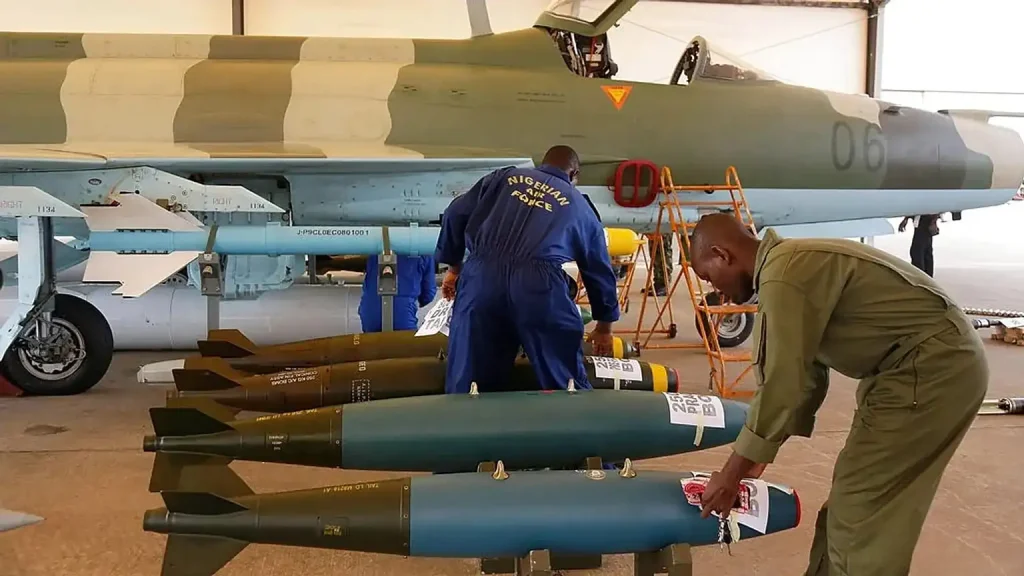
A complicated exchange of hardware and influence is underway between Abuja and Washington. On Tuesday, January 13, 2026, the United States officially transferred a consignment of “critical military supplies” to Nigeria.
This delivery underscores a fragile partnership. Just weeks ago, American forces executed a controversial aerial operation on Nigerian soil.
However, the hardware delivery is only half the story. Simultaneously, the Nigerian government has launched a massive financial offensive to reshape its image in the U.S. capital.
The $9 Million Battle for Narrative Control
While U.S. military supplies to Nigeria are flowing in, Abuja is sending millions of dollars out. National Security Adviser Nuhu Ribadu recently finalized a contract with the DCI Group, a prominent American lobbying firm.
The agreement comes with a steep price tag: $750,000 per month. Over the course of the initial contract, this totals $9 million.
The goal is specific. The firm must counter the narrative that the violence in Nigeria constitutes a “Christian genocide.” This theory has gained traction among international observers and separatist groups in the southeast.
Consequently, Abuja is paying to correct what it views as “misinformation.” The government insists the crisis is driven by criminal terrorism, not religious persecution.
Arrival of U.S. Military Supplies to Nigeria
Despite the ideological friction, the physical aspect of the security pact is moving forward. The U.S. Africa Command (AFRICOM) confirmed the arrival of the equipment on Tuesday.
Officials stated the gear will bolster counter-terrorism initiatives. However, specific details regarding the inventory remain classified.
This logistical support suggests a pragmatic alliance. Both nations face a common enemy in West African jihadist groups, forcing cooperation despite diplomatic awkwardness.
Fallout From the Christmas Day Strikes
The current diplomatic scramble follows a dramatic event late last year. On December 25, 2025, U.S. forces struck targets in Sokoto State.
President Donald Trump claimed credit for the operation, calling it a “Christmas present” to terrorists. He targeted the Islamic State and a local jihadist faction known as Lakurawa.
Conversely, the reaction on the ground was mixed.
-
The Official Line: Nigeria labeled it a “joint operation.”
-
The Local Reality: Journalists reported damage to civilian structures and farmlands.
-
The Friction: The unilateral tone of the U.S. announcement initially embarrassed Nigerian officials.
Refining the Rules of Engagement
To prevent future diplomatic embarrassments, the rules of engagement are shifting. A security source recently indicated that the Nigerian Air Force will lead future strikes. Meanwhile, the U.S. will pivot to providing intelligence and reconnaissance.
This adjustment is critical. President Trump recently told the New York Times that while he preferred a “one-time strike,” he would intervene again if the violence continues.
Previously, Trump labeled the situation in Nigeria as “persecution” and “genocide.” Furthermore, the State Department designated Nigeria a “country of particular concern” regarding religious freedom.
Now, Abuja hopes its $9 million investment will soften that rhetoric, ensuring the flow of U.S. military supplies to Nigeria continues without political strings attached.
__________________________________________________
U.S. Intervention in Venezuela: Lavrov Condemns “Gross Violation”