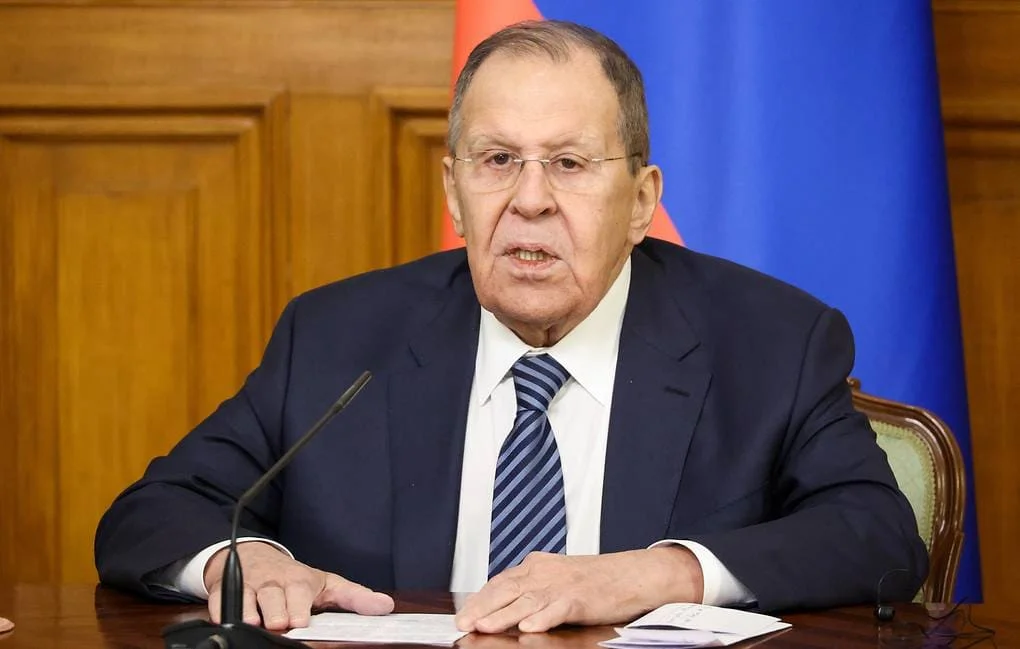
Diplomatic relations between Moscow and Washington deteriorated further this Wednesday. Russian Foreign Minister Sergey Lavrov formally declared the United States an “unreliable” international partner, citing the recent capture of Venezuelan leadership as the breaking point.
Speaking from Moscow on January 14, 2026, Lavrov did not mince words regarding the legality of the operation. He categorized the American mission as a “gross violation of international law.”
Rallying the Global Majority
Lavrov delivered these remarks during a joint appearance with Selma Ashipala-Musavyi, the Foreign Minister of Namibia. The setting was strategic. It underscored Russia’s argument that the Global South and East stand united against American unilateralism.
According to Russia’s top diplomat, support for the U.S. position is isolated to a specific geopolitical block.
“Only Western Europeans and other Washington allies are timidly trying to avoid making principled assessments,” Lavrov remarked.
This statement highlights a sharpening divide. Moscow asserts that the majority of the international community opposes the extrajudicial nature of the extraction.
Context: The January 3rd Raid
The controversy stems from a high-stakes military operation conducted just 11 days prior. On January 3, U.S. forces executed a raid in Caracas, the Venezuelan capital.
The mission’s impact was immediate and physical. Strikes on military infrastructure triggered significant power blackouts across the city. Amid the chaos, U.S. operatives seized Venezuelan President Nicolás Maduro and his wife, Cilia Flores.
Legal and Geopolitical Fallout
Both Maduro and Flores were immediately transported to New York City. They have since appeared in federal court, entering pleas of not guilty to charges involving narco-terrorism.
However, the courtroom drama is only half the story. The Kremlin views the raid not as law enforcement, but as a return to aggressive colonial-style politics.
Moscow had previously designated the extraction an “act of armed aggression.” Lavrov’s latest comments double down on this framing. He argues that Washington has discarded the very international rules it claims to uphold.
Consequently, the incident has moved beyond a bilateral dispute between the U.S. and Venezuela. It has evolved into a proxy debate on sovereignty, with Russia positioning itself as the defender of international law against Western overreach.