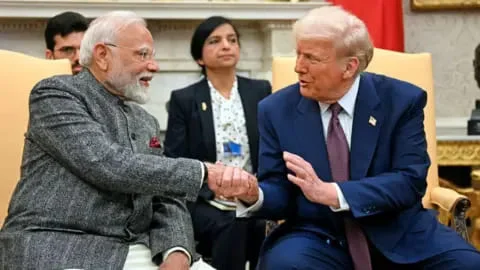
Commerce Secretary Howard Lutnick revealed that a major trade agreement between the United States and India failed because Prime Minister Narendra Modi never made a direct phone call to President Donald Trump to close the deal.
Speaking on the All-In podcast, Lutnick described how technical talks were finished, but the final step—a leader-to-leader confirmation—never happened.
The “Staircase” Trade Strategy
The Trump administration uses a tiered approach to negotiations: countries that sign first get the best terms, while those who delay face progressively higher tariffs.
India was given a tight three-week deadline after the United Kingdom sealed its deal with a personal call from Prime Minister Keir Starmer.
When India did not respond in time, the U.S. moved forward with agreements involving Indonesia, the Philippines and Vietnam at less favourable rates.
Immediate Consequences
The breakdown triggered swift economic pressure:
- In August 2025, the U.S. doubled tariffs on Indian imports to 50%, citing continued purchases of Russian oil
- This week, Trump approved a Russia Sanctions Bill that could push tariffs as high as 500% for countries funding Moscow’s energy sector
The Indian rupee hit a record low in response, and foreign investment in Indian manufacturing has cooled.
Why the Call Was Skipped
Indian officials reportedly hesitated due to concerns that a direct conversation could turn into a one-sided negotiation, potentially forcing quick concessions on sensitive issues.
Lutnick said the original offer has now expired, but added that India will eventually reach an agreement — just on tougher terms.