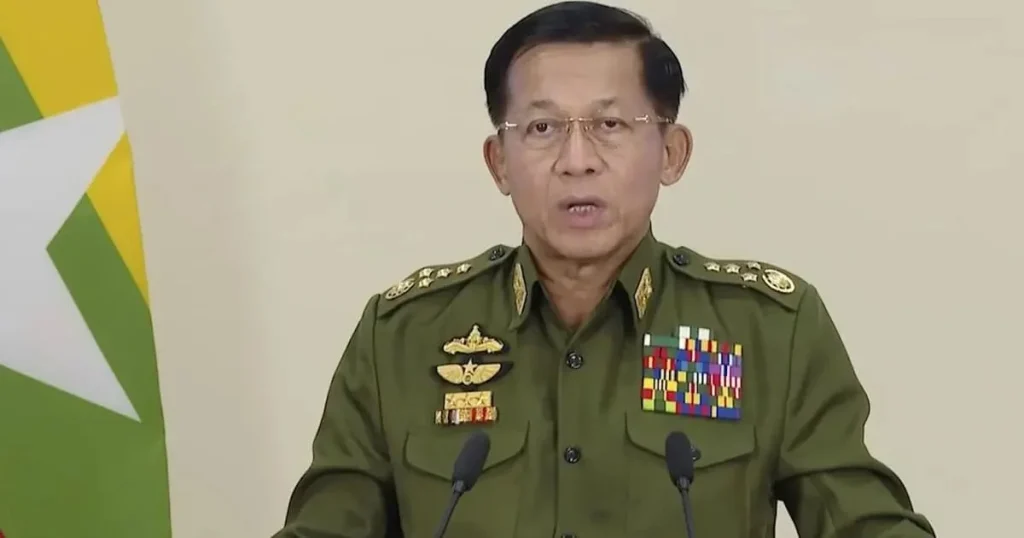
Myanmar’s military leader has explicitly directed voters to back pro-regime candidates just days before polls open. General Min Aung Hlaing, speaking from a military base, insisted that the electorate support individuals willing to work in lockstep with the Tatmadaw.
State media amplified this message, advising citizens to choose leaders capable of “cooperating” with the armed forces. This directive signals a clear intent to maintain the military’s grip on power, even as the regime attempts to pivot toward a civilian administration.
Strategic Shift for Legitimacy
Observers argue this political maneuvering aims to secure international recognition that the junta failed to achieve through warfare. By transitioning to a civilian-led government populated by military allies, the regime hopes to sanitize its image abroad.
Currently, the Union Solidarity and Development Party (USDP)—a military-backed faction—fields the highest number of candidates. Consequently, analysts predict a sweeping victory for the USDP. This outcome would likely allow Min Aung Hlaing to trade his uniform for a suit, protecting military interests from within a nominally civilian framework.
Myanmar Election Logistics: A Fragmented Process
The upcoming vote will not cover the entire nation. The junta restricted polling to areas where the regime retains security control. Specifically, voting will occur in only 202 of the country’s 330 townships.
Authorities split the Myanmar election schedule into three distinct phases:
-
Phase 1: Begins this Sunday, December 28, 2025.
-
Phase 2: Follows on January 11, 2026.
-
Phase 3: Concludes on January 25, 2026.
Officials have not yet confirmed when they will release the final results.
Critics Dismiss Polls as Military Strategy
The integrity of this election faces severe scrutiny. The military dissolved the National League for Democracy (NLD), led by ousted Nobel laureate Aung San Suu Kyi. Furthermore, election officials barred major anti-junta opposition groups from participation.
Experts warn that these exclusions render the process performative.
“A new iteration of indirect military rule will do nothing to resolve the armed conflict,” warned Richard Horsey, Senior Myanmar Adviser at Crisis Group.
Horsey highlighted that the nation remains deeply mired in crisis. Despite the regime’s efforts, a stable government appears unlikely while civil war rages across significant portions of the territory.
Background of the Conflict
The military has dominated Myanmar since independence in 1948. In February 2021, Min Aung Hlaing orchestrated a coup, alleging massive fraud in the previous election without providing evidence.
Nearly five years later, the conflict continues, and this election appears to be the latest tactic in a long struggle for control.
______________________________________________________________________________________________________________________________
Mamady Doumbouya Poised to Sweep Guinea Presidential Election Amid Mining Boom