The board of Kraft Heinz has recruited a veteran “breakup artist” to steer the conglomerate through its most significant restructuring in years.
Steve Cahillane, the former head of Kellogg, has been appointed as the new Kraft Heinz CEO. His mandate is clear: stabilize the business and execute a complex plan to divide the food giant into two independent companies.
Cahillane, 60, assumes leadership on January 1. He replaces Carlos Abrams-Rivera, whose tenure as chief executive began only in early 2024. Abrams-Rivera will move to an advisory capacity before exiting the firm on March 6.
A Proven Split Specialist
The selection of Cahillane signals a deliberate strategy to minimize execution risk. The incoming Kraft Heinz CEO is uniquely qualified for this specific challenge.
Cahillane recently guided the Kellogg Company through its own 2023 separation. That move created two distinct entities: the cereal-focused WK Kellogg Co and the snacking powerhouse Kellanova. Furthermore, he oversaw the subsequent sale of Kellanova to Mars for roughly $36 billion.
Investors view his appointment as a move to ensure the upcoming Kraft Heinz breakup produces coherent, profitable businesses. His resume also boasts high-level experience at global heavyweights AB InBev and Coca-Cola.
Blueprint for the Kraft Heinz Breakup
The restructuring plan, originally announced in September, aims to finalize the separation by the second half of 2026. The split will carve the portfolio into two divergent paths:
-
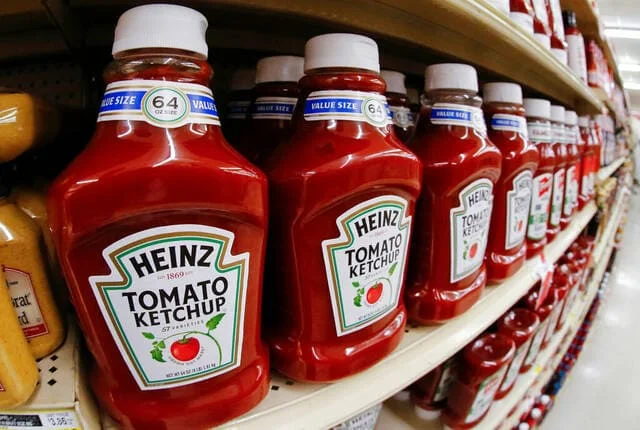
Sauces and Spreads: This unit, dubbed “Taste Elevation,” includes flagship assets like Heinz Ketchup. It generated approximately $15.4 billion in sales in 2024. Cahillane intends to lead this company post-split.
-
Grocery and Processed Foods: Focusing on ready-meals and meats like Oscar Mayer, this division brings in about $10.4 billion annually. The board is actively searching for a separate CEO to run this business.
Battling a Stock Slump
Cahillane arrives during a precarious financial window. The company is fighting to reverse a long-term decline in investor confidence.
Kraft Heinz shares have cratered roughly 75% since their 2017 peak. During Abrams-Rivera’s brief leadership alone, the stock fell nearly 30%. Currently, the company’s valuation lags well behind industry rivals such as PepsiCo, Mondelez, and Coca-Cola.
Management was forced to slash profit and sales targets in October. Inflation-weary shoppers are increasingly abandoning name brands for cheaper private-label options, stalling organic growth.
Navigating New Consumer Habits
Beyond the logistical hurdles of the Kraft Heinz breakup, the new leadership faces shifting cultural tides.
The entire packaged food sector is grappling with changing health standards. This includes the growing popularity of GLP-1 weight-loss drugs, which threaten to alter long-standing consumption patterns. Simultaneously, activists are demanding stricter scrutiny regarding artificial ingredients.
Cahillane has acknowledged that weight-loss medications will impact future food portfolios. Despite these headwinds, he remains committed to the separation plan, aiming to reduce complexity and sharpen the strategic focus of both new entities.
_______________________________________________________________________________________________________________________________
READ MORE: Ivory Coast Wins Fiscal Standoff as Miners Agree to New 8% Royalty