
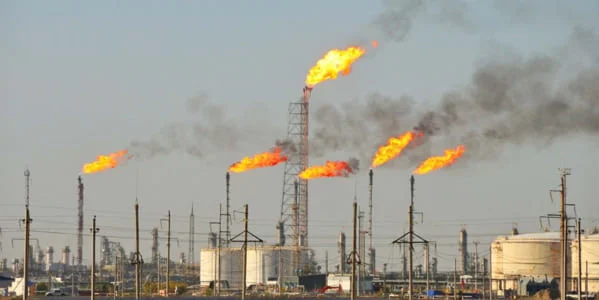
The Federal Government has taken a major step toward ending gas flaring and boosting Nigeria’s energy capacity.
On Friday, permits were issued to 42 companies to access flare gas under the Nigerian Gas Flare Commercialisation Programme (NGFCP).
The move is projected to attract up to $2 billion in new investments into the sector.
The announcement was made by Gbenga Komolafe, the Commission Chief Executive of the Nigerian Upstream Petroleum Regulatory Commission (NUPRC), during the permit ceremony for the 2022 NGFCP cycle held in Abuja.
Turning Waste into Wealth
Komolafe revealed that 49 flare sites were auctioned during the process, with 42 successful bidders emerging. These projects are designed to capture and commercialize gas that is currently being wasted.
According to the NUPRC boss, the initiative will capture between 250 and 300 million standard cubic feet of gas per day.
Economic and Environmental Impact
The Commission Chief Executive outlined the transformative potential of the programme:
- Carbon Reduction: The projects will eliminate approximately six million tonnes of carbon dioxide (CO2) annually.
- Job Creation: More than 100,000 direct and indirect jobs are expected to be created.
- Clean Cooking: About 170,000 metric tons of LPG (cooking gas) will be produced annually, providing clean energy access for approximately 1.4 million households.
- Power Generation: The captured gas has the potential to unlock nearly 3 gigawatts (GW) of power generation.
Supporting the Awardees
To ensure the success of these projects, Komolafe announced the establishment of an NGFCP Forum and College of Awardees. This body will facilitate knowledge exchange and support project implementation.
“We have also deepened engagement with international financiers and technology partners,” he noted, adding that Nigeria’s leadership in upstream decarbonization is gaining global recognition.
A Call to Action
However, Komolafe warned that receiving the permit is just the beginning. He urged the companies to maintain discipline in project execution.
“The Permit to Access Flare Gas is a critical step forward, but it is not the final destination. The value of this programme will be realized only through consistent, disciplined project execution,” he stated.
He assured stakeholders that the commission would closely monitor progress under the Milestone Development Agreements while providing necessary regulatory support.
“To our awardees, we look forward to seeing your projects progress from plans to productive assets,” he concluded.
The NGFCP was launched by the Federal Government to tackle the environmental hazard of gas flaring in oil-producing regions while pivoting toward clean energy and economic growth.
Genocide Alarms Ring as RSF Capture of El-Fasher Deepens Sudan Crisis