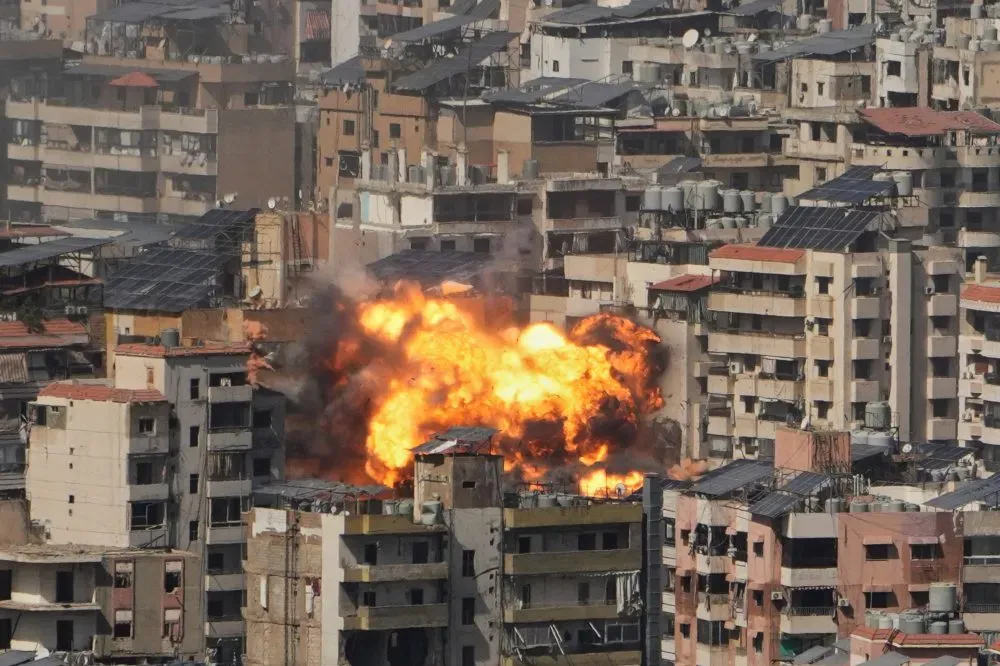
The global economy is reeling as international oil prices shattered the $100 per barrel threshold on Thursday, March 12, 2026. This dramatic surge is a direct result of escalating military strikes and targeted attacks on critical energy infrastructure across the Middle East. As joint American and Israeli forces continue to pound Iranian targets, the “Total War” shows no signs of a ceasefire, sending shockwaves through global commodity markets.
Since the conflict began on February 28, 2026, the geopolitical landscape has shifted from localized skirmishes to a full-scale regional war. Today’s price hike represents a staggering 38% increase in the cost of crude oil since the outbreak of hostilities. With the standard for international pricing, Brent crude, rising another 9% in a single day, the world is now bracing for a period of unprecedented energy inflation.
A Multi-Front Assault on Global Energy Hubs
Tehran has responded to Western military pressure with a calculated campaign of economic warfare. The strategy is clear: inflict enough global financial pain to force a halt to the U.S.-Israeli offensive. On Thursday, this campaign reached a fever pitch with a series of synchronized strikes across the Persian Gulf and surrounding territories.
The Day of Disruption: Major Targets Hit
Maritime Attacks: A large container ship was struck off the coast of Dubai, signaling that even commercial shipping far from the immediate combat zone is no longer safe.Aviation Threats: A significant blaze erupted near Bahrain’s International Airport following a strike, disrupting regional air travel and logistics.Drone Warfare: Iran successfully targeted a major Saudi Arabian oil field using long-range suicide drones, directly hitting the heart of global spare oil capacity.Iraqi Shutdown: Following a devastating attack on the Port of Basra, Iraq was forced to halt operations at all of its oil terminals. As one of the world’s leading producers, Iraq’s sudden absence from the market has left a massive supply vacuum.
The Chokepoint: A Stranglehold on the Strait of Hormuz
Perhaps the most critical factor in the current price explosion is the effective closure of the Strait of Hormuz. This narrow waterway, which separates the Persian Gulf from the Indian Ocean, is the world’s most important energy artery. Under normal conditions, roughly one-fifth of the world’s total oil consumption passes through this 21-mile-wide chokepoint.
By leveraging its geographical position, Iran has placed a “stranglehold” on the Strait. With military assets and naval blockades effectively stopping the flow of tankers, the global supply chain has been severed. Without access to the massive reserves of the Gulf, nations dependent on imported energy—including major economies in Europe and Asia—are facing an immediate and existential threat to their industrial stability.
Economic Consequences: The $100 Barrel Reality
For the average consumer, the shift to $100 oil is not just a headline; it is a catalyst for a massive increase in the cost of living. When the cost of a barrel of oil rises, the price of everything from gasoline to plastic and fertilizers follows.
The Inflationary Spiral
- Transport Costs: Airlines and trucking companies are already announcing “war surcharges” to cover the rising cost of fuel.
- Food Prices: Because modern agriculture relies heavily on petroleum-based fertilizers and diesel-powered machinery, a sustained oil spike will inevitably lead to higher grocery bills.
- Manufacturing: Industrial giants that rely on natural gas and oil for power are seeing their margins evaporate, leading to fears of a global recession.
Economists note that the current price of Brent crude is a “fear premium.” The market is not just reacting to the oil that has been lost today, but to the potential for a total and permanent disruption of Middle Eastern energy exports if the war continues into the summer months.
The Roots of the Conflict
The current crisis traces its origins back to the February 28 attack launched by the United States and Israel against Iranian military and nuclear infrastructure. What was initially framed as a precision strike to neutralize regional threats has transformed into a high-stakes war of attrition.
The joint U.S.-Israeli strategy appears focused on dismantling Iran’s command and control centers. However, the Iranian response has been asymmetric. Instead of engaging in a traditional head-to-head naval battle, Tehran has utilized its proxy networks and missile technology to strike at the “soft underbelly” of the global economy: the energy infrastructure of U.S. allies in the Gulf.
No End in Sight: The Geopolitical Stalemate
As of Thursday evening, diplomatic efforts at the United Nations have remained deadlocked. Neither side appears willing to blink. The United States and Israel have vowed to continue their “pounding” of Iranian targets until their security objectives are met. Conversely, Tehran has made it clear that the economic pain will continue—and likely intensify—until the air strikes cease.
This stalemate leaves the global market in a state of high-alert. With Iraq’s terminals offline and Saudi fields under fire, the “spare capacity” that usually stabilizes the market is non-existent.
Conclusion: A Fragile World Order
The surge of oil above $100 a barrel is a stark reminder of how fragile the global energy system truly is. In 2026, a conflict in a single geographic region can still bring the world’s most powerful economies to their knees. As long as the Strait of Hormuz remains a combat zone and the sky over Tehran remains filled with joint-force bombers, the price of oil will continue to be the primary indicator of global stability or the lack thereof.
The coming days will be critical. If the blockade of the Strait persists, the $100 mark may only be the beginning of a much steeper climb.
READ ALSO: Trump Forecasts “Short-Term Excursion” as Iran Digs In for Long War