A silent economic uprising is transforming West Africa. The agents of change are rural women armed with ambition. They are successfully rewriting the rules of generational wealth.
The primary vehicle for this change is Ivory Coast rubber farming. This lucrative agricultural sector is traditionally controlled entirely by men. Today, it is offering a vital financial lifeline to female cultivators.
Global industries rely heavily on natural rubber. Refined latex is essential for manufacturing vehicle tires and medical supplies.
Consequently, owning a slice of this supply chain guarantees long-term, stable income. Mature rubber trees can yield sap continuously for decades.
For generations, Ivorian women have worked these rural plantations. Yet, they rarely reaped the true financial rewards of the harvest. They provided the backbreaking labor while male relatives managed the profits.
Now, this oppressive dynamic is rapidly fracturing. Female farmers are securing their own private plots. They are keeping the profits and gaining unprecedented autonomy.
This movement goes far beyond simple agriculture. It is a fundamental restructuring of rural economic power.
The Cultural Battle in Ivory Coast Rubber Farming
Agriculture forms the undeniable backbone of the Ivorian economy. Despite this, glaring inequalities persist regarding basic property rights.
The Organisation for Economic Cooperation and Development highlights a stark reality. Only five percent of women own agricultural land in the nation. In contrast, 25 percent of men hold official property titles.
This deep disparity is a widespread issue across sub-Saharan Africa. The UN Food and Agriculture Organization notes a troubling contradiction. Women represent nearly half the entire agricultural workforce.
However, rigid cultural norms frequently block their path to true ownership. Local inheritance traditions heavily favor male descendants over females.
Affoua Mea experienced this systemic marginalization firsthand. The 64-year-old farmer spent years tending her late father’s plantation.
Meanwhile, her brothers maintained strict, exclusive control over the family finances. She eventually grew tired of this deeply unfair arrangement.
“The family plot belongs to all of us,” she said. The reality of the profit distribution, however, was entirely different.
“What they give me are crumbs. That’s why I decided to start my own plantation,” she explained.
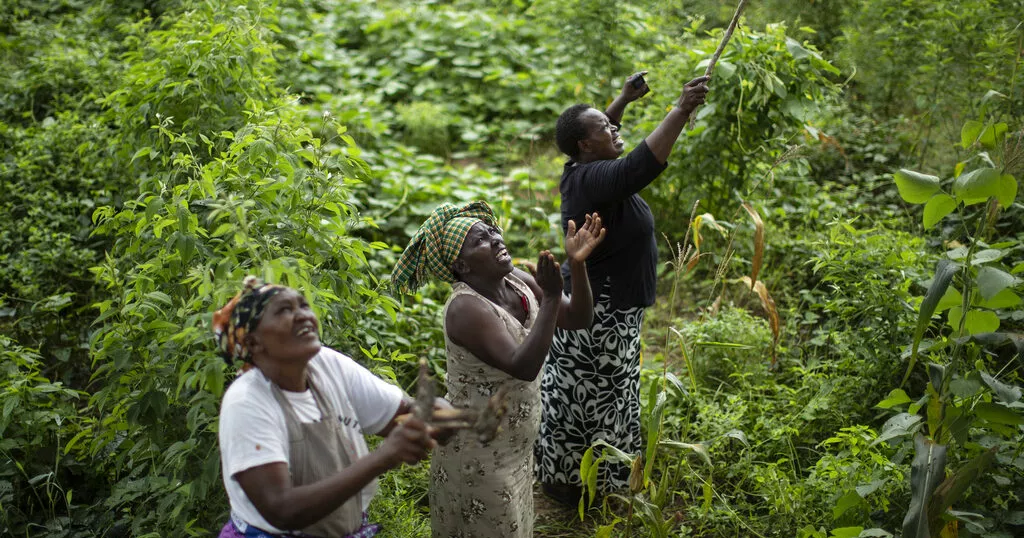
Mea successfully purchased her own land last year. She now taps slim tree trunks for white sap in the eastern town of Bongouanou.
She finally enjoys the direct fruits of her own labor. “I’m really independent and freer,” she told AFP.
Subsidizing the Future of Ivory Coast Rubber Farming
Participating in Ivory Coast rubber farming requires significant initial capital. Purchasing commercial seedlings and securing arable land is highly expensive.
Fortunately, systemic institutional support is now available. The Association of Natural Rubber Professionals of Ivory Coast (APROMAC) is driving this change.
This organization aggressively targets the gender gap in land ownership. They provide massive financial subsidies specifically to female farmers.
These vital grants cover up to 80 percent of the cost of new rubber trees. This radically lowers the barrier to entry for marginalized workers.
Since 2009, approximately 2,500 women have utilized these low-cost agricultural plants. Furthermore, demand has skyrocketed over the last five years.
This recent surge followed the introduction of new subsidies designed exclusively for women. The ambitious program is cleverly funded through monthly contributions paid by existing producers.
Solange Kouakou is one of these proud beneficiaries. The 45-year-old farmer utilized the program to maximize her inherited land near Toumodi.
Without targeted assistance, planting a hectare of land costs 210,000 CFA francs. APROMAC reduced Kouakou’s total cost to just 62,000 CFA francs ($110).
“A lot of women say they, too, want to do rubber trees,” she noted. Her visible success is inspiring her peers to follow suit.
Negotiating Space for Ivory Coast Rubber Farming
Financial assistance alone cannot solve every systemic problem. Deep-rooted cultural obstacles still stand in the way of progress.
Jacqueline N’Guessan proudly represents women rubber producers for APROMAC. She personally confronts these societal barriers on a daily basis.
“In some places, girls aren’t allowed to inherit a plot of land”, she stated. This strict ban is entirely cultural, rather than enforced by law.
To overcome this, N’Guessan acts as a vital community broker. She negotiates directly with local authorities to secure land rights.
She meets with “the heads of the land, the village chiefs, the traditional leaders, or with the husbands, so that they give a small plot to their wives”, she explained.
“In some cases, we manage it,” she said. Diplomacy is often just as important as technical agricultural skill.
Meanwhile, alternative operational solutions exist when traditional negotiations fail. Some women sign multi-year contracts to farm land owned by others.
“Once they have access to the land, we move on to the subsidy phase,” she explained.
Furthermore, N’Guessan established a specialized plant nursery near Toumodi. This impressive facility currently employs 15 local women.
They cultivate the very seedlings ultimately sold to subsidy recipients. It creates a brilliant, self-sustaining ecosystem of female rural employment.
Income, Autonomy, and Ivory Coast Rubber Farming
The immediate financial returns from these micro-plantations are relatively modest. Kouakou earns roughly $116 a month from her specific hectare.
This generated income simply hovers around the national minimum wage. However, the true value lies in the profound independence it buys.
Previously, rural women had to request funds for every minor daily purchase. Now, they completely control their own household wallets.
“women who don’t have their own money, if they need to pay for something, they ask their husband… I do whatever I want”, Kouakou said proudly.
Her friend, Jacqueline Tano, witnessed this personal transformation. The 44-year-old recently purchased her own rubber plants for a half-hectare plot.
This newfound autonomy is breeding a powerful sense of self-esteem. Women are fundamentally transforming a vital sector of everyday Ivorian life.
Crucially, this newly acquired wealth will not revert to male relatives. These empowered women are breaking the patriarchal inheritance cycle permanently.
Mea has already made her personal estate planning incredibly clear. She firmly refuses to hand her hard-won property over to her son.
“I’ll leave it to my daughter,” she said.
Consequently, the long-term future of Ivory Coast rubber farming looks vastly different. For these women, financial freedom is literally growing on trees.
_________________________________________________
IMF Signals Post-Election Timeline for Zambia’s Next Financial Package