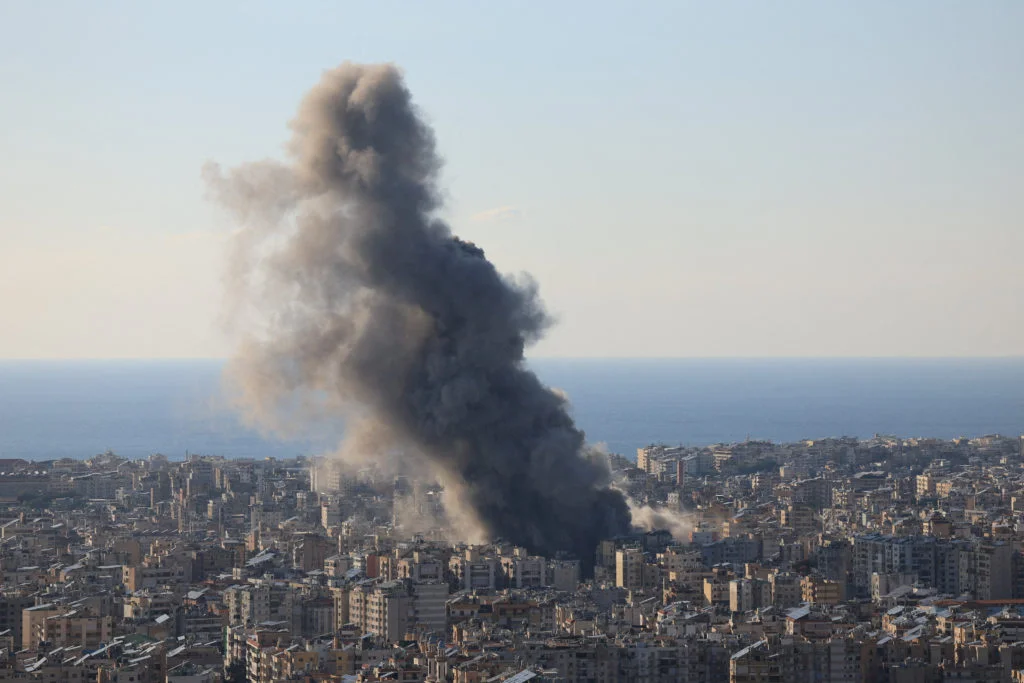
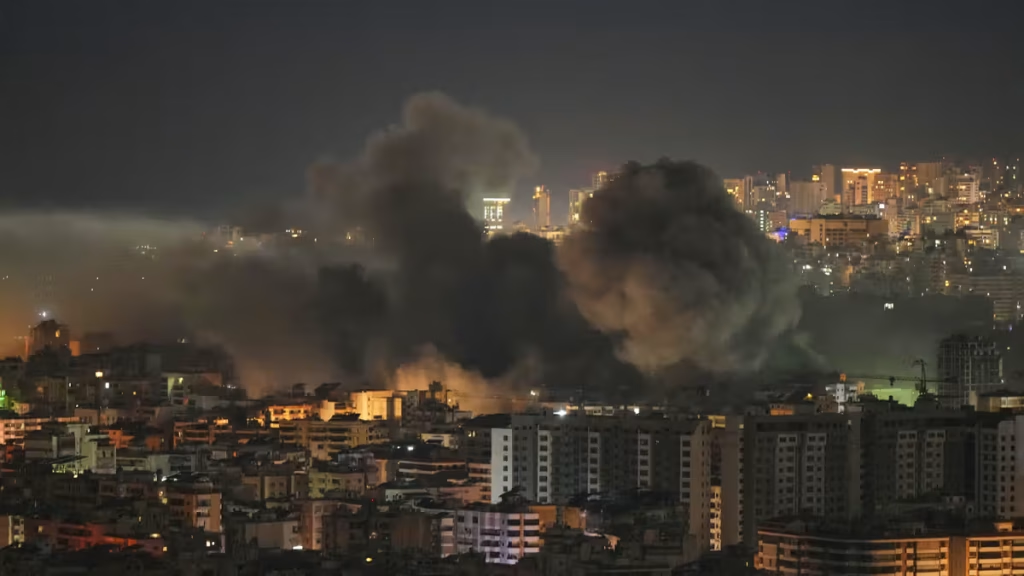
A humanitarian catastrophe is unfolding in the heart of Lebanon. More than 95,000 people have been forced from their homes in a matter of days. This staggering Beirut displacement crisis follows a series of intense military maneuvers and aerial bombardments. The southern suburbs, once bustling residential hubs, have transformed into scenes of absolute panic. Consequently, the social fabric of the capital is being tested like never before.
The immediate catalyst for this exodus was a series of urgent directives. On Thursday, the Israeli military issued immediate evacuation orders for large sections of the southern suburbs. These areas, specifically the district known as Dahiyeh, are among the most densely packed neighborhoods in the world. Residents were told to leave their homes with almost no notice. This triggered a frantic and disorganized movement of masses toward any perceived safety.
The Geography of the Beirut Displacement Crisis
The scale of the movement has overwhelmed the city’s infrastructure. Families did not just leave their homes; they abandoned entire lives in minutes. The flow of people moved in three primary directions. Thousands headed toward the central districts of Beirut. Others pushed toward the Mediterranean coast, hoping the open air would offer safety. Furthermore, many sought refuge in the rugged terrain of the nearby mountains.
The result is a city struggling to breathe under the weight of its own population. Public squares that usually host tourists now house families. The famous Beirut seafront, or Corniche, has become a sprawling, improvised campsite. People are sleeping in their vehicles or on cardboard boxes laid out on the pavement. These makeshift shelters offer little protection from the elements. However, for many, the open street feels safer than a concrete building in a target zone.
Military Objectives and Infrastructure Targets
The Israeli military maintains that these strikes are surgical in nature. They claim to be targeting specific Hezbollah infrastructure embedded within the civilian architecture of Dahiyeh. These targets reportedly include command centers, weapons storage facilities, and logistical hubs. The IDF asserts that the evacuation warnings are a necessary measure to minimize collateral damage.
Despite these claims, the physical impact on the city is undeniable. Massive explosions have echoed across the capital for several days. Thick clouds of dark smoke have become a permanent fixture of the Beirut skyline. This violence did not emerge from a vacuum. It is the latest chapter in a week-long escalation of hostilities. Hezbollah recently launched a series of drone and missile attacks toward Israeli territory. This regional friction has now reached a boiling point that threatens to consume the entire Levant.
A Nation Already on the Brink
The timing of this Beirut displacement crisis is particularly devastating for Lebanon. The country has been grappling with a severe, years-long economic depression. Public services are nearly non-existent in many sectors. The local currency has lost the vast majority of its value. Consequently, the government has almost no resources to manage a mass internal migration.
Schools and public buildings are being converted into emergency shelters. However, these facilities were never designed to house tens of thousands of people indefinitely. Sanitation and food security are becoming immediate concerns for local authorities. The Lebanese government is now pleading for international assistance to manage the surge. Without a significant influx of aid, the situation in the streets could rapidly deteriorate into a health crisis.
The Geopolitical Ripple Effect
This conflict is far more than a local skirmish. It is a critical component of a much larger regional confrontation. On one side, Israel is attempting to degrade the military capabilities of its northern neighbor. On the other, Hezbollah acts as a primary pillar of a regional network supported by Iran. This “Axis of Resistance” views the current fighting as a unified front against Israeli interests.
The involvement of Iran adds a layer of extreme volatility to the situation. Tehran’s strategic goals are deeply intertwined with the survival of Hezbollah’s infrastructure. If the strikes continue to intensify, the risk of a direct regional war increases exponentially. International diplomats are working behind the scenes to prevent a total collapse of regional stability. Meanwhile, the people of Beirut remain caught in the crossfire of these high-stakes geopolitical maneuvers.
Life in the Shadow of War
For the 95,000 displaced individuals, the high-level politics matter less than immediate survival. The psychological toll of the evacuation is profound. Many of those fleeing Dahiyeh have lived through previous conflicts. For them, the sound of drones and the sight of smoke are traumatic reminders of the past. Children are now being raised in the back of cars and on the edges of highways.
The resilience of the Lebanese people is well-known, but it is not infinite. The current situation is stretching that resilience to its absolute breaking point. There is a palpable sense of uncertainty regarding when—or if—these families can return home. Even if the bombing stops tomorrow, the damage to the infrastructure of the southern suburbs will take years to repair.
Looking Toward an Uncertain Horizon
The coming days will be decisive for the future of Lebanon. Military analysts suggest that the air campaign may continue until specific strategic objectives are met. Conversely, if Hezbollah continues its drone and missile salvos, the cycle of retaliation will only deepen. The Beirut displacement crisis is not a static event; it is a growing, living emergency.
As the international community watches, the primary focus remains on de-escalation. However, the path to a ceasefire is cluttered with historical grievances and modern military ambitions. For now, the people of Beirut can only wait. They watch the skies for the next plume of smoke and wait for a sign that they might finally go home. Until then, the streets of the capital will remain filled with the displaced, serving as a silent testament to the cost of regional war.
_________________________________________________
Iran Israel Escalation: Tehran Rallies as Conflict Enters Seventh Day