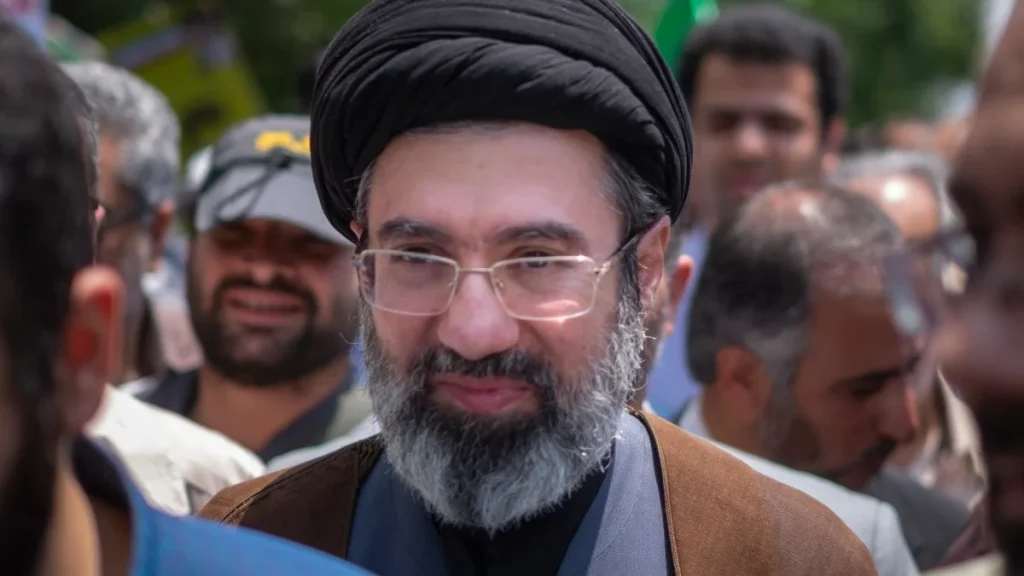
The political landscape of Iran is currently facing its most volatile transition since the 1979 Islamic Revolution. Following the death of Supreme Leader Ayatollah Ali Khamenei in a recent Israeli airstrike, international attention has shifted to his son, Mojtaba Khamenei. Though he has never held an official government office or won an election, he has long been viewed as a primary contender for the country’s highest position of power.
Mojtaba remains a deeply secretive figure. He has not made a public appearance since the strike on his father’s offices, which also claimed the life of his wife, Zahra Haddad Adel. While state media remains silent on his location, experts believe he has moved into hiding to evade ongoing military operations.
A Dynastic Shift in a Theocratic Republic
The potential ascension of Mojtaba Khamenei is a subject of intense debate within Iran. Critics have historically argued that passing power from father to son mirrors the hereditary monarchy that the 1979 Revolution sought to dismantle. However, the current climate of conflict may have altered the internal calculus of Iran’s leadership.
The Assembly of Experts, an 88-seat body of aging clerics, is responsible for choosing the next Supreme Leader. With his father and wife now viewed as martyrs by hard-liners, Mojtaba’s standing among these decision-makers has likely strengthened. Whoever is selected will inherit a nation at war and a sophisticated nuclear program capable of producing highly enriched uranium.
Ties to the Revolutionary Guard and Global Sanctions
Mojtaba Khamenei’s influence is rooted in his deep connections with Iran’s military elite. According to reports from the U.S. Treasury, he has maintained close working relationships with:
- The Quds Force: The expeditionary wing of the Revolutionary Guard responsible for regional operations.
- The Basij: An all-volunteer paramilitary force known for its role in suppressing domestic dissent and protests.
Because of these roles, the United States imposed sanctions on him in 2019. The U.S. government accused him of advancing “destabilizing regional ambitions” and supporting “oppressive domestic objectives” on behalf of his father’s administration.
The Weight of the Supreme Leadership
In the history of the Islamic Republic, there has been only one prior transfer of power in the office of the Supreme Leader. The position was first held by Ayatollah Ruhollah Khomeini, who led the country until his death in 1989. The Supreme Leader acts as the ultimate authority in Iran’s Shiite theocracy, holding the final word on all matters of state and religion.
| Responsibility of the Supreme Leader | Impact on Iranian Policy |
| Commander-in-Chief | Final authority over the regular military and the Revolutionary Guard. |
| Paramilitary Control | Directs the “Axis of Resistance” across the Middle East. |
| Strategic Arsenal | Oversees the country’s vast ballistic missile program. |
| Economic Influence | Manages extensive wealth and holdings controlled by the Guard. |
The Axis of Resistance and Regional Conflict
The Revolutionary Guard does more than just provide security; it is a massive economic and political engine. It leads the “Axis of Resistance,” a network of militant allies designed to counter American and Israeli influence in the Middle East. Under the previous Supreme Leader, this paramilitary force grew in both wealth and military capability.
As the region faces escalating airstrikes and ground tensions, the next leader will need to manage this complex web of proxy groups and a domestic economy under immense pressure.
Whether Mojtaba Khamenei emerges from the shadows to take the mantle remains to be seen, but his proximity to the military apparatus makes him a central figure in Iran’s uncertain future.
Looking Ahead: A Pivotal Decision
The coming weeks will determine the direction of Iran for decades to reach. The Assembly of Experts must balance the need for stability with the potential public backlash against a hereditary succession.