
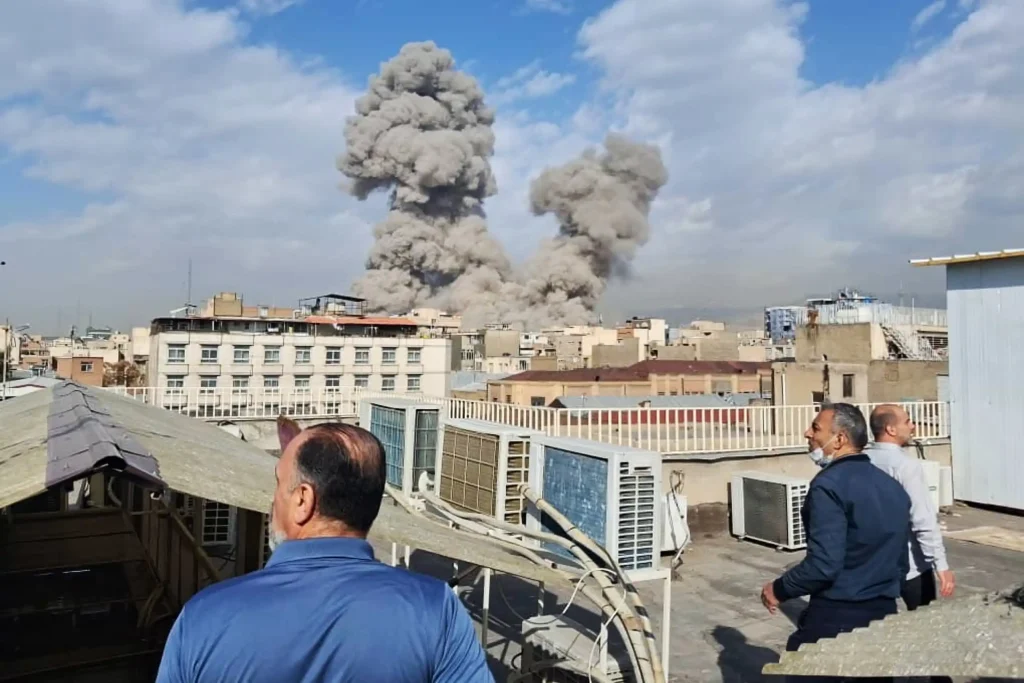
In a major escalation of regional hostilities, Iran’s Revolutionary Guards (IRGC) announced on Monday, March 2, 2026, that they have launched targeted missile strikes against two high-profile Israeli sites. According to the Fars news agency, the IRGC aimed its precision weaponry at the office of Israeli Prime Minister Benjamin Netanyahu and the headquarters of the Israeli Air Force (IAF) commander.
This announcement comes during a time of unprecedented military tension in the Middle East. The IRGC described the operation as a direct response to recent Israeli actions. Furthermore, they labeled the Prime Minister’s office as the “center of the criminal Zionist regime.”
The Weaponry: Deployment of Kheibar Missiles
The IRGC confirmed the use of Kheibar missiles during the assault. This specific class of weaponry is famous for its long-range capabilities and high-explosive payloads. Engineers designed these missiles specifically to penetrate reinforced and heavily protected structures.
Choosing the Kheibar missile is a strategic move. It represents one of the most advanced components in Iran’s ballistic arsenal. By naming the specific hardware, the Revolutionary Guards are demonstrating their technical capacity to strike deep into Israeli territory. They aim to show that even heavily fortified administrative and military hubs are within their reach.
Regional Fallout: UK Bases and US Travel Warnings
The ripples of this escalation extend far beyond the borders of Iran and Israel. Recent reports indicate that the conflict is drawing in global powers and affecting international security protocols.
The Cyprus Incident
In a related development, an Iranian drone reportedly struck a runway at a UK-Cyprus military base. While authorities are still assessing the damage, British Prime Minister Keir Starmer addressed the nation. He clarified that while the incident is grave, the “UK is not at war.” This statement highlights the delicate diplomatic balancing act Western leaders must perform to prevent a total regional conflagration.
US Security Alerts
As a direct consequence of the IRGC’s claims and the drone strikes, the United States issued a comprehensive three-tier travel warning. This alert covers Americans currently in or traveling to 13 different Middle Eastern nations. The State Department has urged citizens to exercise extreme caution due to the increased risk of retaliatory strikes and civil unrest.
Internal Shifts: Iran Appoints New Acting Defence Minister
The military offensive abroad coincides with significant structural changes within the Iranian government. Following the deaths of high-ranking officials in previous Israeli-US strikes, President Masoud Pezeshkian has moved to stabilize the nation’s defense apparatus.
General Majid Ebnelreza, a prominent figure within the Revolutionary Guards, is now the Acting Defence Minister. The announcement was made by the deputy for presidential communications, Mehdi Tabatabaei, via a post on social media.
General Ebnelreza takes the helm at a moment of extreme volatility. His predecessor was killed in a joint operation attributed to Israeli and American forces. This loss dealt a heavy blow to the Iranian military leadership. Appointing an IRGC general to this civilian post underscores the increasing integration of the Revolutionary Guards into state governance during times of conflict.
Analysis: The Strategic Intent of the Strikes
The decision to target the Prime Minister’s office and the Air Force headquarters is a symbolic and tactical shift. Previously, strikes often targeted border positions or secondary military installations. By targeting the heart of the Israeli political and air defense leadership, Tehran is signaling that “no target is off-limits.”
Key Strategic Goals:
- Political Destabilization: Aiming at the Prime Minister’s office is intended to create internal pressure within the Israeli government.
- Neutralizing Air Superiority: Targeting the Air Force commander’s headquarters aims to disrupt the coordination of Israel’s air fleet.
- Deterrence: The IRGC aims to show that further strikes against Iranian leaders will result in direct hits on Israeli decision-making centers.
The Global Response: Calls for Restraint
As news of the Kheibar missile deployment spreads, the international community is calling for immediate de-escalation. The United Nations and various European leaders have expressed concern that the “tit-for-tat” nature of the current conflict is reaching a point of no return.
The involvement of drone technology in Cyprus and the subsequent US travel warnings suggest that the civilian sectors of the Middle East are now within the “danger zone.” Consequently, airlines have already begun rerouting flights to avoid the airspace over the Levant and the Persian Gulf.
Conclusion: A Region on the Brink
The claim by the Revolutionary Guards marks a watershed moment in the 2026 Middle East crisis. With a new Acting Defence Minister in place and advanced missiles in the air, Iran is positioning itself for a protracted engagement.
The coming days will be critical for regional stability. The world waits to see how Israel will respond and whether the international community can find a diplomatic solution before the conflict expands into a broader global crisis.
READ ALSO: African Nations Push Back: Why Zambia and Zimbabwe Are Rejecting Billions in US Health Aid