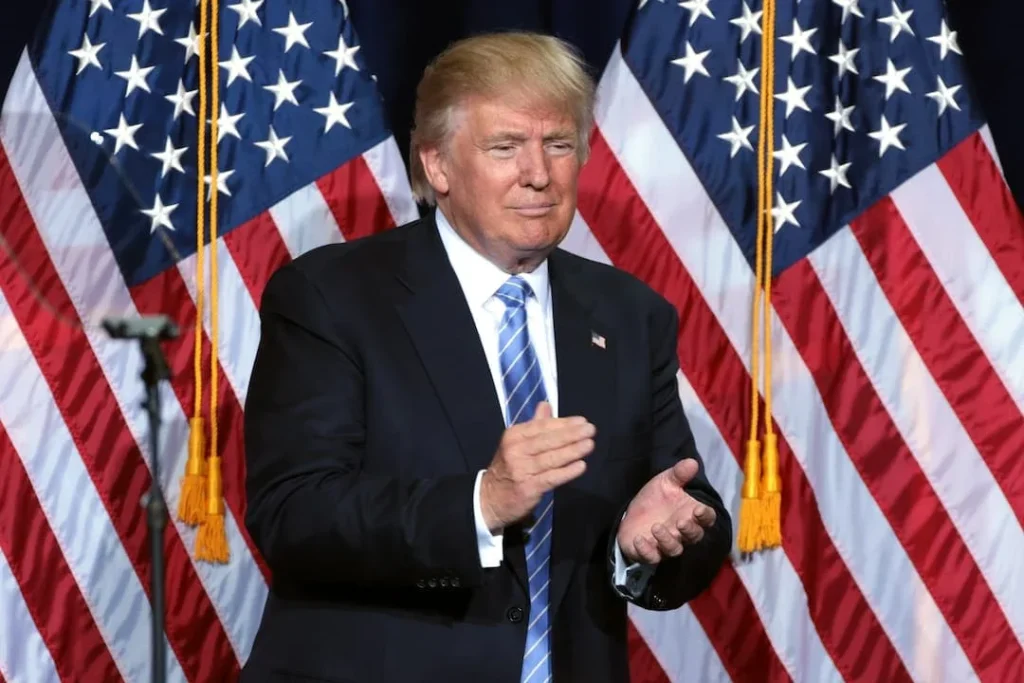
The United States stands at a historic and perilous crossroads. Following the dramatic military escalation on the night of Friday, February 27, 2026, the country find itself embroiled in a full-scale conflict with Iran. As bombs fall and the Middle East braces for impact, a secondary battle is igniting within the halls of the US Congress.
This week, lawmakers are scheduled to vote on critical motions designed to curb the executive power of President Donald Trump. Since returning to the White House in 2025, Trump has aggressively expanded the reach of the presidency, often leaving the legislative branch in its shadow. Now, a bipartisan group of legislators is moving to reassert a fundamental principle of American democracy: the constitutional right of Congress to be the sole body that can declare war.
The Legislative Rebellion: The Kaine Resolution
Leading the charge in the Senate is Senator Tim Kaine, who has been a vocal critic of the administration’s hawk-like stance. Shortly after the joint U.S.-Israeli operations began, Kaine took to social media to condemn the move, labeling it an “unnecessary and illegal war.”
Kaine’s primary weapon is a resolution introduced in late January, during the initial military buildup in the Gulf. This bill is designed to force the President to obtain explicit authorization from Congress before engaging in sustained military hostilities with Iran.
The Argument Against “Imminent Threat”
The legal justification for the war hinges on the definition of an “imminent threat.” President Trump asserted in a midnight broadcast that Iran posed an immediate danger to American interests. however, Senator Kaine—who sits on key committees with access to classified intelligence—disputes this claim.
“I can state plainly that there was no imminent threat from Iran to America sufficient to warrant committing our sons and daughters to another war in the Middle East,” Kaine wrote in a recent op-ed.
Is the War Legal? Understanding the War Powers Act
The debate over the legality of the current conflict centers on the War Powers Act of 1973. This law was created to provide a check on the president’s power to commit the United States to an armed conflict without the consent of the U.S. Congress.
The 60-Day Clock
Under the 1973 Act, a president can launch a limited military intervention in an emergency involving an attack on the U.S. or its forces. However, there are strict rules:
- The Notification: The President must notify Congress within 48 hours of committing armed forces.
- The Deadline: The President must terminate the use of forces within 60 days unless Congress declares war or grants a specific authorization.
- The “War” Label: Significantly, Pentagon chief Pete Hegseth has already used the word “war” to describe the conflict, moving beyond the terminology of a “limited intervention.”
A House Divided: Bipartisan Pushback
While the Republican majority in the Senate is expected to largely shield the President, the House of Representatives is seeing a unique alliance. Conservative Republican Thomas Massie has joined forces with Democrat Ro Khanna to demand a formal vote.
Massie, known for his strict constitutionalist views, argued that every representative needs to be on the record regarding this conflict. “The Constitution requires a vote,” Massie stated, emphasizing that the legislature cannot simply be a bystander while the executive branch wages war.
The Geopolitical Ripple Effect
The conflict has already sent shockwaves through the global economy and regional stability. For clients and investors monitoring the situation, the following developments are critical:
- Energy Markets: Oil and gas prices have surged globally as strikes disrupt supply lines in the Middle East.
- Gulf Instability: Reports indicate that Qatar has downed Iranian jets as the crisis spills over into neutral territories, affecting LNG and oil facilities.
- Global Protests: Large-scale demonstrations have broken out in various parts of the world, including Nigeria, following reports of high-level Iranian casualties.
The Strategic Vacuum: Lack of Public Briefing
One of the sharpest criticisms from analysts, including Daniel Shapiro of the Atlantic Council, is the lack of a clear strategic objective. Traditionally, U.S. presidents provide a comprehensive explanation to the American people before launching major operations.
Aside from a brief meeting with eight top congressional leaders—known as the “Gang of Eight”—just days before the strikes, the administration has bypassed the standard deliberative process. This “go-it-alone” approach has left many questioning not only the legality of the war but the long-term plan for its conclusion.
Will the Bills Pass? The Math of a Veto
Despite the passion of lawmakers like Kaine, Massie, and Khanna, the path to curbing the President is steep.
- The Party Line: Most Republicans view any attempt to limit the President’s military authority as a sign of weakness and are expected to vote against the bills.
- The Veto Power: Even if the motions pass both the House and the Senate, President Trump holds the power of the veto.
- The Supermajority: Overriding a presidential veto requires a two-thirds majority in both chambers, a threshold that seems nearly impossible in today’s polarized political climate.
Conclusion: The Future of Executive Power
The upcoming votes in Congress are about more than just the conflict with Iran. They represent a fundamental struggle over the balance of power in Washington. If the Republican majority successfully shields the President, it may cement a new era of executive dominance, where the Commander-in-Chief can wage war with minimal legislative oversight.
As the 60-day clock of the War Powers Act begins to tick, the eyes of the world are on the U.S. Capitol. Whether Congress can reclaim its constitutional authority or remains a secondary player in Trump’s Middle East strategy will define the American political landscape for years to come.