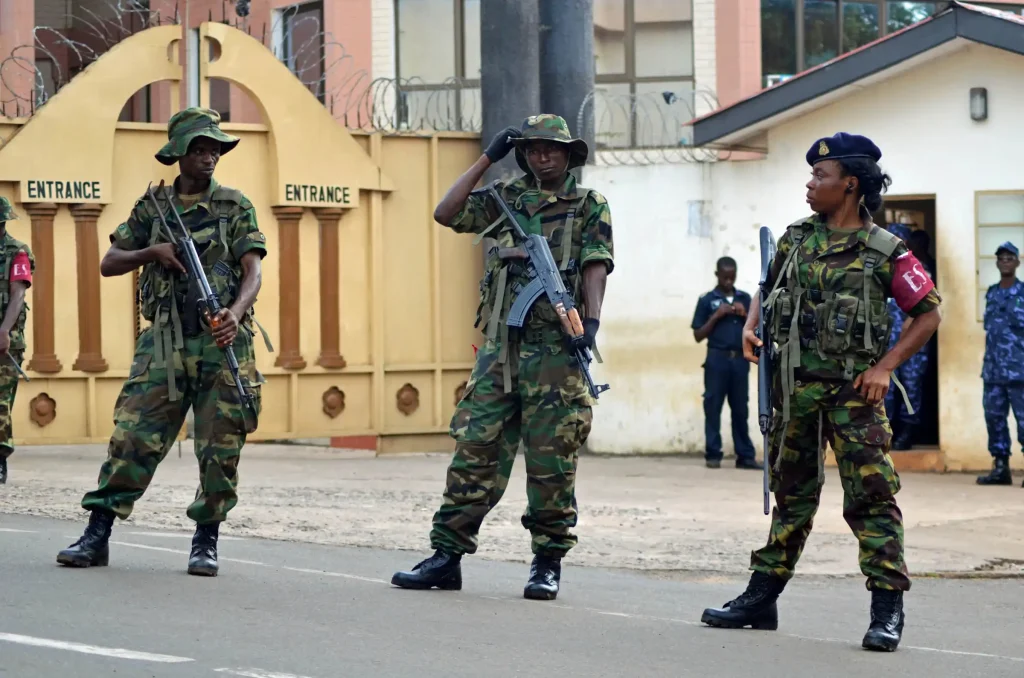
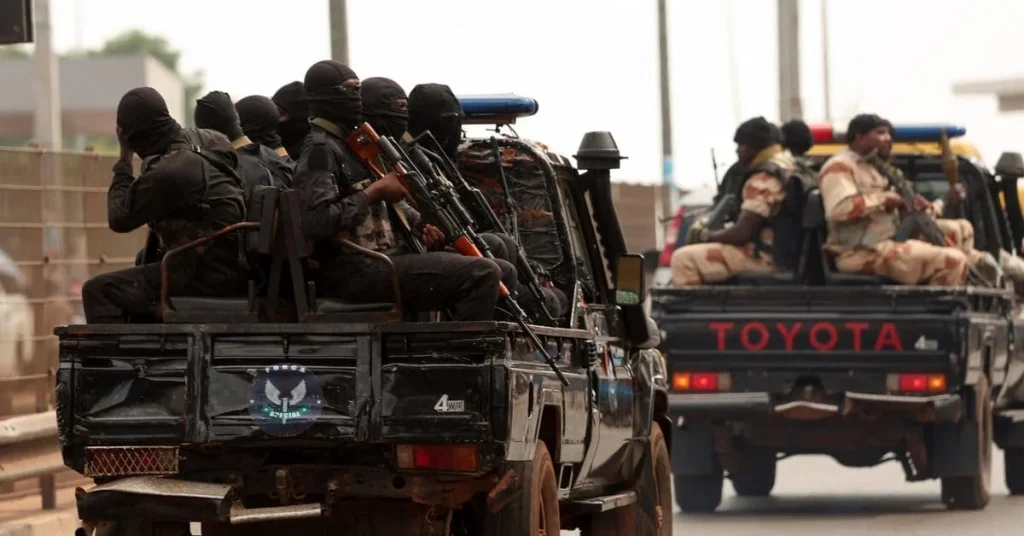
The political landscape of Guinea-Bissau remains on a knife-edge as the nation’s primary opposition forces issue a public plea for genuine negotiation with the military authorities. This appeal marks a critical attempt to resolve the paralysis that has gripped the West African nation since the military seizure of power in late November 2025.
The Haut commandement militaire pour la restauration de la sécurité nationale et de l’ordre public—the junta currently at the helm—has faced mounting pressure both domestically and internationally. While the military maintains that its intervention was a “stabilizing” necessity, opposition leaders argue that the suspension of the constitutional order has left the country in a dangerous vacuum.
The November Coup and the Suspension of Democracy
The current crisis traces back to the events of November 26, 2025. In a move that shocked the region, military officers moved to oust President Umaro Sissoco Embaló, effectively ending his tenure and placing the executive branch under military custodianship.
The coup occurred at a particularly sensitive time: just days after the general elections held on November 23. By seizing control, the junta did more than just remove a leader; they suspended the entire electoral process, leaving millions of voters without a declared result and nullifying the democratic efforts of the preceding months.
The Military’s Justification vs. Civil Reality
The junta, led by General Horta Inta-A (also referred to as Horta N’Tam in transitional decrees), justified the takeover by claiming they had uncovered a plot to “manipulate electoral results” involving foreign actors and domestic politicians. However, for the opposition and civil society, these justifications ring hollow against the backdrop of:
- Suspended media broadcasts: Restricting the flow of information to the public.
- Arbitrary detentions: The arrest of key political figures on the day of the coup.
- Border closures: Temporarily isolating the nation from its West African neighbors.
Opposition Strategy: Why Dialogue is Now the Priority
Leading the charge for a negotiated settlement is a powerful coalition of opposition parties, most notably the PAIGC (African Party for the Independence of Guinea and Cape Verde) led by Domingos Simões Pereira.
Pereira, a veteran of Guinea-Bissau’s turbulent politics, has transitioned from a position of outright resistance to one of strategic engagement. After being released from military detention into house arrest in early 2026, Pereira and his colleagues have sought to open official channels of communication with the High Command.
“We are looking for a way out of this impasse that respects the will of the people expressed at the ballot box,” one opposition spokesperson stated. “Dialogue is not a sign of weakness; it is the only path to preventing a total collapse of the state.”
The Rejected “Olive Branch”: A Symbolic Gesture?
Tensions reached a boiling point in recent weeks when the junta attempted to pacify the opposition by offering them a seat at the table. The military proposed a transitional government that would include ministerial positions for opposition politicians.
Specifically, the junta offered:
- Three ministerial portfolios to the PAIGC.
- Three portfolios to the group led by Fernando Dias Da Costa (who claimed victory in the November polls).
- Ten seats in a National Transitional Council (CNT) to serve as a legislative body.
However, the opposition rejected this offer in no uncertain terms. Key leaders viewed the proposal as symbolic and insufficient. They argue that taking a few cabinet seats in a government still dominated by military decrees would not address the fundamental issue: the restoration of the 2025 election results and the return to constitutional normalcy.
The Regional Dimension: ECOWAS and International Pressure
The Economic Community of West African States (ECOWAS) has emerged as a pivotal arbiter in the crisis. Under the leadership of Commission President Omar Touray and Sierra Leone’s Julius Maada Bio, the regional bloc has maintained a “zero tolerance” policy toward the unconstitutional change of government in Bissau.
ECOWAS has laid out clear demands:
- Restoration of Constitutional Order: A swift return to civilian-led governance.
- Release of Detainees: The full and unconditional freedom of all political prisoners.
- Electoral Integrity: Validation of the November 23 election results, which international observers deemed credible before the military intervention.
The threat of targeted sanctions looms large over the junta. If negotiations do not progress, the High Command could face travel bans and asset freezes, further isolating a country that is already grappling with significant economic challenges and high poverty rates.
A Volatile Period in Recent History
Guinea-Bissau is no stranger to political volatility, having experienced numerous coups and attempted takeovers since gaining independence in 1974. However, the 2025-2026 period is viewed by many as uniquely dangerous. The overlap of a disputed election and a military takeover has created a “double crisis” of legitimacy.
The military tribunal’s recent summons of Domingos Simões Pereira for “alleged links to coup plots” has only added fuel to the fire. Supporters of the opposition view these legal moves as a form of “judicial harassment” designed to sideline popular leaders while the junta consolidates its power.
Conclusion: The Stakes for the Future
As the opposition parties wait for a formal response from the High Command, the window for a peaceful transition is narrowing. The appeal for dialogue represents the last best hope for a “Guinean-led” solution that avoids further bloodshed or a complete regional isolation.
The international community continues to watch Bissau with bated breath. The coming weeks will determine whether the military is willing to relinquish its grip on power or if Guinea-Bissau will remain a fractured state, governed by the shadow of the November coup rather than the will of its people.
ALSO READ: South Africa Debt Stabilizes After 17 Years: What This Massive Turnaround Means