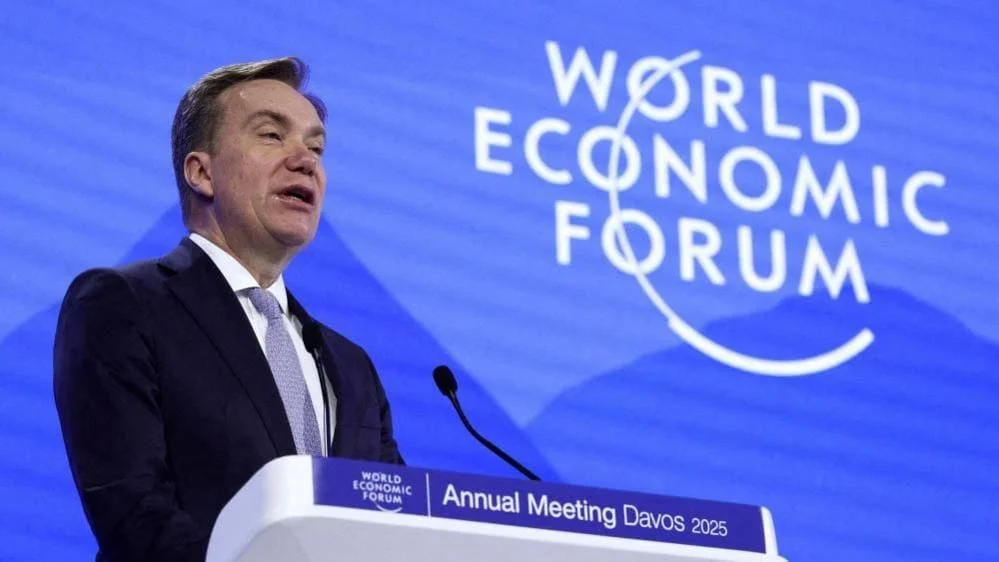
The World Economic Forum (WEF) is currently navigating a major leadership transition. On Thursday, February 26, 2026, Børge Brende officially resigned as the President and Chief Executive Officer of the organization. This decision follows weeks of mounting pressure regarding his historical associations with the late Jeffrey Epstein.
Brende is a seasoned diplomat and a former Norwegian Foreign Minister. In his formal statement, he explained that his departure came “after careful consideration.” He expressed a strong desire to ensure the WEF could maintain its global mission without the “distractions” caused by the scrutiny of his past contacts.
The Investigation: Uncovering the Epstein Connection
The primary catalyst for this resignation was the recent release of a new batch of documents related to Jeffrey Epstein. These files prompted the WEF to launch an internal investigation earlier this month. The goal was to determine the nature and extent of the relationship between Brende and Epstein.
Initial reports indicated that the two had several interactions. These included dining together on multiple occasions and exchanging digital messages. This scrutiny is part of a much wider wave of investigations affecting several prominent Norwegian figures found in the latest document releases.
Brende’s Defense and Full Cooperation
Throughout the inquiry, Brende maintained a stance of total transparency. In previous interviews with the Norwegian broadcaster NRK, he clarified several key points regarding his interactions:
- Business Settings: He asserted that all meetings with Epstein occurred strictly within professional or business contexts.
- Lack of Prior Knowledge: Brende stated he was entirely unaware of Epstein’s criminal history or his illicit private life at the time of their meetings.
- Full Disclosure: He cooperated fully with the independent counsel appointed by the WEF to review the matter.
Results of the Independent Review
The World Economic Forum’s leadership moved quickly to address the investigation’s findings. WEF co-chairs André Hoffmann and Larry Fink released a joint statement confirming that the independent review has officially concluded.
According to the co-chairs, the investigation did not uncover any new or alarming information. The findings stated that there were no additional concerns beyond what had already been publicly disclosed. While the meetings did occur, the review found no evidence of legal wrongdoing or a breach of the Forum’s ethical codes.
Despite being cleared of additional misconduct, the “distraction” mentioned by Brende proved too significant. He felt he could no longer continue in his dual role as President and CEO while maintaining the necessary public trust.
A Distinguished Career in Global Diplomacy
To understand the weight of this resignation, one must look at Brende’s significant contributions to international relations. Before joining the WEF in 2017, he served as the Foreign Minister of Norway (2013-2017). During his tenure, he was a key figure in several global initiatives:
- Arctic Diplomacy: He led discussions on sustainable development and environmental protection in polar regions.
- Middle Eastern Mediation: He facilitated high-level talks and humanitarian aid programs in volatile regions.
- Economic Integration: He worked to strengthen Norway’s ties with global markets and trade organizations.
Under his leadership at the WEF, the Forum expanded its focus on the Fourth Industrial Revolution, climate change, and global economic recovery following the pandemic.
The Interim Path: Alois Zwinggi Steps In
The World Economic Forum has implemented a contingency plan to ensure operational continuity. The organization announced that Alois Zwinggi will serve as the interim President and CEO effective immediately.
Zwinggi is a long-standing member of the WEF Managing Board. He is expected to provide a steady hand during this transition period. His primary responsibility will be to oversee day-to-day operations and begin the groundwork for the 2027 annual meeting in Davos.
Protecting the “Davos” Reputation
The WEF has long prided itself on being a neutral platform for world leaders, CEOs, and activists. However, the association of high-level officials with controversial figures like Epstein has threatened this image of impartial excellence.
By stepping down, Brende aims to protect the “incredible collaboration” he built with global partners. The Forum’s leadership believes a fresh start is necessary to keep the focus on pressing issues like global inflation, technological ethics, and geopolitical stability.
Conclusion: A Legacy Interrupted
Børge Brende’s departure marks the end of a significant era for the World Economic Forum. While the independent review cleared him of further concerns, the shadow of the Epstein files proved too long to ignore for a position that requires absolute public confidence.
Brende leaves behind a legacy of intense collaboration. As Alois Zwinggi takes the helm, the world will watch to see how the WEF navigates this period of internal reflection. The goal remains to continue as the premier platform for global cooperation, free from the distractions of the past.
READ MORE: Nigeria’s New Electoral Act: Presidential Spending Cap Doubled to ₦10 Billion